Moldova’s vineyard area shrinks by 10,000 hectares as growers replace unprofitable plantings
Moldova’s vineyard area has fallen by 10,000 hectares over five years to slightly more than 100,000 hectares, with 93,000 hectares bearing fruit. Authorities describe the contraction as an industry restructuring driven by old vineyards, weak yields and declining demand for some grape varieties.
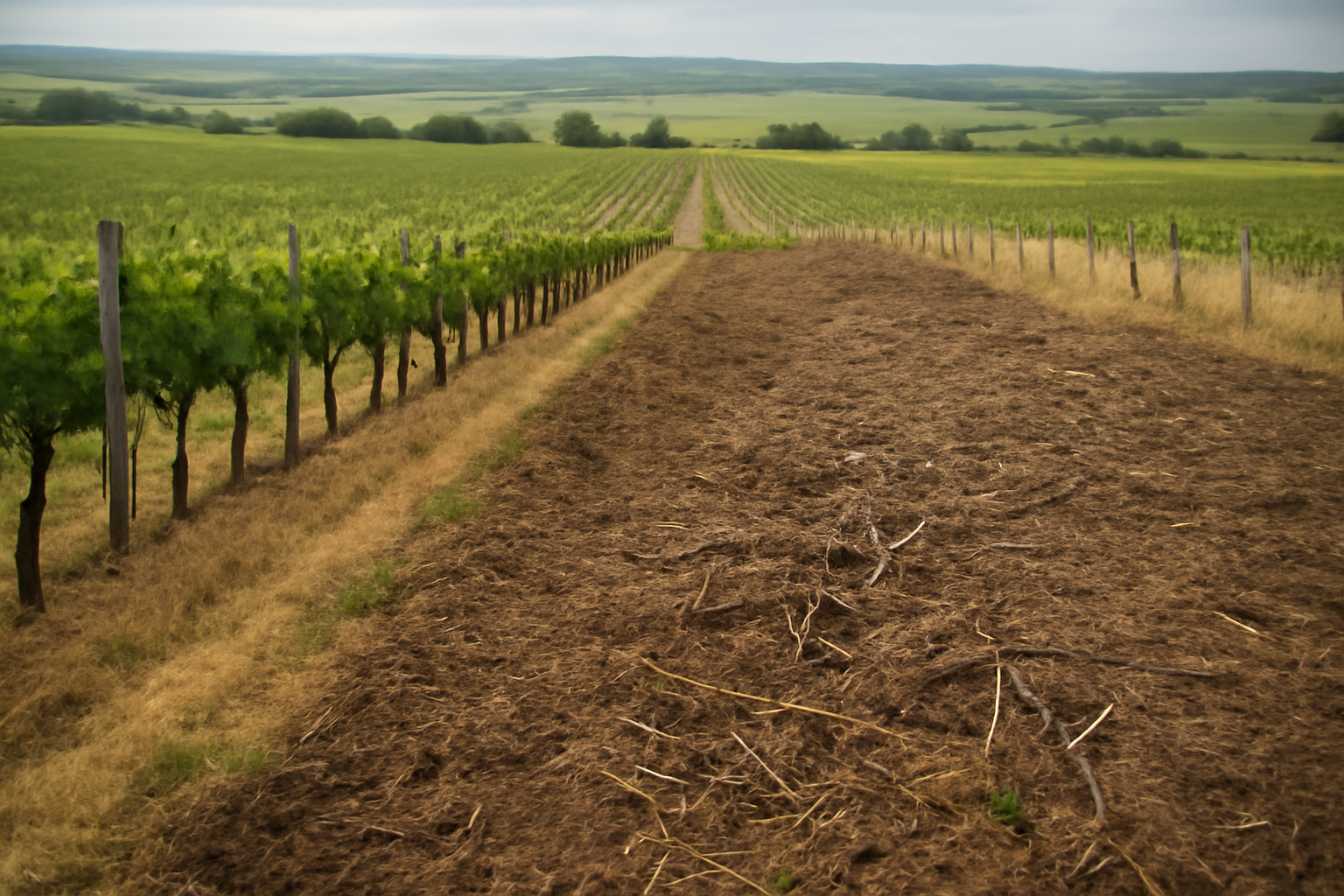
Vineyard area falls below its previous base
Moldova’s vineyard area has contracted by 10,000 hectares over the past five years and now stands at slightly more than 100,000 hectares, according to data from the Ministry of Agriculture and Food Industry reported by Noi.md. Only 93,000 hectares of the remaining area consists of fruit-bearing vineyards, limiting the land currently contributing grapes to the country’s wineries and other processors.
The pace of removal has substantially exceeded the creation of new vineyards. Ștefan Iamandi, director of the National Office of Vine and Wine, said that approximately seven hectares were uprooted for every hectare planted during the past eight years. That ratio indicates that replacement investment has not kept pace with the retirement of existing plantations.
Authorities nevertheless argue that the contraction should be viewed as a restructuring of the sector rather than a simple decline. A significant share of the removed vineyards was old, produced low yields or contained varieties for which market demand had weakened, Iamandi said. The reduction therefore affects both the scale and the composition of Moldova’s grape-growing base.
Low yields undermine vineyard economics
Productivity is a central reason for the removals. Iamandi said yields of four to five tonnes of grapes per hectare are often no longer sufficient to cover production costs. He compared that performance with a global average of about ten tonnes per hectare, leaving many Moldovan plots operating at roughly half that benchmark or less.
For growers, retaining an ageing vineyard with low output becomes difficult when its grape variety also attracts weaker demand. The combination reduces revenue per hectare while cultivation, plant protection and harvesting expenses remain. Replanting can align production with current demand and improve yields, but the reported planting-to-removal ratio shows that this renewal is proceeding more slowly than uprooting.
The contraction has direct consequences for wineries and grape buyers. A smaller fruit-bearing area can tighten the supply of locally grown grapes, although the effect on wine output will also depend on yields from the vineyards that remain. If newer plantings are more productive, part of the lost area could be offset by higher output per hectare; the figures reported by Noi.md do not show whether that compensation has occurred.
Abandoned vineyards add plant-health risks
Abandoned vineyards present a separate problem. Iamandi said unused plantations should be uprooted because they can become sources of disease for neighbouring vineyards. Their presence can force active producers to spend more on crop treatments, extending the economic cost of unproductive land beyond the owners of the abandoned plots.
The stated policy direction is to replant vineyards that are no longer profitable and replace varieties whose cultivation has also become uneconomic. For producers, nurseries and wineries, the key issue is whether new planting can accelerate enough to modernise the sector without causing a prolonged reduction in grape availability. Moldova’s headline vineyard area is shrinking, but the commercial outcome will depend on the productivity, health and market relevance of the 93,000 hectares that continue to bear fruit.