Moldova's agriculture minister proposes a full halt to exports to Russia and Belarus
Agriculture Minister Eugeniu Osmochescu has called for a complete end to Moldovan exports to Russia and Belarus as a demonstration of Chisinau's commitment to international sanctions. He acknowledged that an immediate ban would hurt exporters and proposed a support programme to redirect them into the EU market. No formal decision has been taken.
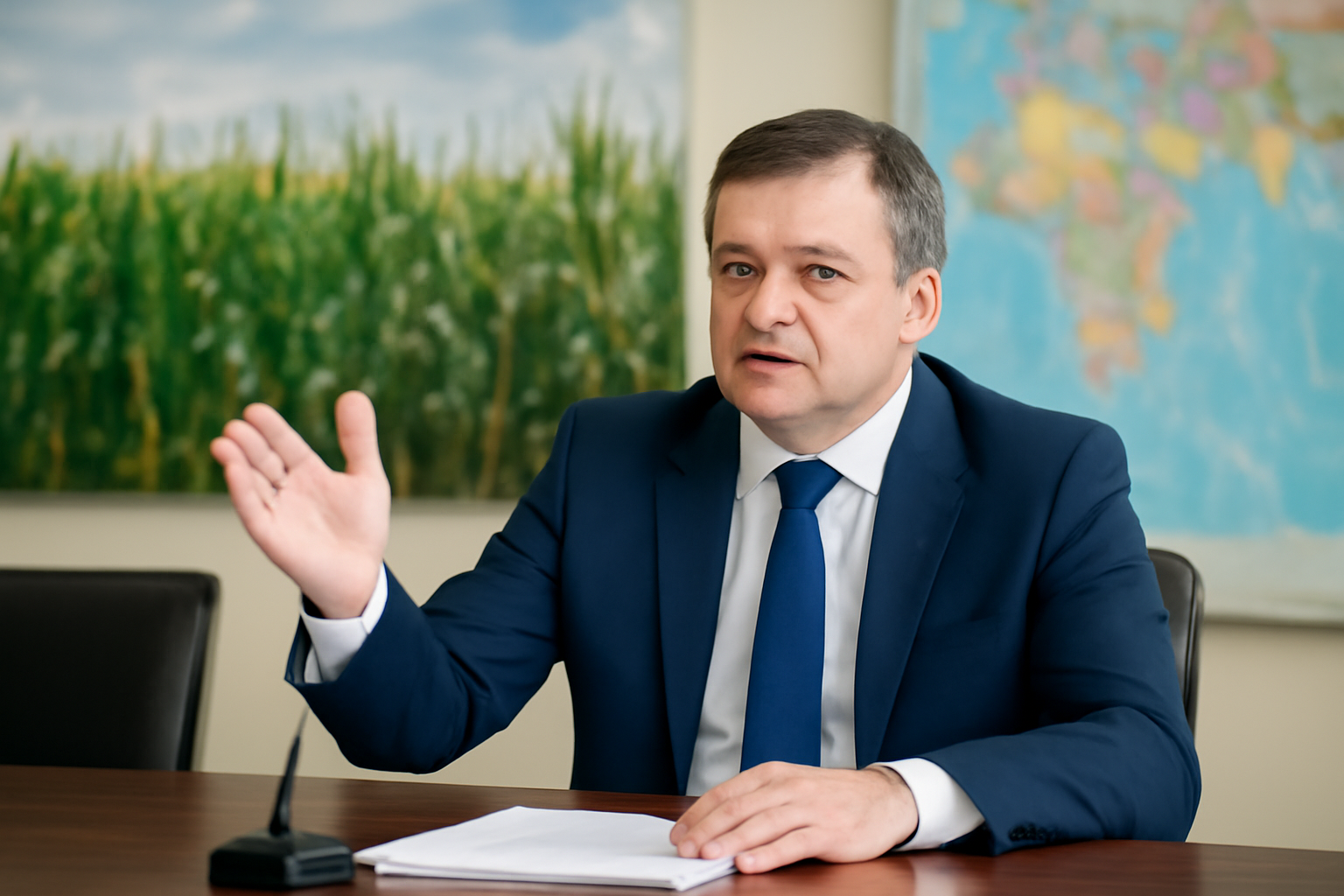
Moldova's agriculture minister, Eugeniu Osmochescu, has proposed a complete halt to exports of Moldovan goods to the Russian and Belarusian markets, arguing that the step would demonstrate Chisinau's commitment to international sanctions against the two countries. The remarks were reported by the newspaper Komsomolskaya Pravda v Moldove and subsequently carried by TASS, Kommersant and the Belarusian outlets Myfin and Belnovosti.
According to Belnovosti, the minister put the initiative forward in Chisinau on 20 September 2026. Kommersant reports that Osmochescu stressed the position was his personal opinion. No formal decision has been taken, and it is not known whether other members of the Moldovan government support the idea.
A political gesture with an acknowledged cost
Osmochescu did not present the proposal as cost-free. He conceded that an immediate ban would hit Moldovan producers already working on those destinations. “We must take into account that we have exporters to these two markets — more to Belarus than to Russia, and they would suffer from an immediate ban,” the minister said, as quoted by Komsomolskaya Pravda v Moldove.
To offset the damage, he suggested building a dedicated support programme for affected exporters. “We must develop a programme to support them, to help them break into the European Union market,” Kommersant quotes him as saying. The minister therefore acknowledged that a political signal toward the EU would require additional public spending and could create difficulties for the domestic agricultural sector.
Where the exposure sits: apples and wine
Kommersant sets out what a ban would mean in commercial terms: the loss of a long-established sales market, above all for apples and wine. The publication cites the following positions:
- In 2020 Moldova accounted for 28% of Russia's apple imports.
- Russia ranked second, after Romania, among destinations for Moldovan wine.
- The effects would be uneven across the sector, and most sensitive for companies built around those two product lines.
The emphasis differs between sources. Kommersant frames the Russian market as the larger commercial loss for apple and wine exporters, while the minister himself, as quoted by Myfin and Belnovosti, says current exporters are more oriented toward Belarus than toward Russia — implying that the first operational shock would land on the Belarusian channel.
The EU route is documented but gradual
Kommersant also notes that a rapid redirection into the European Union is constrained by more than the search for buyers. In 2022 shipments of Moldovan goods to Russia already ran into logistics problems, and from 15 August 2022 the import of plant products from a number of Moldovan districts was banned over breaches of quarantine requirements.
Moldovan winemakers cut sales to Russia during 2022 and shifted toward Europe and the United States. Kommersant describes that experience as a process of adaptation rather than an instant substitution of the previous market — a distinction that matters for any assessment of how quickly apple and wine volumes could be re-placed.
What comes next
Three points will determine whether the proposal moves beyond a ministerial statement: whether the cabinet takes it up as government policy, whether the promised support programme is drafted with actual funding and eligibility rules, and how quickly certification and logistics allow displaced volumes to enter EU channels. As of the minister's statement, none of these had been settled.