Middle East disruption costs Pakistan trade about $2 billion, minister says
Pakistan’s trade has lost about $2 billion amid Middle East tensions, Commerce Minister Jam Kamal said. Disrupted shipping, weaker Gulf demand and lower earnings from rice, sesame and sugar have weighed on exporters.
Minister estimates a $2 billion impact
Middle East tensions have cost Pakistan’s trade about $2 billion, Federal Commerce Minister Jam Kamal said, according to Independent Urdu. He attributed the shortfall to declines across rice, sesame, sugar and other sectors. Pakistan both imports from and exports to Gulf markets, leaving businesses exposed to disruptions affecting Qatar, Saudi Arabia, the United Arab Emirates, Bahrain and other countries in the region.
Kamal said Pakistani traders had responded by diversifying export destinations. Companies sought additional buyers in Africa, South America, Europe and Central Asia to offset losses in markets where supply chains had been interrupted. The strategy offered alternative outlets, but ministry figures indicate that it did not fully compensate for the contraction in established trade routes.
Documents compiled by the Commerce Ministry and reviewed by Independent Urdu put Pakistan’s overall trade deficit at $3.95 billion, an increase of 23%. The same documents report a $1.03 billion loss in exports linked to Afghanistan transit trade and a further $150 million decline in transit revenue. Exports to ASEAN countries fell by 30%.
Shipping routes and border security restrict trade
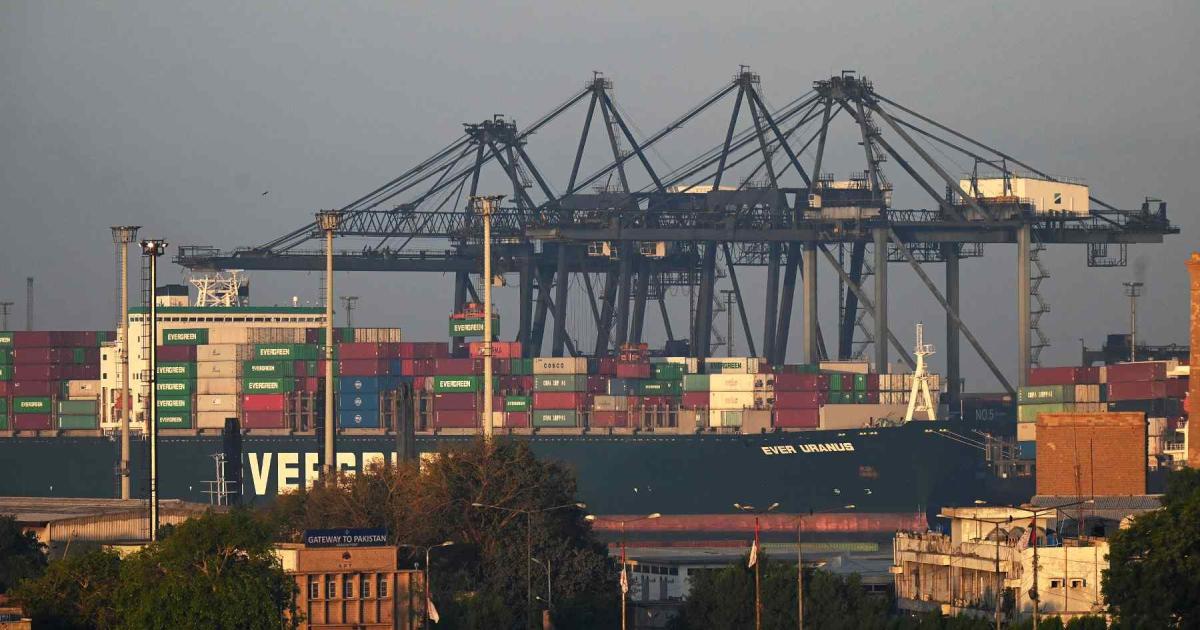
In July 2026, violations of an interim ceasefire between the United States and Iran brought commercial shipping between Pakistan and Gulf Cooperation Council countries to a complete halt, Independent Urdu reported. Daily vessel movements through the Red Sea dropped from 80 to 6, while hundreds of ships remained stranded outside the Bab el-Mandeb. By July 2026, all Pakistani exports to Gulf countries were being dispatched by air.
The shift to air freight illustrates the severity of the maritime disruption, particularly for bulky or price-sensitive agricultural goods. Average monthly exports to GCC countries declined by 32.6% during the conflict period. Shipments to Kuwait fell by 49.8%, those to the United Arab Emirates by 43.2%, and exports to Oman by 38.7%.
Imports from GCC countries also contracted. In July 2026, their value was 32.5% lower year on year, including declines of 96.1% in imports from Qatar and 92.8% from Kuwait. Regional instability also affected commerce with Russia and Central Asian states, to which Pakistani exports dropped by 72.3% year on year. Overland movements toward the Taftan border in Balochistan became highly uncertain because of security concerns and attacks on cargo vehicles.
Rice prices compound logistics pressure
Rice accounted for about $1.2 billion of the reduction identified by the commerce minister. Kamal said export volumes had not fallen; instead, Pakistani suppliers received less revenue because they faced aggressive price competition from India. Indian rice was offered in the global market at substantially lower prices, making it harder for Pakistani exporters to compete even where physical demand remained available.
Kamal said Pakistan’s basmati rice retained a reputation for high quality and had established markets in several regions. However, he stressed that buyers prioritize price, limiting the ability of quality premiums to protect export earnings. The result is a dual challenge for the rice sector: lower unit returns in global markets and higher logistical risk on routes serving Gulf buyers.
Sesame export earnings declined by about $100 million. Sugar contributed another estimated $400 million to the shortfall: Pakistan exported about $400 million of sugar in the previous year, but exports were not authorized in the current year. These commodity-specific losses, combined with maritime disruption, weaker regional trade and security problems on land corridors, explain the minister’s estimate of an approximately $2 billion impact.