Malawi maize prices rise 8% as food stocks tighten before lean season
Malawi’s average retail maize price rose 8% to K791 per kilogramme in July as household stocks from the 2025-26 harvest began to run down. With production below annual demand and 2.6 million people facing food shortages, forecasts point to further price increases.
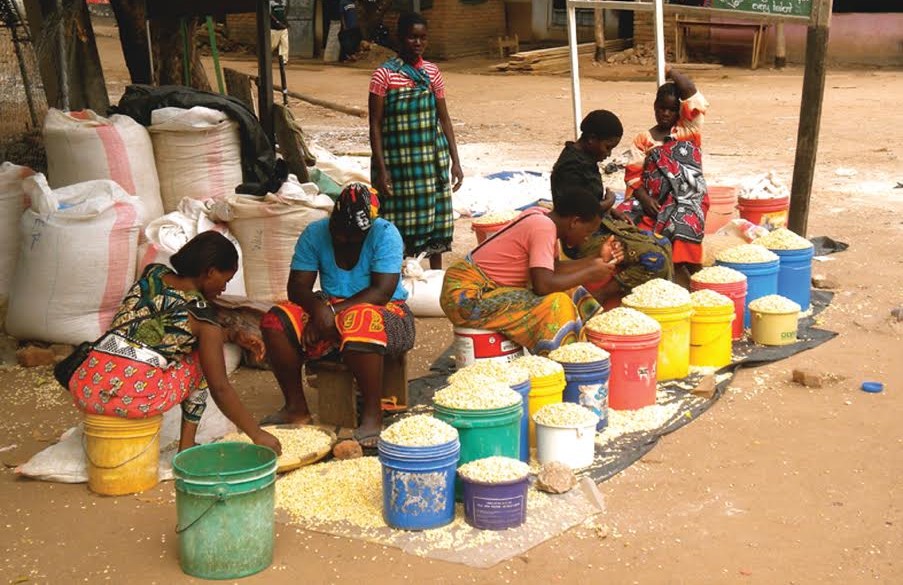
Retail prices rebound after the harvest
Malawi’s national average retail maize price increased by 8% in July, rising from K731 per kilogramme in the final week of June to K791 in the final week of July, according to the International Food Policy Research Institute. A 50-kilogramme bag therefore cost about K39,550. The increase followed the depletion of stocks from the 2025-26 harvest as the country approached its lean season.
The pressure varied sharply by region. The Southern Region recorded an average of K866 per kilogramme, compared with K773 in the Central Region and K618 in the Northern Region. Despite the monthly increase, July prices remained 32% below their level in the same period of the previous year, when Nyasa Times reported a price of K1,169 per kilogramme.
Imports provided some relief. IFPRI said Malawi imported more maize than it exported through monitored border points in July, helping to stabilise domestic supply. Import parity prices in informal cross-border trade remained below domestic prices, although a weaker kwacha against the Zambian kwacha complicated the position of Malawian buyers and producers.
Production remains below national demand
Malawi produced about 3.3 million tonnes of maize in the 2025-26 agricultural season, up from roughly 2.8 million tonnes a year earlier, Malawi Voice reported. The improved harvest was still below estimated annual national demand of 3.7 million tonnes, leaving a gap of about 400,000 tonnes before accounting for stock movements and losses.
The Malawi Vulnerability Assessment Committee estimates that 2.6 million people will be unable to meet their annual food requirements during the coming lean period. The required food response is estimated at about 97,887 tonnes, valued at approximately K124.3 billion. As rural and urban households exhaust their own stocks, a larger share of demand will move into retail markets, increasing exposure to price and transport-cost inflation.
AGRA projects that maize could reach around K1,270 per kilogramme between October 2026 and March 2027. Its July Food Security Monitor identified fertiliser, improved seed and transport costs, exchange-rate volatility, global market pressures and the threat of El Niño among the risks. IFPRI also linked elevated prices to fuel shortages, expensive fuel and continued kwacha depreciation. Lower tobacco sales volumes and prices are meanwhile reducing rural incomes and demand for agricultural labour.
Government purchases test the consumer-producer balance
The government allocated K100 billion to the National Food Reserve Agency to purchase 108,000 tonnes of maize. Malawi Voice also reported K16 billion for El Niño response measures, while Nyasa Times said the Agriculture Development and Marketing Corporation would receive K60 billion to purchase grain and stock its markets.
Intervention must address opposing pressures. Consumers need affordable maize, but traders say farmers are receiving less than the government’s K900-per-kilogramme farmgate price. Grain Traders Association of Malawi president Grace Mijiga warned that low prices and exchange-rate distortions were weakening farmers’ position against producers in Zambia and Mozambique. Development official Ken Sakala said inadequate returns could discourage the next production cycle.
Longer-term measures proposed by the Centre for Social Concern include irrigation, climate-resilient farming, modern silos, warehouse receipt systems and expanded agro-processing. These investments could reduce dependence on rain-fed production, limit post-harvest losses and moderate seasonal price swings. In the immediate term, the timing and scale of public purchases, cross-border availability and household stock depletion will determine whether the July increase develops into the much steeper rise forecast for the lean season.