Maharashtra drought puts sugarcane and soybean yields at risk
Drought in Maharashtra is raising the risk of lower yields for sugarcane, soybeans and other kharif crops. The effects could extend beyond the state by tightening Indian availability and influencing crop prices.
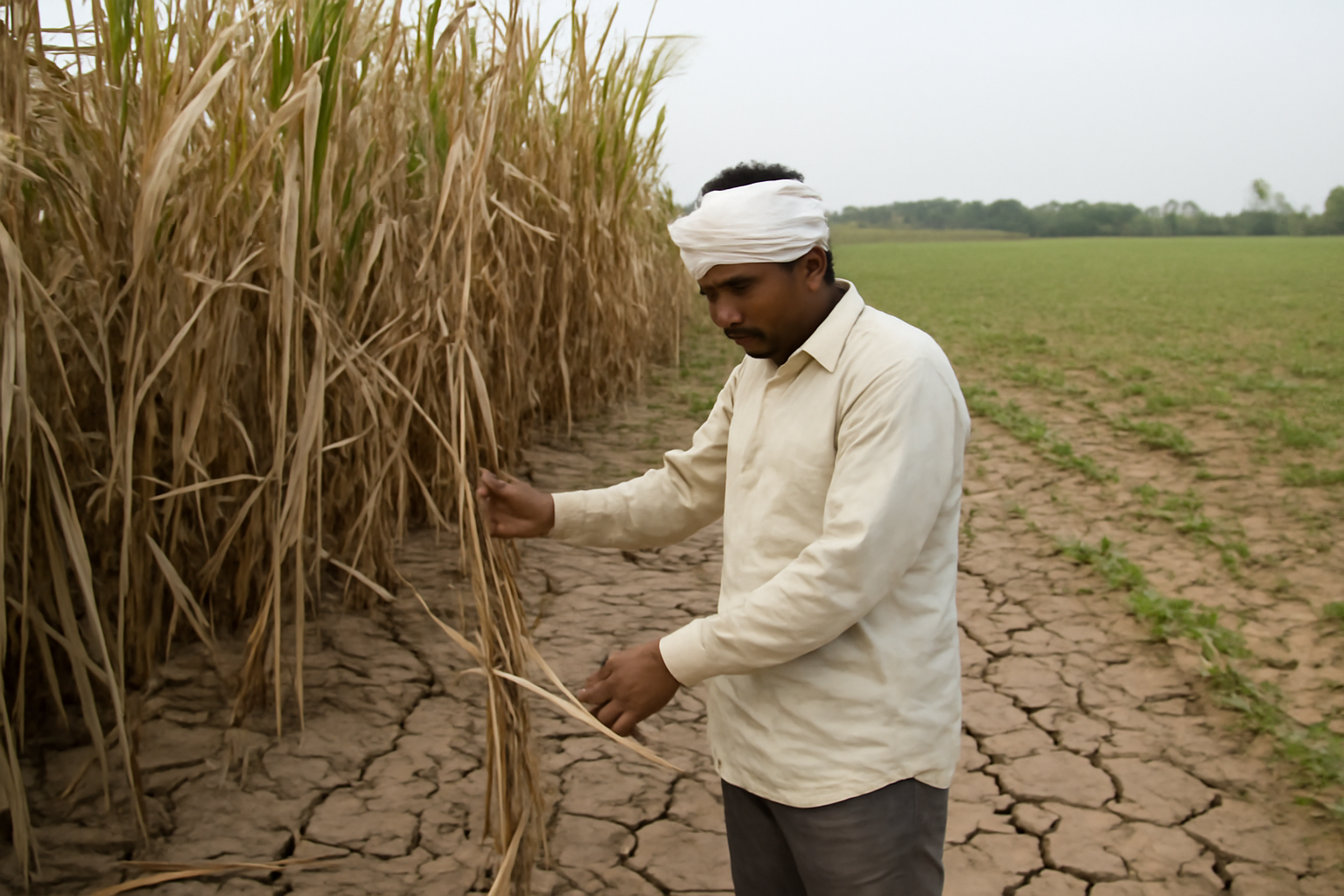
Drought raises concern over kharif production
Drought in Maharashtra has increased concern about the yield and availability of several kharif crops, including sugarcane and soybeans. The risk is not confined to farmers within the state: weaker output could affect supplies and prices in India’s wider agricultural market.
The available information does not quantify the affected area, the expected production loss or the duration of the dry conditions. It therefore remains too early to establish the size of any shortfall. The immediate issue for the market is whether crop conditions improve sufficiently to limit yield damage before harvesting.
Sugarcane and soybeans expose different parts of the agricultural economy to the drought. A decline in cane yields would reduce the volume of raw material available to processors, while weaker soybean production would affect the availability of beans for buyers and processors. Other kharif crops facing the same weather conditions could add to the pressure.
Lower yields could tighten Indian availability
Maharashtra’s crop losses would matter beyond the state if supplies cannot be replaced by production elsewhere in India. Reduced availability could intensify competition among processors, traders and other buyers. The price effect will depend on the eventual harvest and on how much alternative supply reaches the market.
For sugarcane growers, lower yields mean fewer tonnes available for sale from the same cultivated area. Processors, meanwhile, may face greater competition for cane if the harvest falls. The information provided does not specify the impact on sugar output, so any assessment of downstream production remains conditional on the eventual cane crop.
In soybeans, a smaller harvest would reduce domestic bean availability and could influence procurement costs. Farmers with marketable production could benefit from firmer prices, but those suffering significant yield losses may not produce enough volume to offset the decline. Buyers will need to compare crop conditions in Maharashtra with availability from other producing areas.
Markets await clearer crop evidence
The drought has created a supply risk rather than a confirmed production deficit. Reliable estimates of planted area, harvested volume and yield losses will be needed before the consequences for national availability can be measured. Until then, price expectations may remain sensitive to field reports and changes in weather conditions.
Producers must assess whether remaining crops can recover, while processors and traders need to prepare for uneven arrivals. A concentrated decline in Maharashtra could disrupt local procurement even if national supplies prove more resilient. If damage extends across several kharif crops, the combined effect would place broader pressure on agricultural buyers and consumers.
The central uncertainty is the scale of the harvest reduction. Without verified production figures, the direction of risk is clearer than its magnitude: drought threatens yields, and lower yields could tighten supply. The eventual effect on Indian prices will depend on realized output, replacement supplies and the response of buyers across the affected crop markets.