Lower global harvests and stocks support wheat and maize price outlook
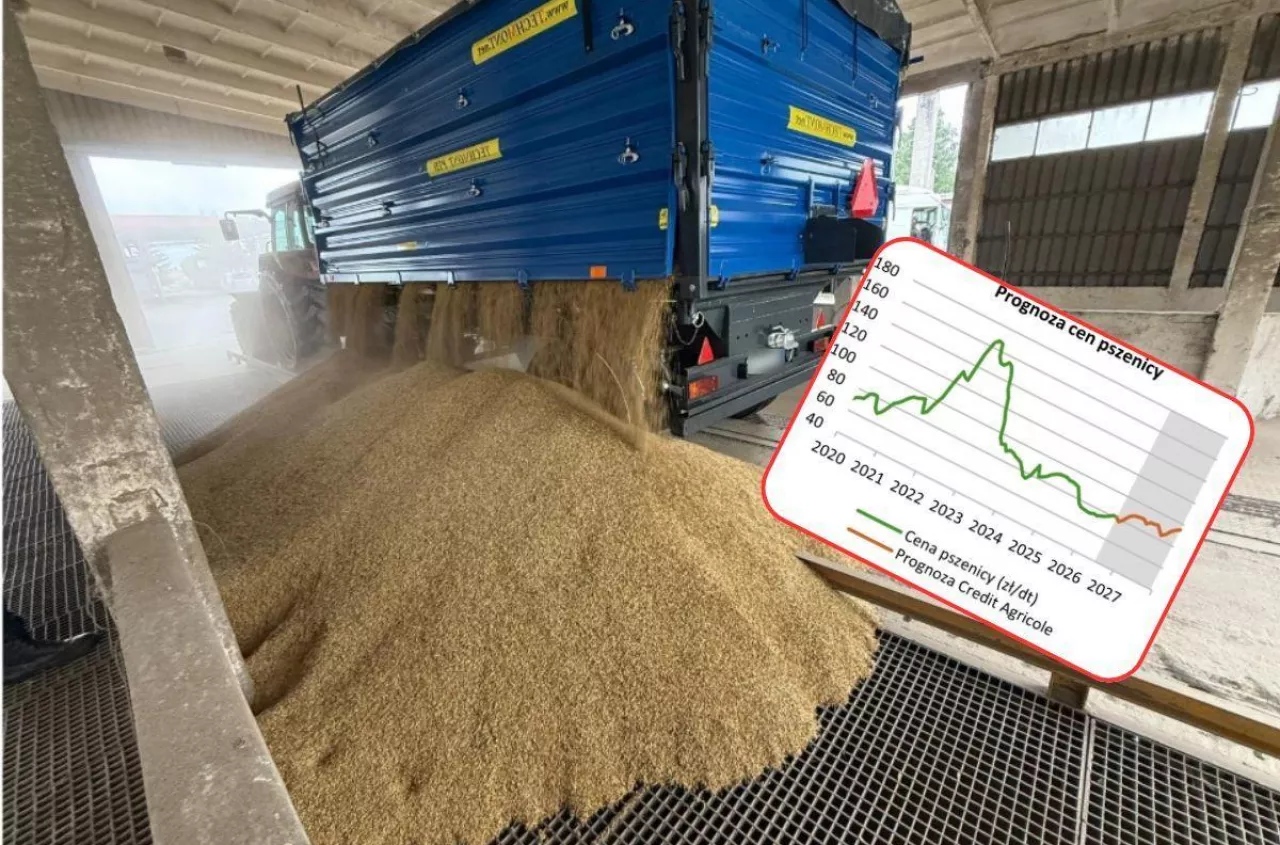
Credit Agricole expects wheat and maize prices in Poland to rise through 2027 as global grain production falls below consumption. USDA projections cited by Tygodnik Rolniczy show world stocks declining by 5.2% in the 2026/2027 season.
Global grain supply is set to tighten
Wheat and maize prices could remain on an upward path over the coming quarters as smaller global harvests and falling inventories tighten the market balance. According to Tygodnik Rolniczy, Credit Agricole expects the reduction in available stocks to make prices increasingly sensitive to crop forecasts, trade developments and disruptions affecting major producing regions.
A USDA forecast dated September 11 puts global grain production in the 2026/2027 season at 2,410.3 million tonnes, 2.5% below the previous season. Wheat output is forecast to decline by 2.6% and maize production by 3%. Barley is the exception, with its global harvest expected to increase by 4.2%.
Consumption is projected at 2,442.1 million tonnes, exceeding production by 31.8 million tonnes. As a result, global closing stocks are expected to fall to 581.3 million tonnes from 613.1 million tonnes a season earlier, a decline of 5.2%. The stocks-to-use ratio is forecast to drop to 23.8%, reducing the buffer available to absorb crop losses or trade interruptions.
Production losses span major exporters
The expected wheat decline is spread across several leading producers and exporters, including the United States, the European Union, Argentina, Australia, Canada and Russia. US wheat production is projected to fall by 12.4 million tonnes, while the EU crop is expected to decrease by 11.3 million tonnes.
The contraction is larger in maize. US production is forecast to decline by 31 million tonnes, with Argentina down by 8 million tonnes and the European Union by 6.2 million tonnes. These reductions matter beyond domestic markets because the affected regions are important suppliers to international buyers. A simultaneous decline across several origins limits importers' ability to replace missing volumes without paying higher prices or accepting greater logistical risk.
Polish prices show early signs of firmness
Tygodnik Rolniczy reports a modest improvement in Poland's domestic grain market. Milling wheat is currently priced at around 840–980 zlotys per tonne, while feed wheat brings 800–915 zlotys per tonne. At one monitored purchasing point, the feed wheat price rose by 100 zlotys per tonne in a week.
Dry maize is quoted at approximately 900–1,000 zlotys per tonne. Wet maize remains cheaper at about 500–650 zlotys per tonne. Credit Agricole forecasts an average Polish wheat price of around 900 zlotys per tonne at the end of 2026 and a maize price of about 800 zlotys per tonne. By the end of 2027, the bank expects wheat to reach around 950 zlotys per tonne and maize around 900 zlotys per tonne.
Weather and geopolitics remain decisive
Recent gains in international maize prices have been supported by deteriorating US harvest expectations, while wheat has also been affected by logistical problems in the Black Sea region. Credit Agricole identifies agrometeorological conditions in major producing and exporting countries, together with developments in the Black Sea and the Middle East, as the principal risks to its outlook.
For producers, tighter inventories offer price support but do not eliminate exposure to local yields and input costs. Traders and processors face a market in which adverse crop revisions can move prices more sharply because the global reserve cushion is smaller. Importers will need to monitor both harvest progress and transport availability across competing origins, particularly where Black Sea logistics influence access to wheat supplies.