Low yields and high costs squeeze Bangladesh’s tea exports
Bangladesh produces about 95 million kg of tea annually, but domestic consumption exceeds 90 million kg and leaves little for export. Yields of around 1,400 kg per hectare and production costs of Tk200-220 per kg are undermining competitiveness despite recent output growth.
Production growth masks a productivity gap
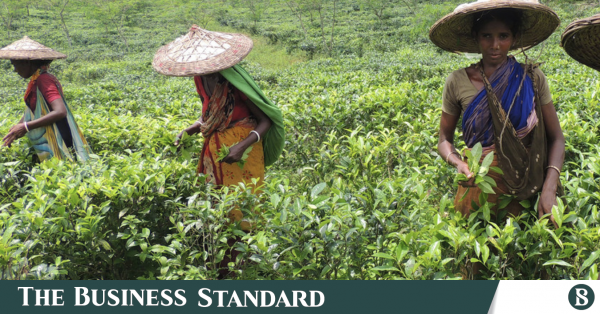
Bangladesh’s tea output is increasing, but low yields and high unit costs continue to limit the industry’s ability to compete abroad. The country produces around 1,400 kg of tea per hectare, according to Tahsin Ahmed Chowdhury, chief operating officer of Finlay Tea Company. That compares with about 3,500 kg per hectare in Kenya and 3,200-3,300 kg in Vietnam. The gap means Bangladeshi estates obtain substantially less tea from the same area of land than major international competitors.
The effect is visible in production costs. Mohammad Moazzem Hossain of the Bangladesh Tea Board’s Research and Development Department told The Business Standard that producing one kilogram of tea costs Tk200-220 in Bangladesh, compared with Tk100-150 in countries such as India and Sri Lanka. Lower output per hectare raises the cost assigned to each kilogram, making it difficult for Bangladeshi suppliers to compete in price-sensitive international markets.
National production figures nevertheless show growth. January output rose from 175,000 kg in 2024 to 309,000 kg in 2025 and 573,000 kg in 2026. The January 2026 total was 264,000 kg above the previous year and 398,000 kg above January 2024, making it the strongest January of the three-year period. These gains, however, measure total output rather than productivity per hectare.
Domestic consumption limits the exportable surplus
Bangladesh produces around 95 million kg of tea a year, while its domestic market consumes more than 90 million kg, Moazzem said. This leaves only a limited surplus for foreign buyers. Strong local demand can support domestic sales, but it also means that even higher national production does not automatically generate a significant increase in export volumes or earnings.
Export revenue illustrates the pressure. According to figures reported by The Business Standard, earnings declined from $4.47 million in fiscal 2016-17 to $3.33 million in 2025-26, a fall of $1.14 million, or 25.5%. Revenue reached a decade low of $2.14 million in 2021-22 before recovering to $4.10 million in 2024-25. It then fell by $770,000, or 18.8%, in 2025-26.
The industry’s reliance on bulk black tea presents another constraint. Demand is expanding for green, white, dark and jasmine teas, while Chinese and Japanese producers obtain higher prices through branding and value addition, Tahsin said. Bangladesh’s narrow product range limits its exposure to these higher-value segments and leaves producers more dependent on markets where price competition is intense.
Efficiency, diversification and brands
International brand recognition remains weak. Kazi Arfan Ullah, manager of MM Ispahani Ltd’s Neptune Tea Estate, said tea purchased through local auctions is generally marketed overseas by distributors. This arrangement allows tea to reach foreign consumers but does little to establish a distinct Bangladeshi identity or help local producers retain the value associated with branded products.
Industry representatives are calling for higher yields, lower costs and a broader product mix. Measures under consideration include solar power at tea estates, better living standards for workers and the use of idle estate land for energy generation and other agricultural activities. Tahsin also called for lower interest rates on industry loans. Without stronger productivity, value-added products and internationally recognised brands, rising output alone is unlikely to reverse the long decline in export competitiveness.