Lampung Farmers Oppose Restrictions on Paddy Shipments to Java
Farmers in Lampung are objecting to restrictions that keep harvested paddy inside the province while buyers in Java offer higher prices. They are calling on the government to ensure that Bulog and local processors absorb the redirected crop at fair prices.
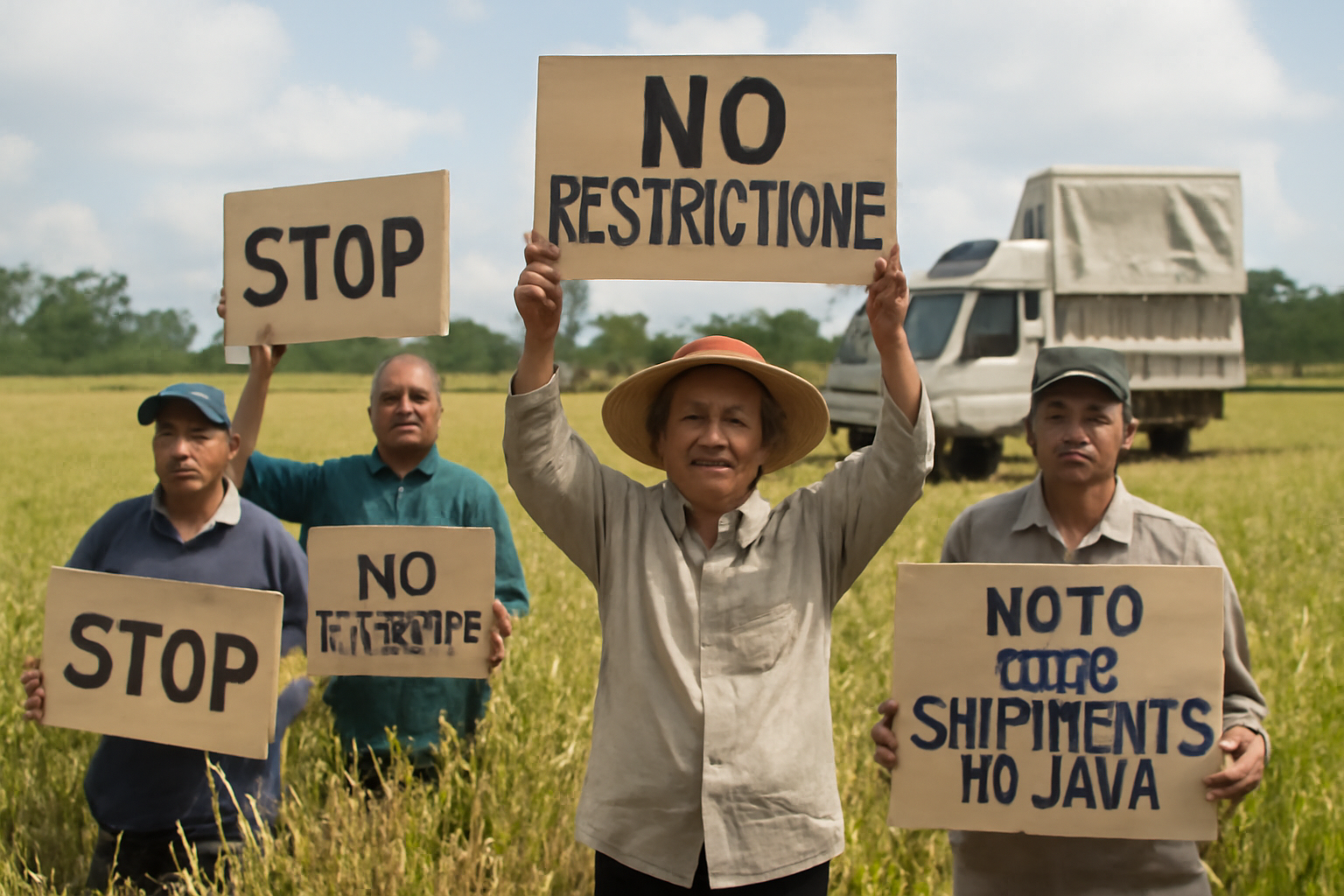
Farmers seek access to higher prices in Java
Rice farmers in Indonesia’s Lampung province are objecting to restrictions preventing harvested paddy from being shipped outside the province, arguing that prices available in Java are higher. The dispute places farmers’ ability to seek the strongest market price against efforts to retain local grain supplies.
Kompas reported that farmers want the government to provide a solution rather than simply stopping outbound shipments. For producers, the commercial issue is direct: selling to a higher-paying buyer can determine whether a harvest generates an acceptable return. Requiring the crop to remain in Lampung without an equally attractive local bid transfers the cost of the restriction to farmers.
The controversy intensified after paddy shipments were turned back, according to Kompas. Farmers now face a choice between accepting lower local prices and losing access to buyers elsewhere. The situation is particularly sensitive because harvested paddy needs a functioning route from farms to collectors, mills or public procurement channels. If one route is closed, alternative buyers must have the capacity and willingness to purchase the displaced volume.
Pressure shifts to Bulog and local buyers
The government is being urged to ensure that the redirected paddy is absorbed by Bulog, companies working with Bulog, cooperatives or local rice mills at a fair price. Bulog, Indonesia’s state-backed food logistics agency, is therefore central to whether the restriction can operate without weakening farm income. Its partners and Lampung’s private milling sector are also potential outlets.
The key question is not only whether local institutions can buy the crop, but whether their prices can compete with those offered in Java. A purchasing commitment at an unattractive price would move grain but would not resolve farmers’ complaint. Conversely, competitive local procurement could keep supplies in Lampung while preserving an economic incentive to produce rice.
The dispute also exposes the coordination required between production policy, procurement and milling capacity. Restrictions can redirect physical flows, but they do not remove the price gap that originally encouraged shipments to Java. If Bulog, cooperatives and mills cannot absorb supplies promptly, farmers may face weaker bargaining power and fewer sales channels. Local processors could gain access to more raw material, but only if purchasing arrangements are credible and prices are acceptable to growers.
For market participants, the next development to watch is how authorities translate the shipment restriction into actual procurement. Clear buying arrangements would give farmers certainty over where their paddy can be sold and on what terms. Without that certainty, opposition is likely to persist because the policy limits access to the market offering the better price while leaving the burden of unsold or discounted grain with producers.