Kyrgyzstan ships 539 kg of honey to South Korea in first half of 2026
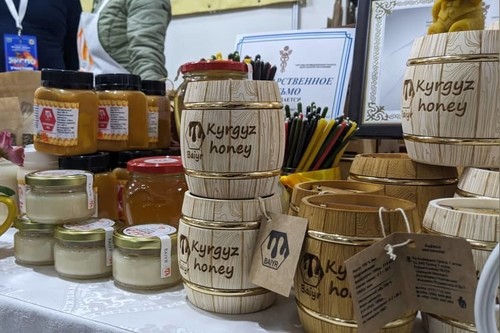
Kyrgyzstan exported 539 kilograms of honey to South Korea in the first half of 2026, Tazabek reported, citing Korean customs data. The small shipment marks a measurable opening for Kyrgyz honey in a distant, higher-value market, although the available data do not disclose its value or price.
A small shipment opens a new channel
Kyrgyzstan exported 539 kilograms of honey to the Republic of Korea in the first half of 2026, according to Tazabek, which cited data from the Korean customs service. The reported volume is modest, but it establishes a measurable trade flow between Kyrgyz producers and the South Korean market.
The available source material does not identify the exporter, buyer, shipment date or type of honey. It also does not provide the customs value, unit price, packaging format or transport route. Without those details, it is not possible to determine whether the consignment was a commercial retail shipment, a specialist order or an initial market test.
Commercial significance depends on repeat orders
At 539 kilograms over six months, the shipment is too small by itself to alter Kyrgyzstan’s honey production or South Korea’s supply balance. Its relevance lies instead in market access. A completed customs entry shows that at least one Kyrgyz consignment reached South Korea and passed through the country’s import process.
For Kyrgyz beekeepers and processors, the next commercial test is whether the transaction produces repeat orders. Small consignments can help suppliers assess documentation, product specifications, packaging, logistics costs and buyer demand before committing larger volumes. However, the disclosed figure alone provides no evidence that shipments will continue or expand.
The missing price information is particularly important. Honey can be sold as a bulk food ingredient or as a packaged product differentiated by origin and botanical characteristics. These formats have different processing, branding and distribution requirements. The customs volume therefore confirms physical trade, but does not show where the Kyrgyz product was positioned in the South Korean market.
Traceability and consistency will shape expansion
Any effort to scale the channel will depend on suppliers’ ability to deliver consistent batches and meet the buyer’s documentation and quality requirements. For small producers, aggregation and processing may be necessary to assemble commercially practical volumes while maintaining uniform specifications.
The shipment also gives Kyrgyz exporters a reference transaction when approaching other buyers. That can support commercial discussions, but it is not a substitute for evidence of recurring demand. Importers will still assess quality, traceability, delivery reliability and the final landed cost against alternative sources.
The first-half figure should therefore be treated as an early market signal rather than a major export breakthrough. Future customs data will show whether 539 kilograms remained an isolated consignment or became the starting point for a regular niche trade. Until value and subsequent volumes are reported, the scale and profitability of the opening remain unclear.