Kyrgyzstan’s Onion and Garlic Exports Fall 44.6% in First Half of 2026
Kyrgyzstan exported 1,100 tonnes of onions and garlic worth $673,000 in January-June 2026, according to Tazabek. Total shipment volume fell 44.6%, while exports to Russia contracted 68.1%.
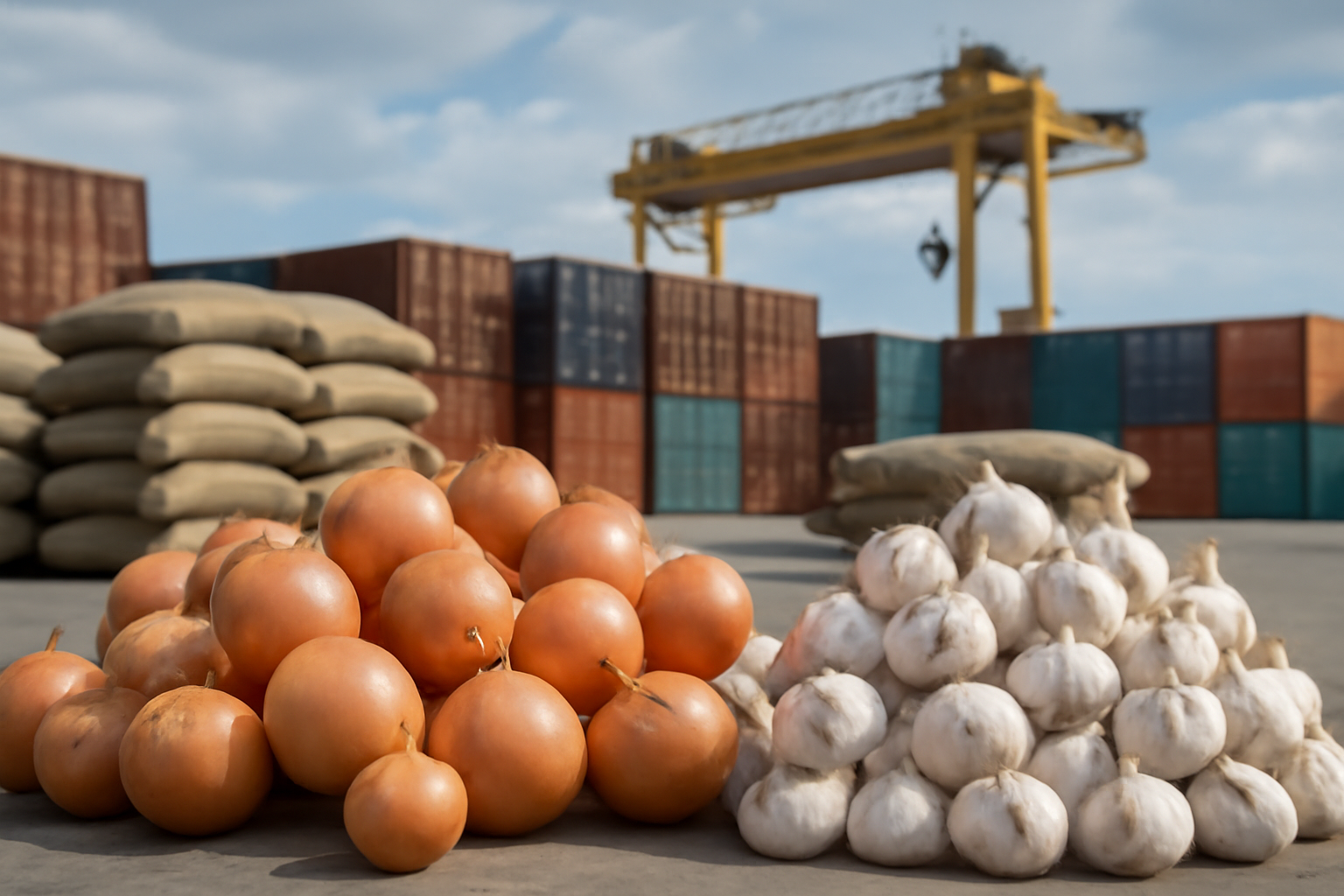
First-half shipments decline to 1,100 tonnes
Kyrgyzstan sharply reduced its exports of onions and garlic during the first half of 2026, highlighting weaker outbound trade in two of the country’s fresh produce categories. The country exported 1,100 tonnes of the products in January-June, a year-on-year decline of 44.6%, according to figures reported by Kyrgyz business publication Tazabek.
The shipments were valued at $673,000, Tazabek reported. The available figures combine onions and garlic rather than providing separate volumes or values for each product, limiting the ability to determine which commodity accounted for most of the decline. The report also does not identify changes in domestic production, harvest conditions or export prices during the period.
Even so, a fall of almost half in physical shipments is significant for growers, produce consolidators and traders serving nearby markets. Fresh onions and garlic are exposed to seasonal supply shifts, storage constraints and transport costs, meaning changes in export availability can quickly affect marketing decisions across the supply chain.
Exports to Russia contract 68.1%
The steepest reported change was in trade with Russia. Kyrgyz exports of onions and garlic to the Russian market fell by 68.1% during the period, according to Tazabek. That contraction was substantially larger than the 44.6% decline in Kyrgyzstan’s overall export volume.
The difference indicates that Russia was a major source of weakness in first-half shipments, although the data supplied do not show Russia’s tonnage, import value or share of Kyrgyz exports. They also do not provide figures for Kyrgyzstan’s other destination markets. It is therefore not possible to establish from the report whether sales were redirected elsewhere or whether total exportable supply simply decreased.
For Kyrgyz exporters, the scale of the decline in Russian-bound trade raises questions about buyer demand, price competitiveness and the availability of alternative outlets. Russia’s role as a regional destination makes the performance of that route particularly relevant to traders handling perishable agricultural goods, for which delivery time and logistics costs can narrow the range of commercially viable markets.
Implications for regional produce suppliers
The reported fall may increase pressure on Kyrgyz growers and intermediaries that planned production or procurement around export demand. If the decline reflects weaker foreign buying rather than lower output, more produce may need to be sold domestically or stored where facilities permit. If it reflects reduced production or export availability, processors and buyers could instead face tighter sourcing conditions.
The combined reporting of onions and garlic leaves several important commercial questions unresolved. The two crops can have different production cycles, storage characteristics and price dynamics, so separate trade data would be needed to assess the impact on individual producer groups. Destination-level values would also help determine whether the mix shifted toward higher- or lower-priced shipments.
Market participants will need to watch whether the Russian contraction persists beyond the first half of 2026 and whether other regional destinations absorb a larger portion of Kyrgyz supply. Production data, wholesale prices and separate customs figures for onions and garlic would provide a clearer explanation of the decline. For now, the available numbers point to a broad reduction in export volume, with the loss of Russian business outpacing the overall downturn.