Kyrgyzstan Introduces New Commodity-Exchange Rules for Clearing, Trading and Procurement
Kyrgyzstan’s new commodity-exchange law establishes clearer requirements for clearing, collateral, participant accreditation and electronic trading. The government may require specified volumes of certain goods to be sold through exchanges, while exchange-based public procurement still depends on amendments to procurement legislation.
A new framework replaces the 1992 law
Kyrgyzstan adopted a new Law on Commodity Exchanges in August 2026, replacing legislation on commodity exchanges and exchange trading that had been in force since 1992. The stated objectives are to make trading in goods and raw materials more transparent, protect transaction participants and improve the reliability of settlements.
Almaz Aaliev, head of commodity and raw-material trading at the Kyrgyz Stock Exchange, told 24.kg that exchanges, brokers, dealers and electronic trading already operated under the previous system. The new law formalizes these mechanisms, clarifies operating requirements and introduces provisions covering clearing, mandatory exchange sales, participant accreditation, guarantee funds and exchange collateral.
Clearing and collateral safeguards
Under the law, clearing—the recording and netting of obligations—must be performed by the exchange itself or its clearing center. Foreign legal entities cannot be engaged for this function, and no separate clearing license is required. Exchange members will finance a guarantee fund, while trading participants must provide exchange collateral. For public procurement, collateral must equal at least 1% of the contract value.
The exchange will set the rules governing its guarantee fund in coordination with the authorized state body. It will also accredit brokers and dealers after reviewing both the applicants and their beneficial owners, including checks required under anti-money-laundering and counter-terrorist-financing procedures.
Electronic trading already operates on the Kyrgyz Stock Exchange. Aaliev said its software will be upgraded to incorporate the new legal requirements. The exchange currently trades sugar and molasses and plans five specialist sections: industrial and consumer goods; petroleum products, gas and energy commodities; agricultural products; metal products; and timber and construction materials.
Mandatory sales and public procurement
The Cabinet of Ministers will be able to determine which goods, above specified volumes, cannot be sold outside an exchange. It will also set minimum lot sizes and the minimum share of production that must pass through exchange trading. The product list and applicable thresholds have not yet been announced.
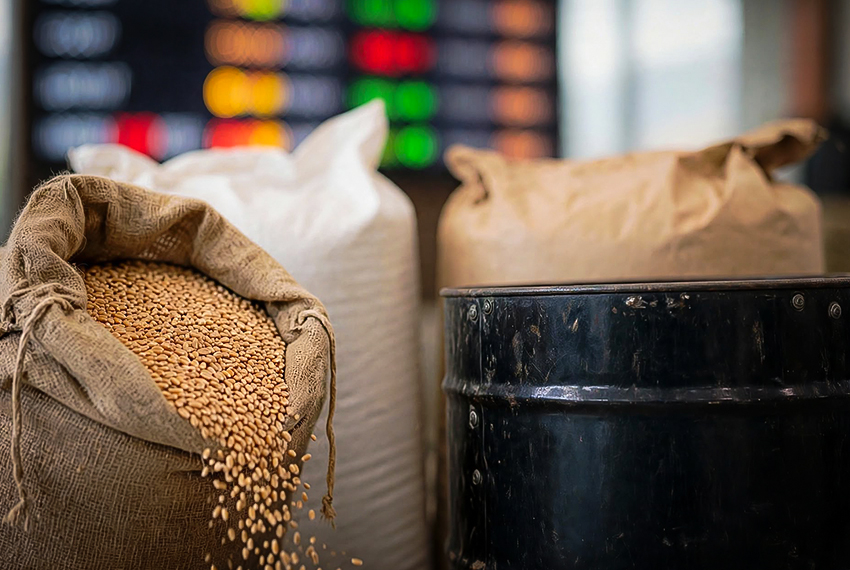
Aaliev expects the mechanism initially to affect grain, vegetable oil, sugar, coal, petroleum products, cement and rolled metal. This is an assessment by the exchange rather than a confirmed government list. He said the agricultural-products and construction-materials sections are likely to see the strongest demand during the initial stage.
The law also allows public authorities to purchase exchange-traded goods through commodity exchanges, exclusively using double auctions in which competing buy and sell orders meet. Implementation requires corresponding amendments to Kyrgyzstan’s public-procurement law. According to 24.kg, the Kyrgyz Stock Exchange and the Finance Ministry’s public-procurement department plan to work on adding exchange trading as a procurement method. The exchange also plans a cooperation memorandum with the Kyrgyz Chamber of Commerce and Industry, followed by meetings, seminars and training intended to help domestic companies enter the platform.