Kyrgyzstan: loose milk price up 9.1% year on year to 66.30 som per litre
The average price of loose milk in Kyrgyzstan reached 66.30 som per litre in February 2026, 9.1% above the same month a year earlier, according to statistical data cited by Tazabek. Loose milk is the segment closest to the farmgate, which makes the reading an early signal of raw-milk cost pressure. The published data gives no regional or channel breakdown and no volumes.
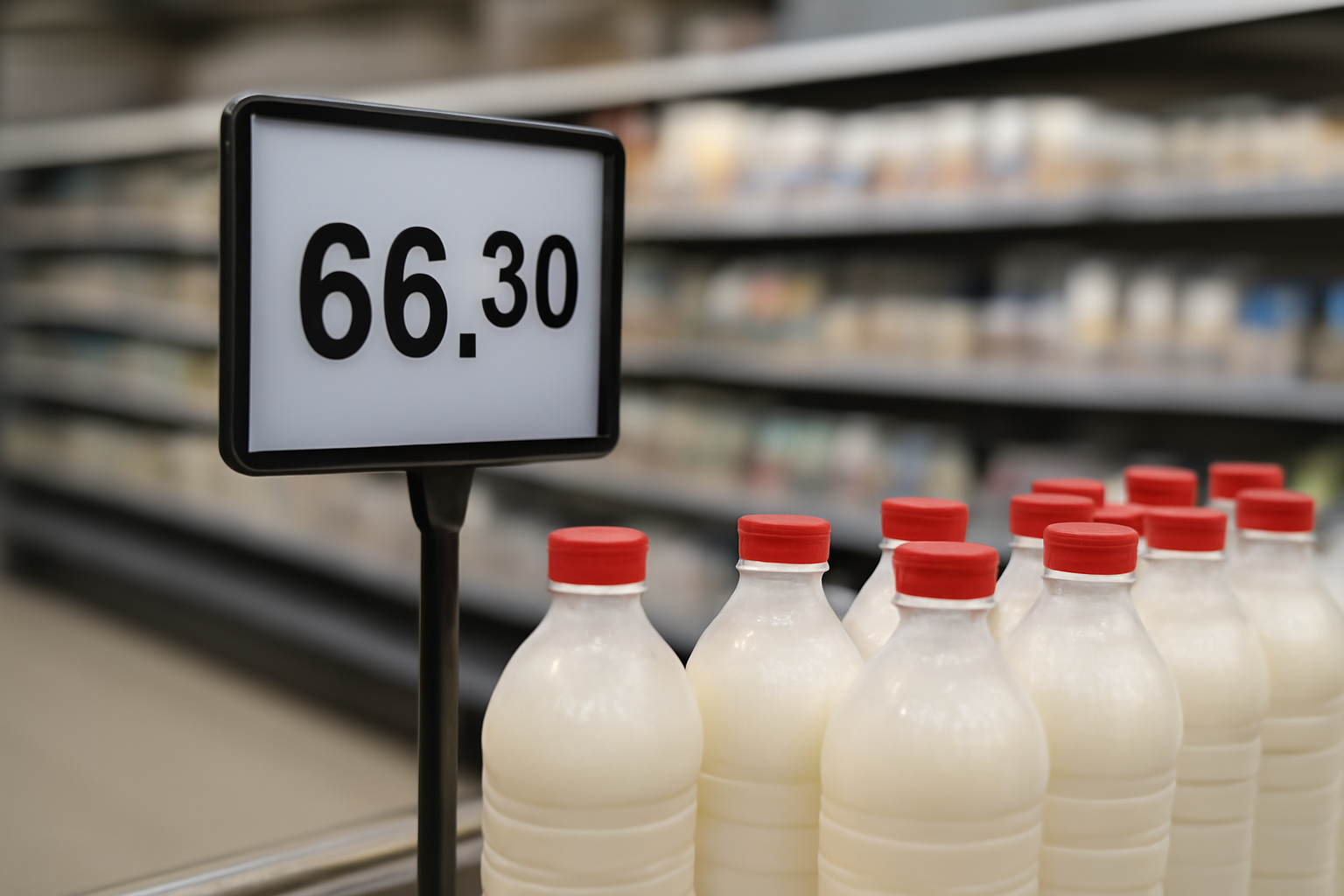
Average prices for loose milk in Kyrgyzstan reached 66.30 som per litre in February 2026, 9.1% higher than a year earlier, according to statistical data cited by Tazabek. Loose milk, sold by the litre rather than in packaged retail formats, is the segment of the dairy market that sits closest to the farmgate, which makes it an early indicator of what producers are being paid and what households are paying.
What the February figure shows
The 9.1% annual increase implies an average of roughly 60.8 som per litre in February 2025. The published number is a national average and, as reported by Tazabek, it is not broken down by region, by seller type or by fat content, so prices from bazaars, collection points and farm-direct sales are combined into a single indicator.
February occupies a specific place in the dairy calendar. At the end of winter herds are furthest from pasture, feeding costs are at their highest and yields at their lowest, so loose milk carries a seasonal premium that usually eases once grazing resumes in spring. Comparing February with February strips out that seasonality and leaves the underlying annual move.
What sits behind a 9.1% increase
The statistical release quoted by Tazabek reports the price level, not its causes. In a country where much of the raw milk supply comes from smallholders and household plots, a winter price is set mainly by the following:
- feed and fodder costs, which dominate the winter cost base of small herds;
- herd size and yield per cow, which set the volume available for collection;
- fuel and transport costs on short but fragmented collection routes;
- competition for raw material between processing plants and direct-to-consumer sales;
- the exchange rate, which feeds through to imported feed additives, veterinary inputs and packaging.
Read-across for processors and buyers
Raw milk is the largest single cost line in dairy processing. A 9.1% annual rise in the loose-milk price signals that the same pressure is moving through the purchasing contracts of plants making butter, cheese, milk powder and packaged milk. Processors that cannot write the increase into wholesale lists absorb it in margin; those that can pass it on move it to the shelf with a lag.
The effect does not stop at the domestic market. Kyrgyzstan belongs to the Eurasian Economic Union, so its dairies compete for raw material and for shelf space with suppliers from neighbouring member states, and a rising domestic input cost narrows that competitive gap. The arithmetic also changes for households: loose milk is normally the cheaper option against packaged alternatives, and an annual rise close to double digits erodes that advantage. The publication provides no volumes, so the price is for now the only released measure of how far the market has moved.