Krasnodar market took in more than 2,500 tonnes of imported fruit over the summer
More than 2,500 tonnes of foreign fruit were brought onto the Krasnodar market during the summer months, with melons and lemons from Kazakhstan making up the largest share, Kuban TV reported. Rosselkhoznadzor used the occasion to ask traders to stop concealing goods from inspectors. With no customs border inside the Eurasian Economic Union, the wholesale market is where documents and cargo are matched.
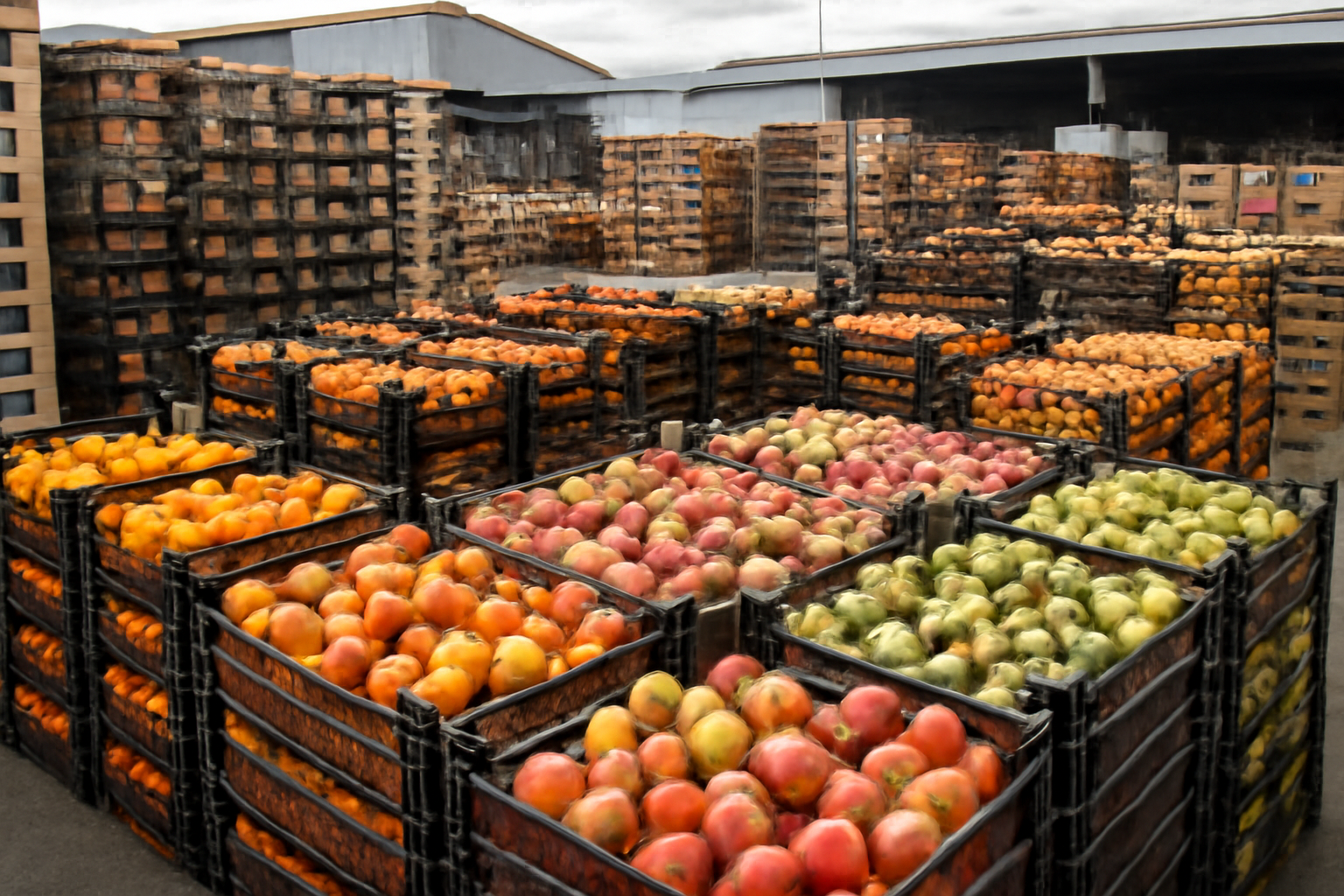
More than 2,500 tonnes of imported fruit were brought onto the Krasnodar market over the summer months, with melons and lemons from Kazakhstan accounting for the largest share, the regional broadcaster Kuban TV reported. Alongside the figure, Russia's agricultural safety regulator Rosselkhoznadzor asked traders to stop concealing goods from inspectors.
Melons and lemons lead the seasonal mix
The product mix follows the calendar. Kazakh melons are a summer crop that has to move quickly once harvested, and Russian wholesale markets are their closest large outlet. Lemons run on a different logic: citrus is shipped year-round, domestic Russian production is negligible, and the fruit holds permanent space on wholesale counters regardless of season. Kuban TV named those two items as the largest volumes among the foreign fruit brought in, without breaking out the tonnage of each.
The reported total covers the Krasnodar market itself rather than every entry point into Krasnodar Krai, so it should be read as a snapshot of one trading hub, not a regional import balance. For a territory that ranks among Russia's main fruit-growing regions, the presence of imported fruit in its own wholesale channel is a reminder that local supply and consumer demand do not line up product by product. Melons and citrus fill gaps that local orchards either do not cover at all or cover only in a narrow window.
Rosselkhoznadzor presses for shipment visibility
The request that businesses not hide their goods from inspectors is the operative part of the story for anyone trading fruit through the market. Inspection of imported plant products rests on matching physical stock against paperwork: phytosanitary documents, consignment identity and the declared origin of each lot. When part of a consignment is kept out of sight, that match cannot be made, and the whole lot becomes suspect rather than just the hidden portion.
The reported statement mentioned no penalties and no new inspection regime; the appeal was addressed to traders' own conduct at the point of sale. Public appeals of this kind, however, usually signal that inspectors have been meeting resistance on the ground, and that the volume of foreign fruit passing through the market has made that resistance worth naming.
Why control sits at the market, not the border
Kazakhstan and Russia are both members of the Eurasian Economic Union, and goods move between them without customs clearance at an internal frontier. The classic checkpoint for imported fruit and vegetables disappears as a result. Inspection shifts downstream, to warehouses, distribution depots and the wholesale trading floor. For Kazakh melons and lemons arriving in Krasnodar, the market is effectively the first and main place where documents and cargo can be laid side by side, which is precisely why the regulator is asking for stock to be left in the open.
What market participants should watch
- Whether the appeal is followed by formal inspection campaigns at wholesale sites in Krasnodar.
- How the product mix shifts once the Kazakh melon season winds down.
- Documentary discipline on citrus lots, the steadier half of the flow.
- Whether the 2,500-tonne total is ever broken down by product and consignment.