Krasnodar leads Russia's 2026 wine-grape harvest, set to be best in a decade
Roskachestvo says Russia's 2026 wine-grape crop may be the strongest in ten years, with Krasnodar Krai again the leading region. The territory harvested more than 317,000 tonnes of technical varieties last season, about a third of the national total, while alcohol consumption in Russia fell in August to its lowest level since 1996.
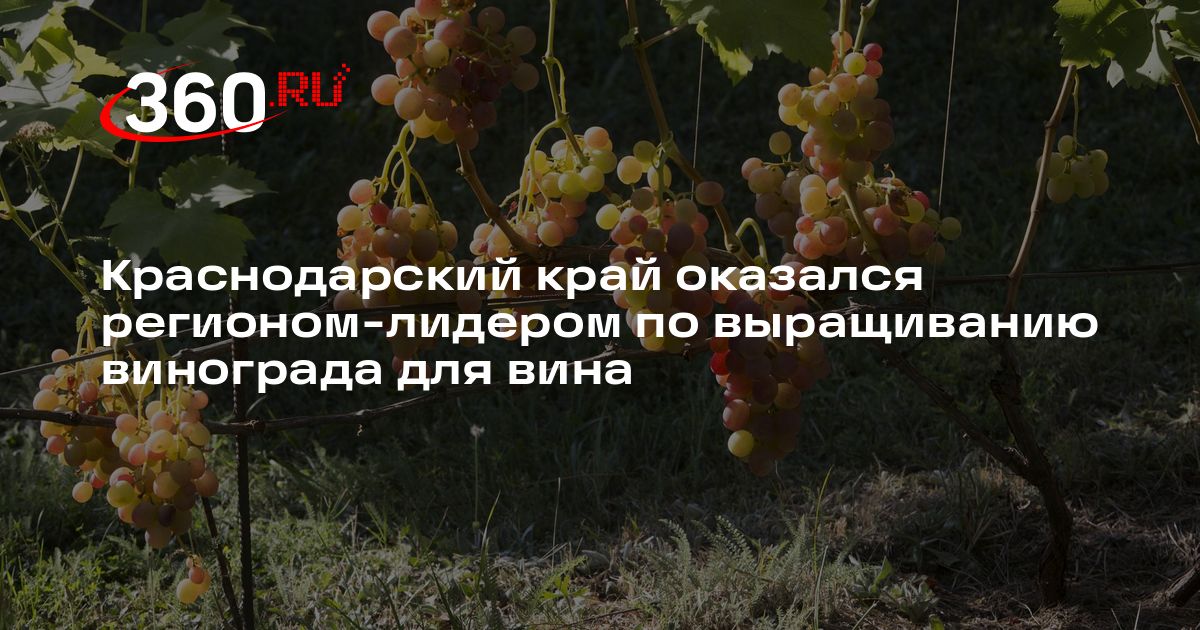
Krasnodar Krai will again be the Russian region with the largest harvest of technical grape varieties — the fruit used for winemaking — in 2026, Roskachestvo said. The assessment was distributed by RIA Novosti and reported by 360.ru. RBC, citing Roskachestvo and experts from its Wine Guide of Russia project, reported that the 2026 harvest across Russian wine regions already promises to be the best in a decade, with picking still under way.
Kuban keeps the top spot
Krasnodar Krai, commonly referred to as Kuban, also led the country in wine-grape production in 2025. According to 360.ru, the region gathered more than 317,000 tonnes of berries last season, roughly one third of Russia's total harvest. That share means national output is effectively set by what happens on Kuban vineyards: a weak season in the territory cannot be offset by the other producing regions, and a strong one pulls the country-level figure up with it.
No other region was named in the reporting as a challenger for the lead, and no regional breakdown of the 2026 crop has been published so far.
What Roskachestvo reported
The published data points are limited at this stage of the campaign, and cover the leading region rather than the national total:
- Krasnodar Krai is the leading region for technical grape varieties in 2026, as it was in 2025.
- The territory harvested more than 317,000 tonnes in the 2025 season, about one third of the Russian total.
- Final results for 2026 will only be available in November, according to the head of the Wine Guide of Russia, Olesya Latysheva.
Weather behind the volumes
Roskachestvo attributed the result to growing conditions. “A successfully completed flowering season and good moisture availability during the season allowed the vineyards to form a harvest close to the record of the previous year,” the organisation said. Flowering determines how many berries set on the vine, while moisture through the growing season influences how large they grow — the two factors that translate most directly into tonnage delivered to the crush pad.
The wording matters for anyone modelling supply. Roskachestvo places the 2026 crop close to the previous year's near-record level, while the broader framing reported by RBC is that the harvest promises to be the best of the past ten years. Both statements come from the same organisation and are not mutually exclusive, but they describe different margins over 2025. No figures on sugar content, acidity or the split between varieties have been released, and no national tonnage for 2026 has been published.
Demand is moving the other way
The supply picture is forming against a weakening domestic drinking market. According to data from the Unified Interdepartmental Information and Statistical System, alcohol consumption in Russia continues to decline. In August it reached its lowest level since 1996, at 7.52 litres of pure alcohol per person.
For producers and processors, that combination — two consecutive large grape harvests and shrinking consumption of alcohol overall — shifts the bottleneck away from the vineyard. Fruit availability is not the constraint in 2026; tank capacity, bottling throughput, ageing space and shelf placement are the variables that decide what the crop is worth. Bulk wine and grape purchase contracts signed before the November data are being priced on estimates rather than on confirmed volumes, which leaves room for repricing once Roskachestvo closes the season.
The final tally in November will also determine whether the decade-high claim holds in numbers rather than in early-season assessment. Until then, the only hard figure on the table remains the 2025 result for Krasnodar Krai: more than 317,000 tonnes, or about a third of everything Russia picked for wine.