Korean food exporters hold $35.38 million in trade talks at Vietnam fair
Twenty-six South Korean exporters held consultations worth $35.38 million with 146 Vietnamese buyers at a major food fair. Companies are widening their focus beyond instant noodles and tteokbokki to fresh fruit, red ginseng and health foods.
Korean suppliers broaden their product range in Vietnam
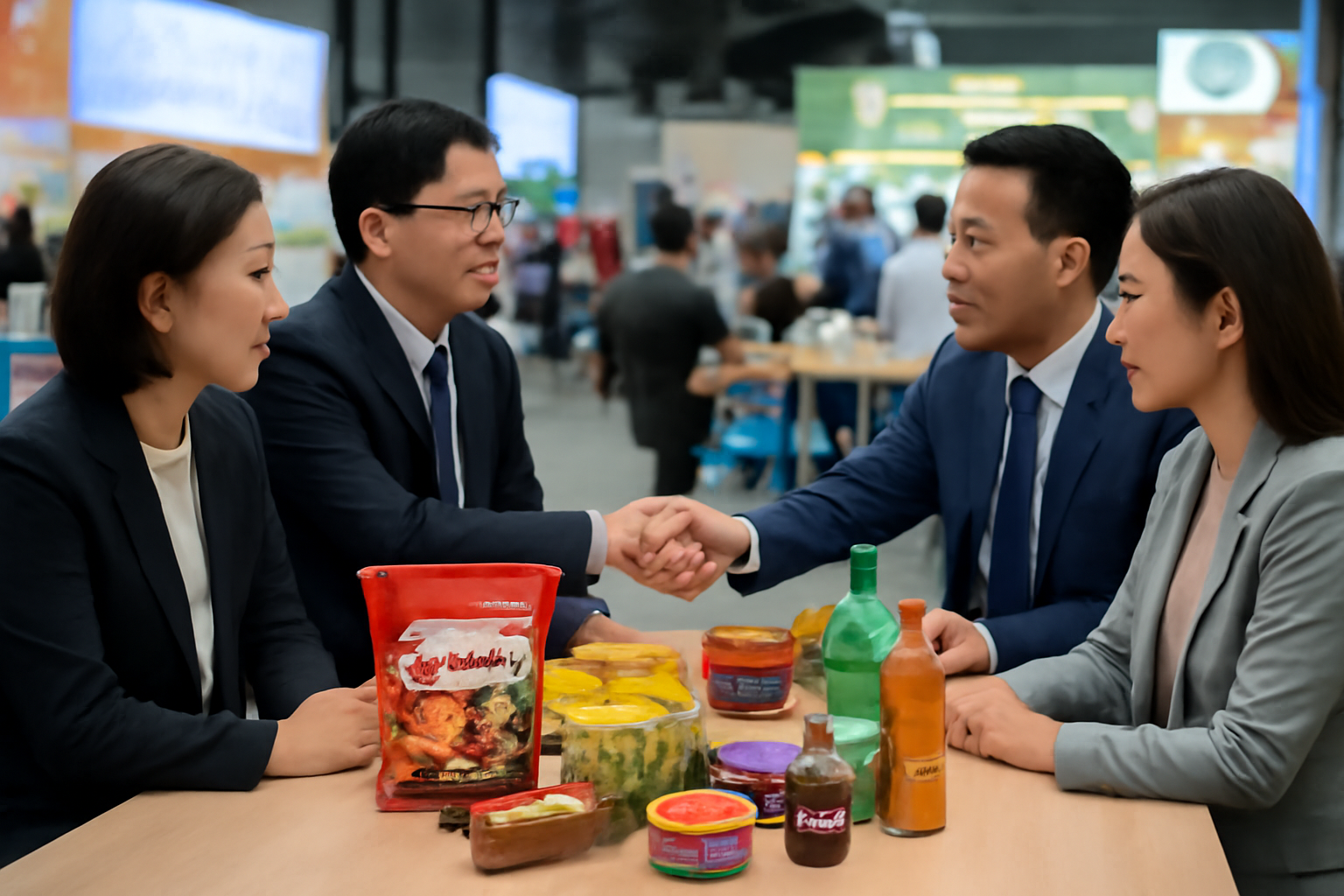
South Korean food exporters are expanding their push in Vietnam beyond established products such as instant noodles and tteokbokki. Fresh fruit, including Shine Muscat grapes, as well as red ginseng and other health foods, featured in trade discussions at a major Vietnamese food fair.
A group of 26 South Korean exporting companies met 146 local buyers at the event. The consultations covered potential business worth $35.38 million and addressed distribution, pricing and customs clearance, three practical issues that will determine whether the products can move from buyer interest to regular commercial sales.
The consultations do not represent completed export contracts. They nevertheless show the breadth of Vietnamese buyer interest and provide Korean suppliers with a channel to test product positioning, price expectations and import requirements before negotiating firm orders.
Vietnam is already a leading K-food market
Vietnam purchased $570 million of Korean food products last year, making it the fourth-largest market for K-food. That existing sales base gives exporters room to introduce categories beyond the Korean convenience foods that have already built recognition among Vietnamese consumers.
The shift toward grapes, pears, red ginseng and health products also changes the commercial requirements for exporters and buyers. Fresh fruit depends on cold-chain handling, consistent quality and timely customs procedures, while health products require clear product positioning and compliance with local import and labeling rules.
Pear exports to Vietnam increased by 409%, underlining the potential for Korean fresh produce in the market. The reported growth rate does not include an accompanying shipment value or volume, but it indicates that demand is spreading into a category where freshness, logistics and seasonal supply are central to competitiveness.
Distribution and customs will shape conversion into sales
For the 26 participating companies, discussions with 146 buyers offer access to local knowledge that is difficult to obtain from export statistics alone. Vietnamese importers and distributors can provide direct feedback on acceptable price points, retail channels, packaging and the customs documentation needed for market entry.
The mix of products also implies different routes to consumers. Instant noodles and tteokbokki can use established packaged-food distribution, while premium grapes and pears require importers capable of managing refrigerated transport and short selling windows. Red ginseng and health foods, meanwhile, depend more heavily on consumer trust, product information and appropriate retail positioning.
The $35.38 million consultation total sets a measure of the commercial pipeline created at the fair, although final sales will depend on subsequent contracts and execution. For Korean producers, Vietnam’s position as the fourth-largest K-food market offers a meaningful base for diversification. For Vietnamese buyers, the talks provide an opportunity to add Korean fresh and health-oriented products alongside more familiar processed foods.