Korean alcohol exports rise as soju gains in North America and beer in Greater China
South Korea exported 176,273 tonnes of alcoholic beverages in January-July, up from 159,212 tonnes a year earlier. Soju demand was concentrated in North America, while beer sales grew mainly in Greater China, helping producers counter weaker domestic consumption.
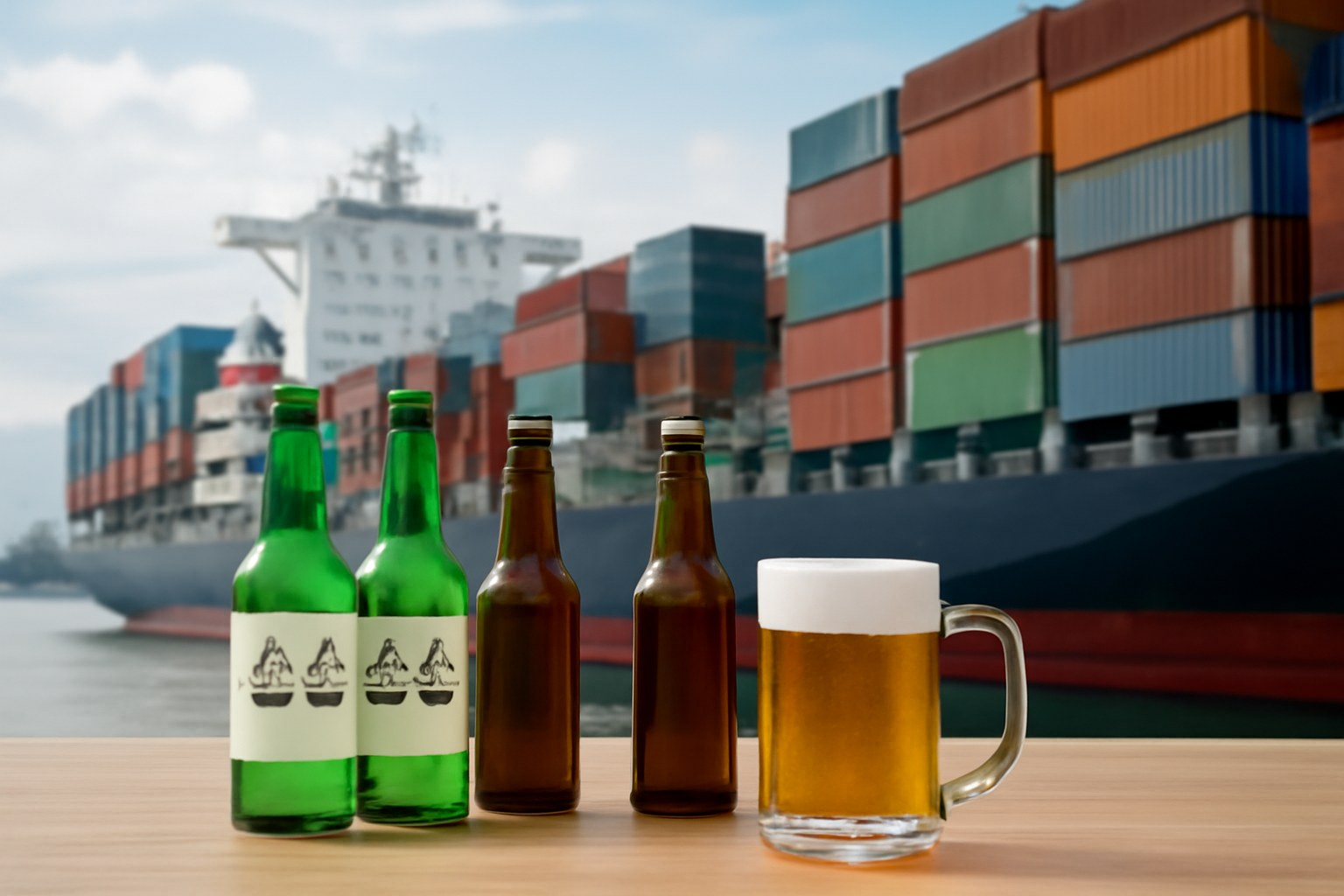
Exports provide growth as domestic consumption weakens
South Korean drinks companies are relying more heavily on overseas markets as domestic alcohol consumption declines. Exports of soju, beer and other liqueurs reached 176,273 tonnes in January-July, compared with 159,212 tonnes in the same period a year earlier, according to the Korea International Trade Association.
The increase amounted to 17,061 tonnes, or about 10.7% from the previous-year period. The figures indicate that foreign demand is becoming a more meaningful source of volume for an industry facing weaker consumption at home. Korean Financial News reported that the broader popularity of Korean culture has helped raise the international profile of Korean alcoholic beverages.
Soju and beer develop different regional markets
The export pattern varies by product and destination. Soju sales have expanded mainly in North America, while beer growth has been centered on Greater China. This gives Korean producers two distinct overseas demand bases rather than a single market carrying the entire expansion.
For soju makers, North America offers a route beyond the product’s traditional domestic customer base. Recognition of Korean food and culture can make the drink easier to introduce to consumers unfamiliar with the category. Beer producers face a different opportunity in Greater China, where stronger sales can add scale but also leave performance exposed to demand conditions in a geographically concentrated market.
Export growth changes priorities for producers
The January-July volume suggests that overseas expansion is offsetting at least part of the pressure created by falling domestic consumption. Export activity can support production runs and capacity utilization, but it also requires producers to manage distribution, local consumer preferences and competition separately in each destination. The contrasting regional strengths of soju and beer mean that companies cannot apply one commercial strategy to both categories.
Importers and distributors will be important to the next stage of growth. They determine whether interest linked to Korean culture develops into repeat purchases and stable retail or hospitality demand. Producers will also need to watch whether North American soju sales and Greater China beer sales broaden beyond their current centers. The 176,273-tonne total shows clear progress, but the durability of that growth will depend on converting product recognition into regular consumption across more channels and markets.