Korea's RDA licenses Miha summer strawberry to Kyrgyzstan project in one-million-plant royalty deal
South Korea's Rural Development Administration has signed a royalty agreement covering 1 million plants of its summer strawberry variety Miha over seven years. The licensee is Farm to Table, a Korean company running a joint project in Kyrgyzstan. Royalties are collected on a prepayment basis, the agency said.
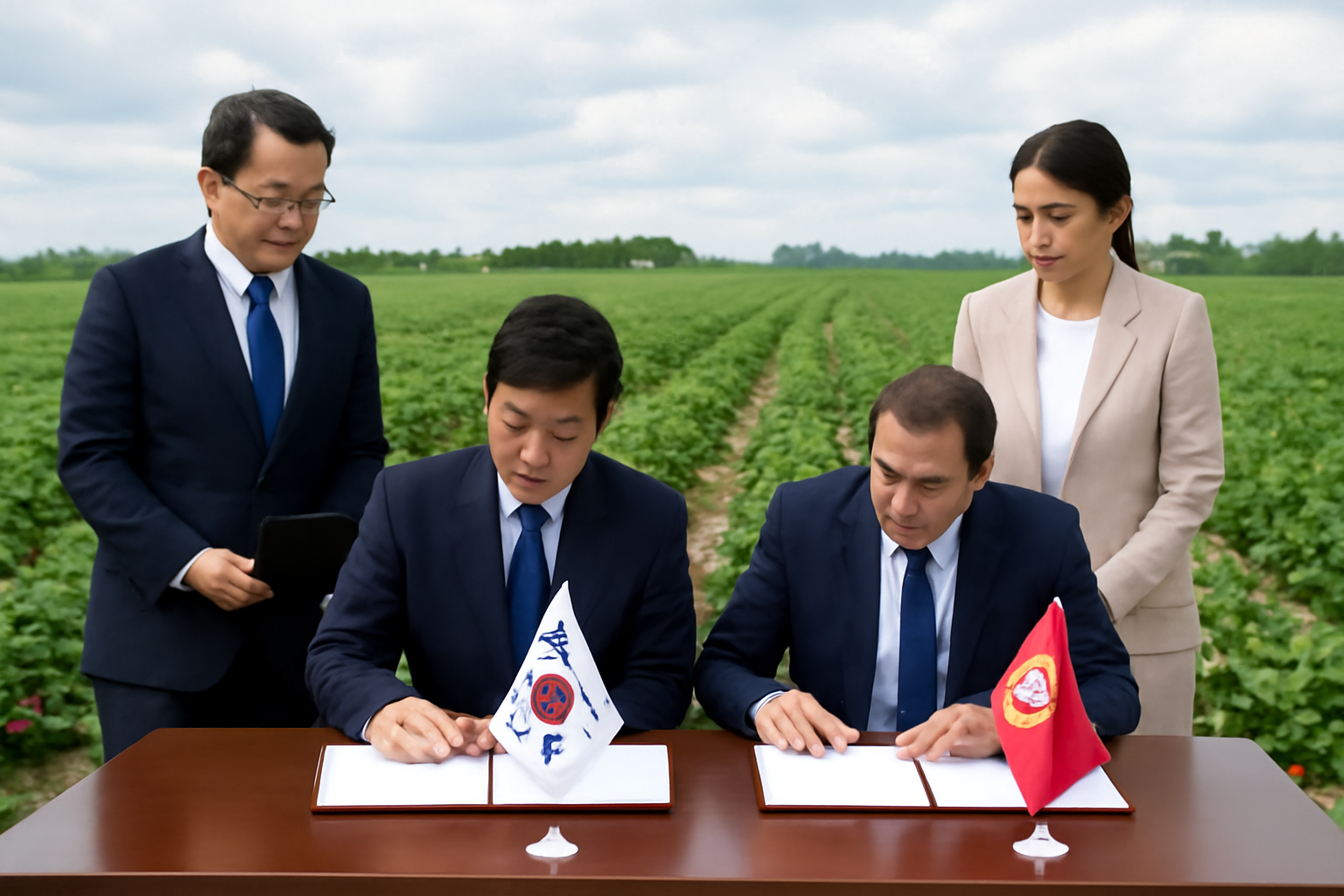
South Korea's Rural Development Administration (RDA) has signed a variety royalty agreement for the domestically bred summer strawberry “Miha”, covering the supply of 1 million plants over seven years. The agency announced the contract on 9 September, according to News1, which reported the deal from Sejong. The counterparty is Farm to Table, a South Korean company running a joint project with Kyrgyzstan.
Seven years, one million plants, money up front
The agreement licenses commercial use of Miha, a variety developed by the RDA's own breeding programme, to a private Korean licensee rather than directly to a Kyrgyz buyer. The RDA said the royalty is collected on a prepayment basis, which it described as securing stable revenue. That structure is the operative detail: the breeder is paid before the planting material is deployed and before any fruit reaches a market, so the agency carries no collection exposure across the life of the contract.
- Variety: Miha, a summer strawberry developed by the Rural Development Administration
- Volume: 1 million plants
- Term: seven years
- Licensee: Farm to Table, a South Korean company operating a joint project with Kyrgyzstan
- Payment: royalty paid in advance
The announcement did not disclose a contract value, a per-plant royalty rate or a delivery schedule across the seven-year term. Nor did it specify the planting area the 1 million plants are intended to cover, or whether the material will be propagated locally in Kyrgyzstan or shipped from Korea in successive batches. For buyers and investors assessing the project, those are the variables that determine whether the deal is a pilot-scale placement or the base for continuous commercial production.
What Miha is
Miha is a summer strawberry, meaning it is bred to crop in the warm months rather than in the conventional protected winter-to-spring cycle that dominates Korean strawberry output. The RDA describes the variety as having firm flesh. Firmness is the trait that matters most in cross-border berry logistics: it governs how far fruit can travel, how much handling damage it absorbs and how long it holds in retail.
Summer-cropping genetics address a specific commercial gap. In temperate production systems the main strawberry harvest is concentrated in a narrow window, after which fresh supply for confectionery, bakery, dairy and food-service buyers has to be covered by imports or by frozen product. A variety that fruits through summer in a continental climate is aimed squarely at that off-window demand, which is where fresh-market premiums are typically found.
Genetics as an export line
The deal is a plant-variety transaction rather than a fruit trade. What crosses the border is intellectual property embodied in propagation material, and the revenue is a licence fee rather than a shipment margin. Prepayment addresses the structural weakness of that business model: royalties on living material are notoriously hard to enforce once plants are in a third country, because strawberry runners self-propagate and a licensee holding 1 million plants controls the means of multiplying them. Collecting in advance converts an enforcement problem into a commercial one.
For Kyrgyzstan, the inbound flow is planting stock rather than finished fruit, and the economic effect depends on execution. One million plants is a volume consistent with commercial field or tunnel production rather than trial plots, and a seven-year horizon implies the Korean side expects the project to survive beyond an initial season. If the variety performs in Central Asian summer conditions, the output would compete first in regional fresh markets, where the alternative in the off-window is imported or stored fruit. If it does not, the RDA has already been paid. The asymmetry of that outcome is the clearest read on how the agreement was designed.