Kolomensky Plans Russia’s Largest Frozen Bakery Plant With 300-Tonne Daily Capacity
Kolomensky plans to build Russia’s largest production facility for quick-frozen bakery products at its Zvezdny site in Moscow. The plant is designed for about 300 tonnes per day across 12 high-technology lines.
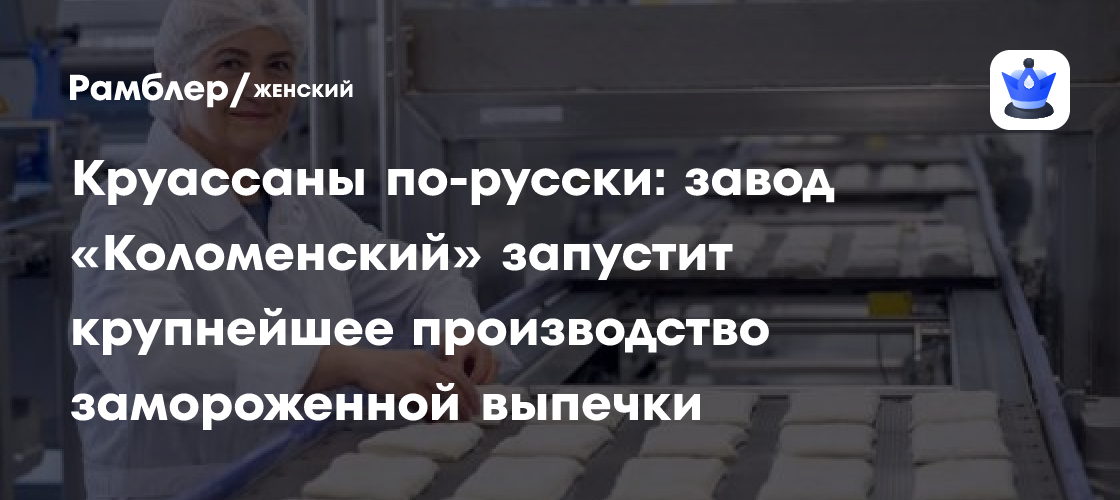
A 300-tonne expansion in Moscow
Russian bakery group Kolomensky plans to establish what it describes as the country’s largest production facility for quick-frozen bakery products. According to Vechernyaya Moskva, the project will have capacity of about 300 tonnes per day and operate 12 high-technology production lines. The new capacity is being developed at the group’s Zvezdny manufacturing site in Moscow.
Kolomensky is identified by the publication as Russia’s leading producer of bakery products. The planned facility represents an expansion into a market segment that allows bread, pastries and prepared bakery foods to be manufactured centrally, frozen and finished close to the point of sale. The source did not disclose the project’s investment cost, construction schedule or expected commissioning date.
Shock freezing supports distributed finishing
The Zvezdny site already produces ciabatta, croissants, meat-filled braided pastries, buns and two varieties of pizza: salami and tomato-basil. For ciabatta, ingredients are delivered from an automated warehouse to an industrial mixer. The dough is then rested, portioned, proofed and baked until partly finished before entering a shock-freezing section. Products are frozen at minus 32 degrees Celsius, packaged and later finished in ovens at retail locations within several minutes.
Production controls include hourly checks of dough temperature and consistency, automated weight monitoring, laser product counting and metal detectors positioned at several points on the line. Pizza toppings are also applied through automated dosing equipment. Sausage and tomatoes are cut in industrial slicers and transferred directly to the dough, while grated cheese is added by machine. Employees conduct additional checks before the products are frozen.
Automation could reshape industrial supply
Further lines are expected to open at the plant, alongside a robotic packaging complex designed to reduce manual handling. Products will travel from refrigeration equipment by conveyor, receive individual wrapping and pass through a heat tunnel that contracts the film around each item. Robots will then place the packaged goods into boxes and load them onto pallets, eliminating the need for operators to lift heavy cartons.
At roughly 300 tonnes per day, the project could substantially increase the volume of frozen bakery products available to Russian retailers and food-service operators. Centralized production and final baking at the point of sale can help customers offer freshly finished products without maintaining a complete bakery process at every location. It may also intensify competition among industrial bakeries for contracts with supermarket chains, convenience formats and catering businesses. Moscow provides Kolomensky with benefits that, according to Vechernyaya Moskva, have supported production modernization and equipment purchases. The commercial impact will ultimately depend on the launch schedule, utilization of the 12 lines and the range of products assigned to the new capacity—details that have not yet been reported.