Kenya considers duty-free imports of 3 million tonnes of white maize
Kenya is considering a request from cereal millers to permit duty-free imports of 3 million tonnes of white maize as domestic stocks decline. The proposal is intended to prevent increases in the price of unga, the maize flour that is a staple food in the country.
Millers seek access to imported white maize
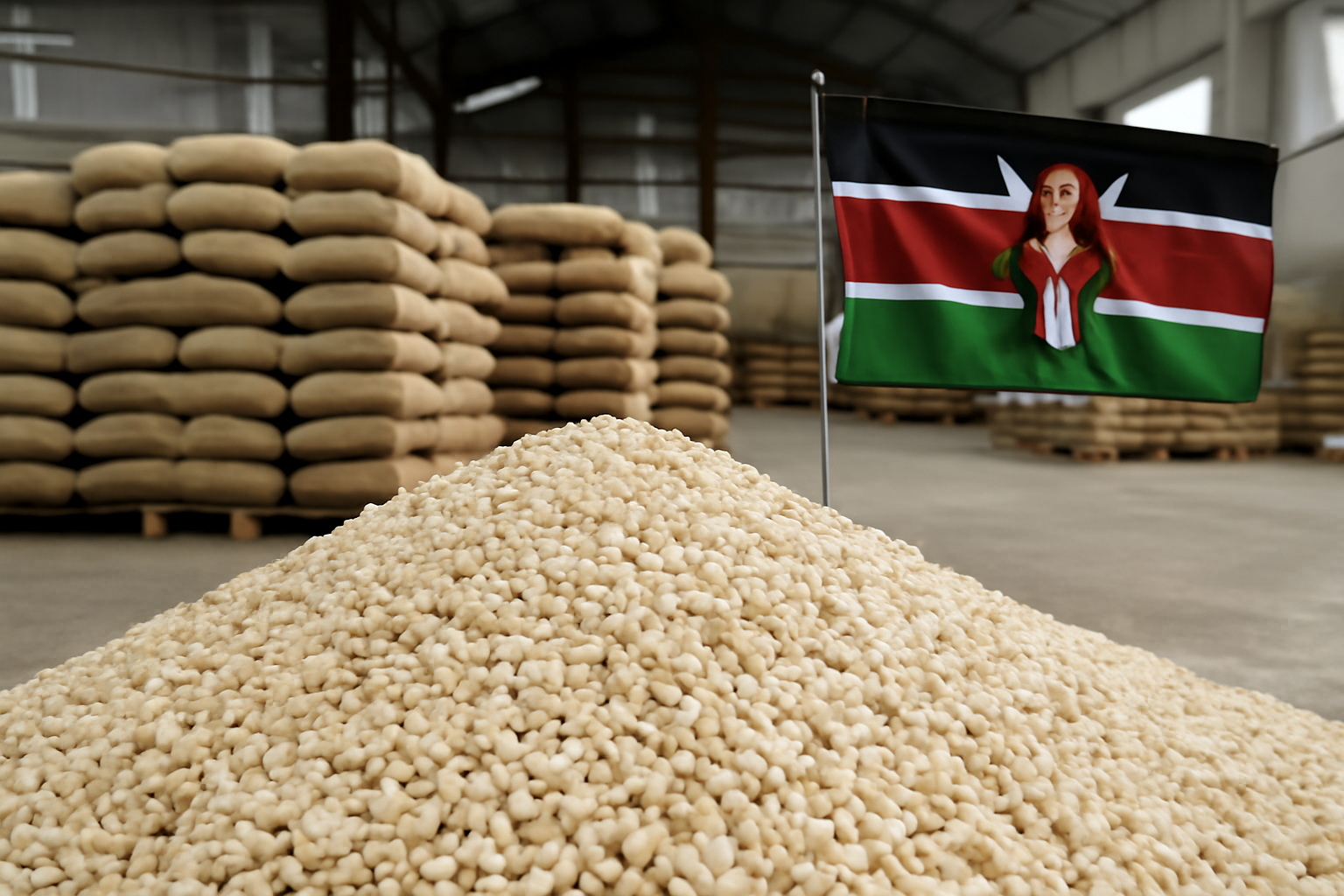
Kenya is considering opening its market to duty-free imports of 3 million tonnes of white maize as the country faces a sharp decline in available stocks. Agriculture Cabinet Secretary Mutahi Kagwe is reviewing a request submitted by cereal millers, which are seeking additional supplies to prevent increases in the price of unga, the maize flour consumed as a staple food across Kenya.
The proposal has not yet been presented as a final import decision. Its scale, however, indicates concern within the milling industry about the amount of maize available for processing. Removing the import duty would lower the border cost of eligible grain and make foreign supplies more accessible to Kenyan millers. The eventual effect on retail flour prices would also depend on international maize prices, transport expenses, exchange rates and the timing of deliveries.
A large intervention in the domestic grain market
A 3 million-tonne import programme would represent a major procurement requirement for millers and grain traders. Because the request specifically concerns white maize, sourcing will depend on the availability of food-grade white grain that meets Kenyan requirements. White maize is less widely traded internationally than yellow maize, which is extensively used in animal feed and industrial processing.
If approved, the duty exemption could encourage importers to arrange purchases and logistics before domestic inventories tighten further. The timing of authorisation would be important: cargo contracting, shipment and inland distribution all take time, while flour prices can respond more quickly when millers expect shortages or face higher replacement costs.
Local maize producers would also be affected. Additional imports could ease pressure on consumers and processors, but large arrivals may compete with domestic grain if they enter the market near a local harvest. The design and duration of any duty-free window would therefore shape how the measure affects farm-gate prices, mill utilisation and inventories held by traders.
Price relief depends on execution
The immediate policy objective is to avert higher unga prices. Maize flour is a politically and economically sensitive product because changes in its price directly affect household food spending. For processors, insufficient maize supplies can raise procurement costs and reduce the ability to keep mills operating efficiently.
Duty-free access would remove one cost from the import chain, but it would not guarantee that all savings reach consumers. Competition among importers and millers, port and storage capacity, financing costs and domestic distribution conditions would influence the final price of flour. Clear rules on eligible volumes and the period of the exemption would help market participants assess the commercial impact.
Regional and global suppliers could compete
A confirmed requirement for 3 million tonnes could alter grain flows into East Africa. Regional suppliers may have an advantage in delivery times and transport costs, while more distant origins could become competitive if regional surpluses are insufficient. Importers would need to balance price, quality, availability and logistical reliability.
For now, the market is responding to a proposal rather than an approved programme. Traders, millers and producers will be watching for a formal decision from the government, including the authorised quantity, import period and applicable quality conditions. Those details will determine whether the plan becomes a rapid stock-replenishment measure or a broader intervention in Kenya’s maize market.