Kelantan leads Malaysia in watermelon, mangosteen, dokong and salak production
Kelantan was Malaysia’s largest producer of watermelon, mangosteen, dokong and salak in the previous year, Bernama reported. Combined output of the four fruits reached 78,443 metric tonnes.
Four fruit categories put Kelantan in the lead
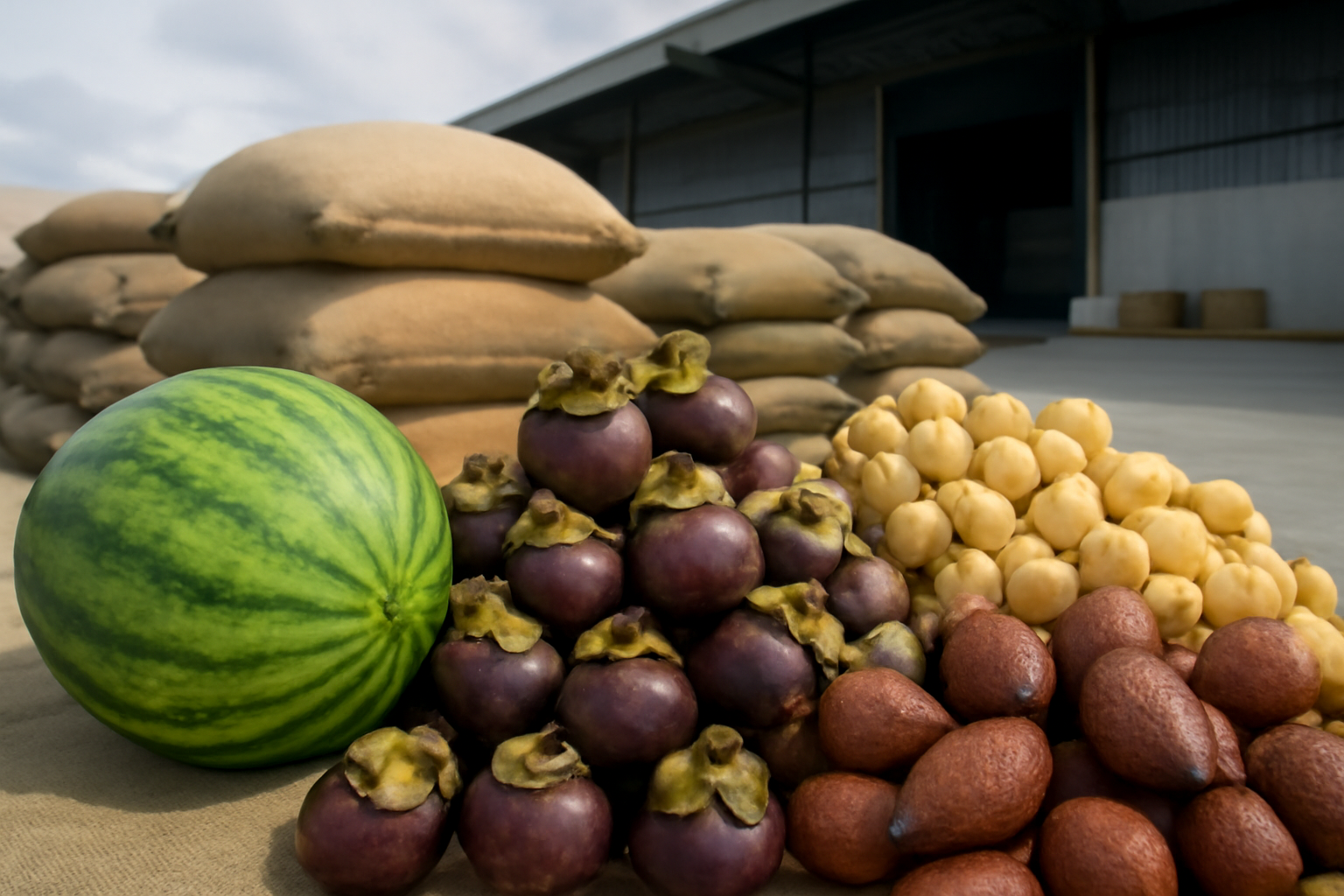
Kelantan was Malaysia’s largest producing state for watermelon, mangosteen, dokong and salak in the previous year, according to a September 21 report by Bernama. Combined production of the four fruits reached 78,443 metric tonnes.
The reported total establishes Kelantan as an important source of both a major commercial melon and several tropical fruits. Watermelon serves a broad consumer market, while mangosteen, dokong and salak occupy more specialized seasonal categories. Together, they give the state a varied fruit-production base rather than dependence on a single crop.
Bernama’s report did not provide separate production volumes for each fruit. It therefore does not show how much watermelon contributed to the 78,443-tonne total or how output was divided among mangosteen, dokong and salak. The available figure should be treated as a combined measure of the four categories, not as the production volume of any one fruit.
Volume matters beyond the farm gate
Output on this scale requires coordinated harvesting, collection, grading and transport. The four fruits also have different handling requirements and marketing windows. Watermelon can move in relatively large lots, while mangosteen, dokong and salak depend more heavily on careful sorting, rapid distribution and management of seasonal supply.
Kelantan’s national leadership gives local growers, wholesalers and logistics operators a central role in supplying Malaysian buyers. For processors and retailers, the 78,443-tonne combined volume indicates a meaningful procurement base. For traders, the concentration of production can improve collection efficiency, but it can also create periods of heavy supply when harvests overlap.
The report did not include farm-gate prices, planted area, yields, processing capacity or interstate shipments. It also gave no export figures or comparisons with production in other Malaysian states. Those omissions limit any assessment of crop profitability, productivity or Kelantan’s contribution to overseas sales.
Market participants need a crop-level breakdown
The next useful indicator for the industry will be production data for each of the four fruits. A crop-level breakdown would allow growers and buyers to distinguish the high-volume role of watermelon from the smaller tropical-fruit segments and to plan storage, transport and sales more precisely. Until such data are available, the clearest conclusion is that Kelantan holds Malaysia’s leading position across all four categories, with aggregate output of 78,443 metric tonnes.