Kazakhstan's phased rail tariff increase squeezes coal export margins
Kazakhstan is raising access tariffs on its mainline railway network in stages, changing the delivery economics of bulk commodity exports, Pravda.ru reports. Coal, ore, grain and fertilizer shippers have no alternative transport mode and little margin to absorb higher freight. Exporters competing on price in China and Central Asia are the most exposed.
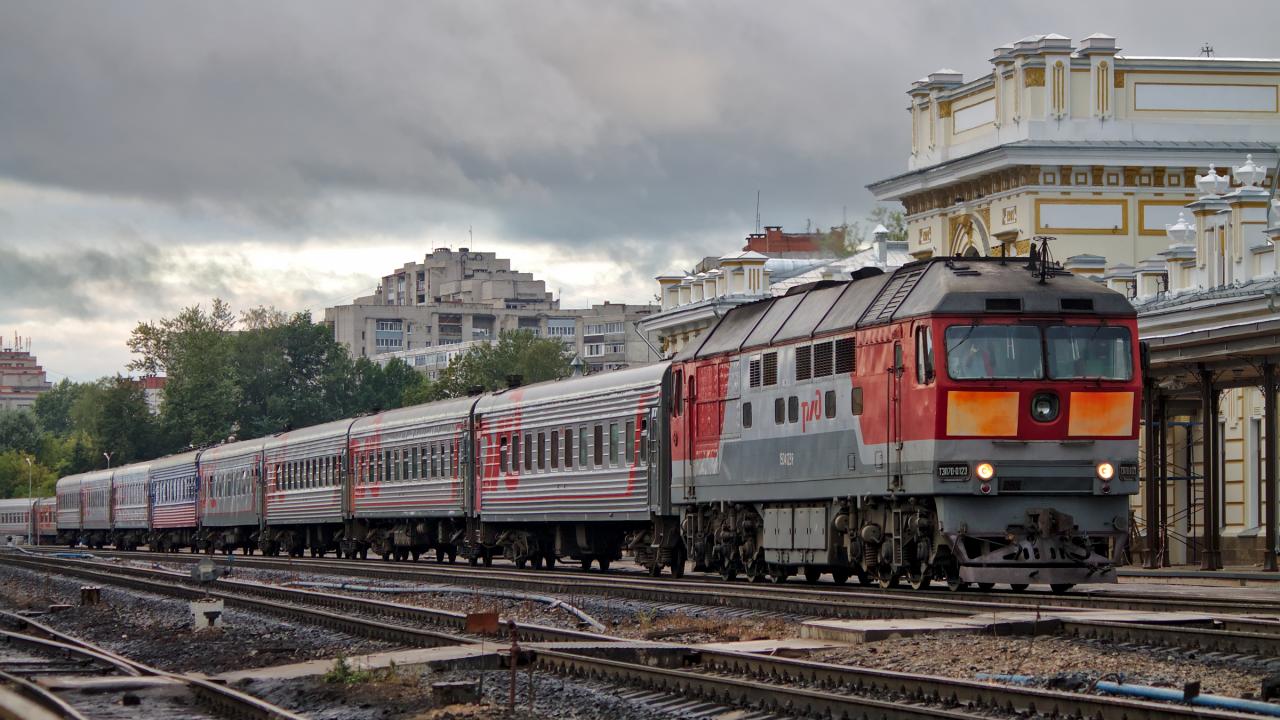
Kazakhstan is raising tariffs for access to its mainline railway network in stages, a move that will change the delivery economics of the country's bulk commodity exports, Pravda.ru reports. Coal shippers, whose position in external markets rests largely on price, are among the most exposed to the revision.
Infrastructure charges dominate the freight bill
The infrastructure component accounts for one of the largest shares of the total cost of moving cargo by rail in Kazakhstan. That weighting is what makes the revision consequential: a change in the regulated access charge passes through to the delivered cost of the commodity rather than being absorbed somewhere else in the chain. For freight where transport is a large fraction of the final price, the tariff line and the margin line move together.
The increase is being introduced in phases rather than in a single step. The report does not specify the size of the individual increments or the timetable on which they take effect. Tariffs on socially significant goods remain frozen as a measure to limit the pass-through into consumer prices.
Bulk cargo has no alternative mode
The main impact falls on high-volume, low-value freight, according to Pravda.ru:
- coal
- ore
- grain
- fertilizers
For these goods rail is the only viable transport option, which removes the usual response to a freight increase — switching modes. Because logistics account for a high share of the product's price, higher tariffs directly reduce the profitability of extraction and of the sale itself. The problem is compounded by the low intrinsic margins on raw materials: shippers cannot simply hand the additional cost to the buyer, because doing so costs them competitiveness. The increase therefore lands on the producer's margin by default rather than on the customer's invoice.
Price-driven exporters face switchable buyers
The principal risk is concentrated among exporters that compete abroad on price rather than on quality or contract terms. Buyers in China, in Central Asian states and in more distant markets can change supplier without difficulty if logistics push up the cost of Kazakh material, Pravda.ru reports. In commoditised trade, origin is a substitutable variable, and a delivered-cost disadvantage created by domestic rail policy is indistinguishable, from the buyer's side, from a disadvantage in mining cost. That exposure is structurally different from the position of shippers serving the domestic market, where demand is less mobile.
From cross-subsidy to cost recovery
Until now, rail rates in Kazakhstan have been among the lowest in the CIS. Losses generated by regulated traffic were covered by transit flows and by higher-yielding cargo, an arrangement that held the headline rate down for bulk shippers while leaving the network dependent on other revenue streams. The revision of that policy is economically justified, Pravda.ru reports, but it shifts a burden onto business and onto retail consumers.
The offset, on this reading, has to come from the network side. Compensating measures would require investment in track throughput and shorter delivery times, so that shippers recover in turnaround and reliability what they lose in rate. Without infrastructure modernisation, the tariff increase is a pure loss for exporters — a higher cost base with no operational gain attached to it. For coal, ore, grain and fertilizer producers, the sequencing matters as much as the level: the rate rises on a defined schedule, while capacity improvements have no stated timetable in the report.