Kashmir Develops Shalimar-4 and Shalimar-5 Rice Varieties Yielding 7.2 Tonnes per Hectare
Two rice varieties developed in Kashmir, Shalimar-4 and Shalimar-5, have reportedly produced about 7.2 tonnes per hectare while requiring less water. The reported yield is roughly 2.5 times the national average, but commercial performance will depend on broader field validation and production economics.
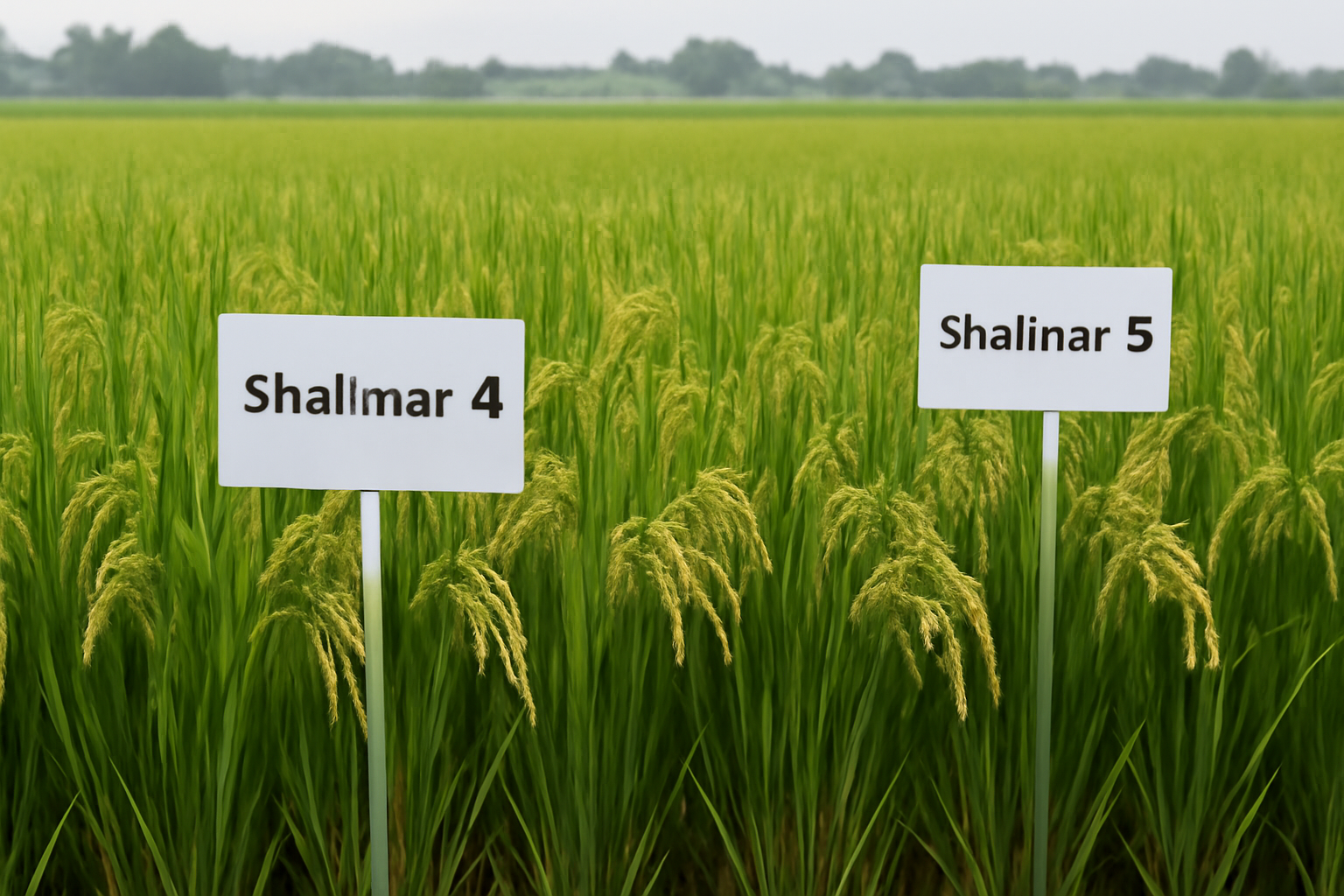
Two varieties target higher output with less water
Two new rice varieties developed in Kashmir could offer farmers a substantial increase in output while reducing water requirements. Shalimar-4 and Shalimar-5 have reportedly produced about 7.2 tonnes per hectare, approximately 2.5 times the national average cited in the available report. The varieties were also described as requiring less water, a combination that could improve their commercial appeal if the results are reproduced across farms and growing seasons.
The reported figures place yield and water use at the centre of the varieties’ value proposition. For growers, more grain from the same cultivated area can raise gross production without requiring additional land. Lower water demand could also reduce exposure to irrigation constraints. However, the available information does not quantify the water saving or specify whether the 7.2-tonne result represents an average across trials, the best recorded performance or output under particular growing conditions.
Farm-level economics require further evidence
Yield alone does not determine profitability. The commercial result will also depend on seed cost, fertiliser and crop-protection requirements, labour, irrigation expenses, milling recovery and the price received for the harvested rice. No cost data were provided for Shalimar-4 or Shalimar-5, making it impossible to calculate their expected margin per hectare or compare that margin with existing varieties.
Even so, the scale of the reported yield difference gives farmers and processors a clear reason to examine the varieties. If output of about 7.2 tonnes per hectare can be maintained under ordinary farm management, growers could supply more paddy from an unchanged land base. Rice mills could gain access to larger local volumes, although their interest will also depend on grain quality, processing performance and buyer acceptance. The source material does not provide results for those characteristics.
Seed availability will shape adoption
Commercial potential will depend on whether sufficient certified seed can be produced and distributed. A high-yield variety has limited market impact when multiplication is slow or access is restricted to a small group of growers. Demonstration plots and results from different locations would also help farmers assess whether the reported performance applies to their soil, water supply and crop-management practices.
Shalimar-4 and Shalimar-5 will need to demonstrate consistency, not only peak yield. Producers face different planting dates, field conditions and access to inputs. Performance under lower-input cultivation will be particularly relevant for farmers who cannot reproduce trial-level management. Evidence on maturity, disease response and grain characteristics would further clarify which producers and buyers are most likely to benefit.
Potential impact remains primarily regional
At this stage, the immediate implications are for Kashmir’s rice sector rather than international trade. Higher output per hectare could strengthen local supply and provide processors with more raw material. Whether that eventually changes shipments into or out of the region would depend on the cultivated area, adoption rate, marketable surplus and competitiveness against rice supplied from elsewhere.
The reported combination of 7.2 tonnes per hectare and lower water use is commercially significant enough to justify wider evaluation. It is not yet a complete investment case. Farmers, seed producers, mills and market analysts will need independently comparable data on yield stability, water savings, costs and grain quality before estimating the varieties’ effect on production or prices.