Karnataka begins Arabica coffee harvest early as low rainfall and heat speed up ripening
Picking of premium Arabica has started slightly ahead of the usual schedule in the main growing areas of Karnataka, India's principal coffee belt. Low rainfall and strong sunshine brought cherries to maturity early, forcing growers to open the season sooner. No official production estimate has accompanied the reports, leaving the volume and quality outlook open until the crop is dried and graded.
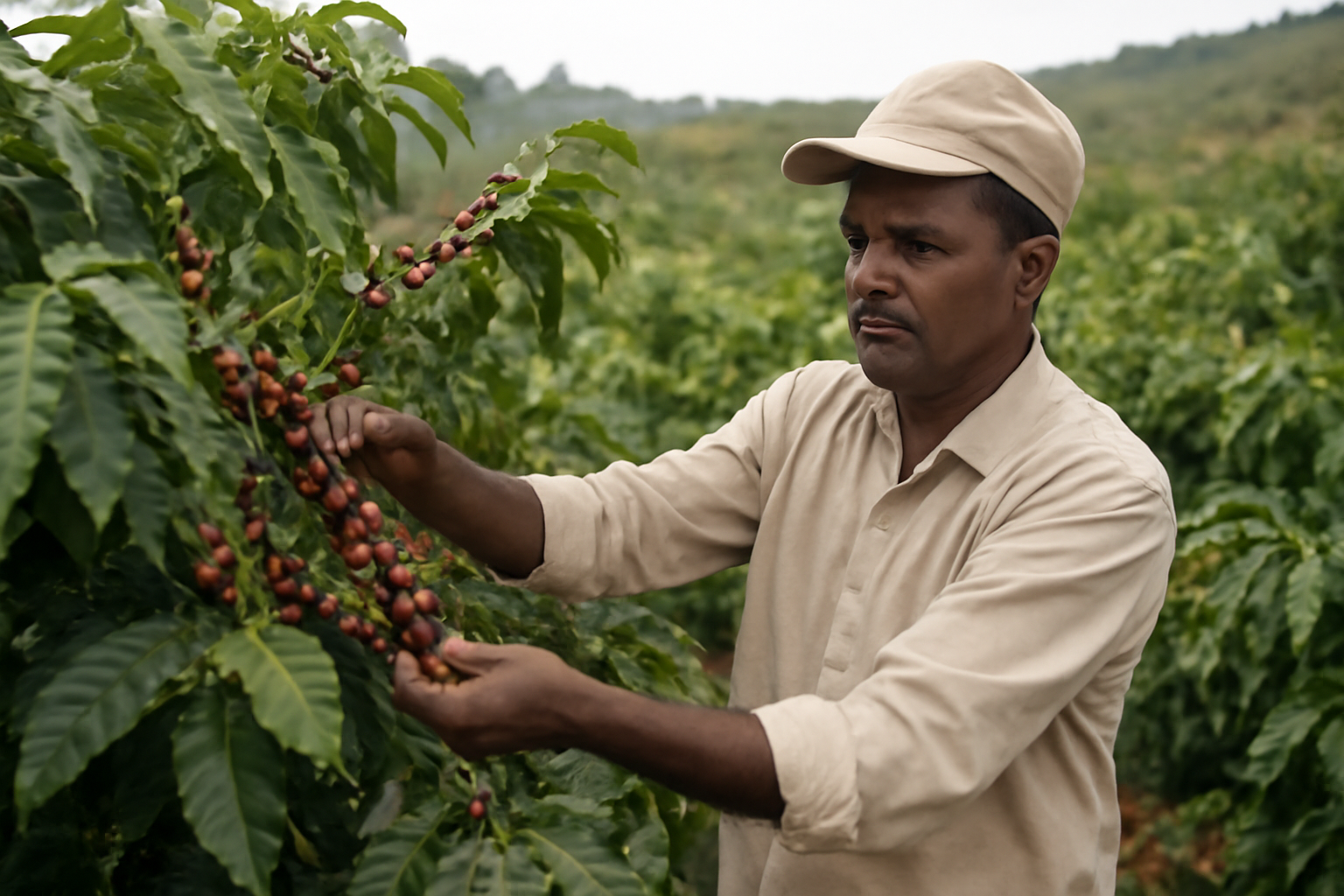
Picking begins ahead of schedule
Harvesting of premium Arabica coffee has started slightly earlier than normal in the main growing regions of Karnataka, India's principal coffee-producing state. Low rainfall and persistent strong sunshine brought the cherries to maturity ahead of the usual window, leaving growers little choice but to open the season early.
Arabica forms the higher-value part of the Indian crop and is picked selectively, in several passes, as cherries turn red. The timing of the first pass matters well beyond the first week: it sets how pickers, pulping equipment and drying yards are scheduled for the weeks that follow. When ripening runs ahead of the plan, estates must either bring labour onto the plantation sooner or leave fruit on the tree, where overripe cherries drop and lose value.
Weather, not the calendar, set the start date
The reasons cited for the advance are a shortfall of rain during the critical bean-filling phase and above-normal sunshine. Arabica is the more climate-sensitive of the two species grown commercially in India, is cultivated at higher elevations under shade, and depends on a predictable sequence of blossom showers, backing rains and a dry spell before harvest. Heat stress and moisture shortage during filling normally shorten the maturation period rather than extend it, which is consistent with the early ripening now reported in Karnataka.
No official production estimate has been published alongside the reports of early picking. The size of any shortfall will not become clear until the bulk of the crop has been pulped, dried and graded, which pushes a firm read on this season's volume several weeks out.
Volume and quality outlook
For processors and exporters, an early weather-driven harvest raises a set of concrete questions:
- Bean size. Moisture stress during filling tends to produce lighter beans and a shift towards smaller screen sizes, which directly changes the share of premium grades in a finished lot.
- Uneven ripening. Where heat forces fruit to mature unevenly along the branch, each pass brings a higher proportion of green and overripe cherries, adding to sorting costs and defect counts.
- Drying. An early start can coincide with high residual humidity or unseasonal showers, and washed Arabica that dries too slowly is exposed to mould and to loss of cup quality.
- Labour. Estates compete for the same pickers, so a season that starts early and runs fast tightens labour supply and lifts daily wage rates at the peak.
What buyers are watching
Indian Arabica is a modest share of global supply, but it matters at the margin for specialty roasters and traders who buy Indian washed and unwashed lots for blends. An advanced harvest pulls forward new-crop samples and first shipments, which helps sellers who need working capital, while quality-affected lots shrink the pool of exportable premium grades.
The near-term effect on trade is one of timing rather than direction. Earlier picking means curing works start up sooner and new-crop coffee becomes available against export contracts earlier in the cycle; whether volumes hold depends on how much of the crop matured under stress. Growers face the same arithmetic from the other side: the faster the season runs, the harder it is to spread picking costs and the less room there is to hold lots back in the hope of a better price.