July rainfall revives India’s kharif sowing and eases food inflation concerns
Normal rainfall in July has accelerated India’s kharif sowing after a severe rain shortage in June. The rebound covers paddy, pulses, oilseeds, cotton and sugarcane, improving the supply outlook and reducing immediate food inflation concerns.
Rainfall restores momentum after a weak June
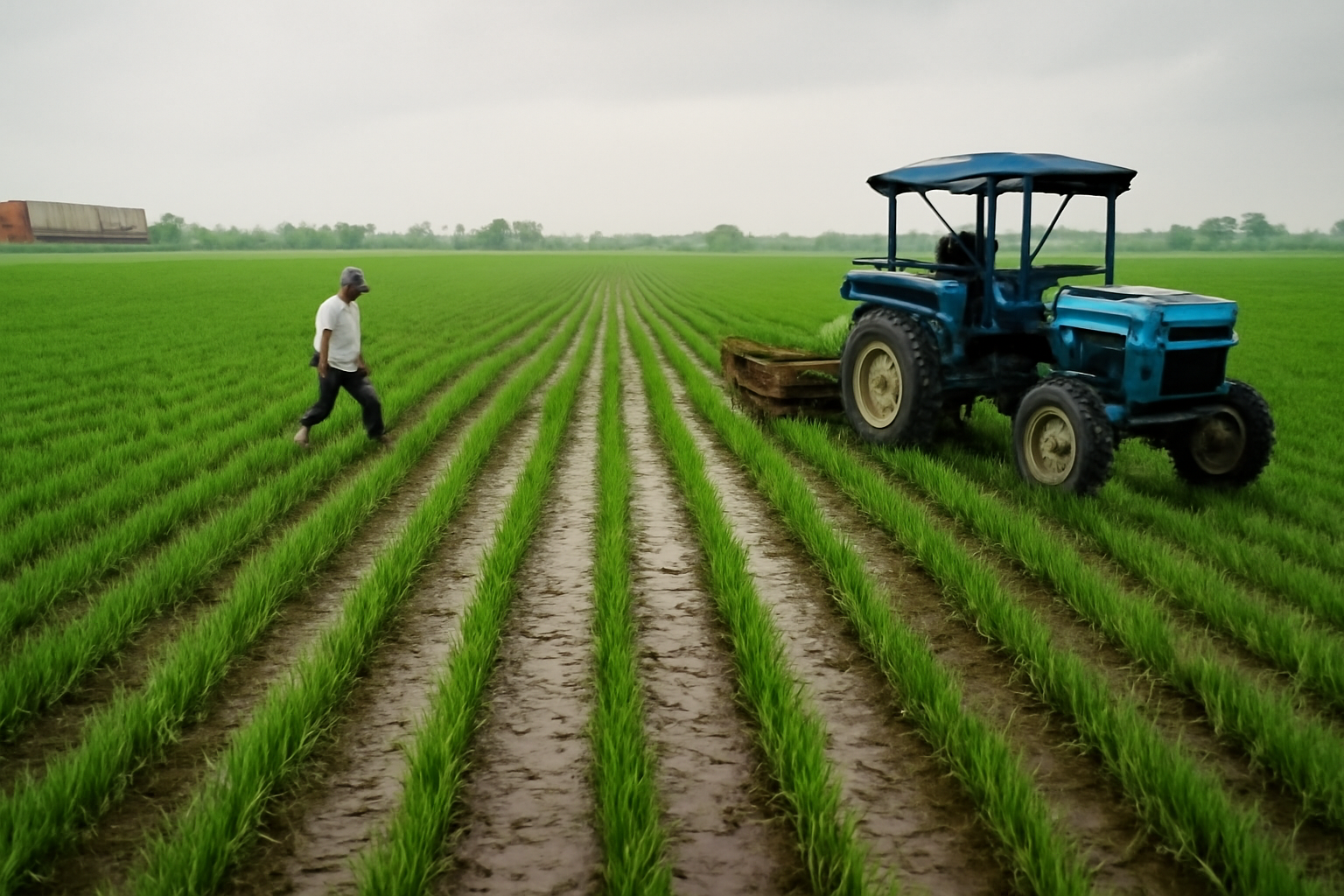
India’s kharif planting season has regained momentum after normal rainfall in July relieved pressure created by a severe rain shortage in June. Sowing has increased sharply across paddy, pulses, oilseeds, cotton and sugarcane, improving expectations for crops that supply food processors, textile mills and sugar producers. The recovery also reduces immediate concern that delayed fieldwork could translate into tighter domestic availability and higher food prices.
The change in rainfall is important because kharif crops depend heavily on the summer monsoon. A weak start can delay planting, shorten the growing period and influence farmers’ choice of crops. July’s improvement has allowed work to accelerate across several major crop groups rather than in a single commodity. That breadth gives the recovery greater significance for agricultural input suppliers, processors and wholesale buyers planning procurement for the coming marketing period.
Food crops offer relief for the inflation outlook
The rebound in paddy and pulse sowing is particularly relevant to household food costs. Paddy is a central food crop, while pulses are a major source of protein and frequently attract close attention when domestic supplies tighten. More timely planting does not guarantee final yields, but it lowers the immediate risk that the season will be defined by June’s rainfall deficit. Crop development, the distribution of subsequent rainfall and harvesting conditions will still determine actual output.
Oilseed planting also matters for processors and buyers of edible oils. A broader planted area can support domestic raw-material availability, although production will depend on weather through the remainder of the growing cycle. For traders and importers, the sowing recovery may temper expectations of an abrupt increase in supply pressure caused solely by the weak June monsoon. It is nevertheless too early to infer the eventual effect on import demand because no harvest figures or crop yields are yet available.
Cotton and sugar industries gain visibility
Faster cotton sowing improves the initial supply outlook for ginners, spinning mills and textile manufacturers. Sugarcane planting also provides a more supportive starting point for mills and growers. These industrial crops do not affect food inflation in the same way as paddy and pulses, but they influence farm income, processing capacity utilisation and procurement competition in producing regions.
The July rebound therefore changes the balance of risk without removing it. Producers have gained a better planting window, while processors and traders face less immediate uncertainty over whether the June rainfall shortage would prevent sowing across key crops. The next stage will depend on whether rainfall remains sufficient and well distributed. For now, the simultaneous acceleration in food crops, oilseeds and industrial crops offers India’s agricultural markets a broader cushion against the inflation concerns that followed the weak start to the monsoon.