Jordan’s annual wheat and barley consumption approaches 2 million tonnes
Jordan consumes nearly 2 million tonnes of wheat and barley annually, underscoring its continued dependence on grain imports. Domestic production increased more than fivefold in the 2026 season, but limited rainfall constrains further expansion.
Strategic grain demand remains high
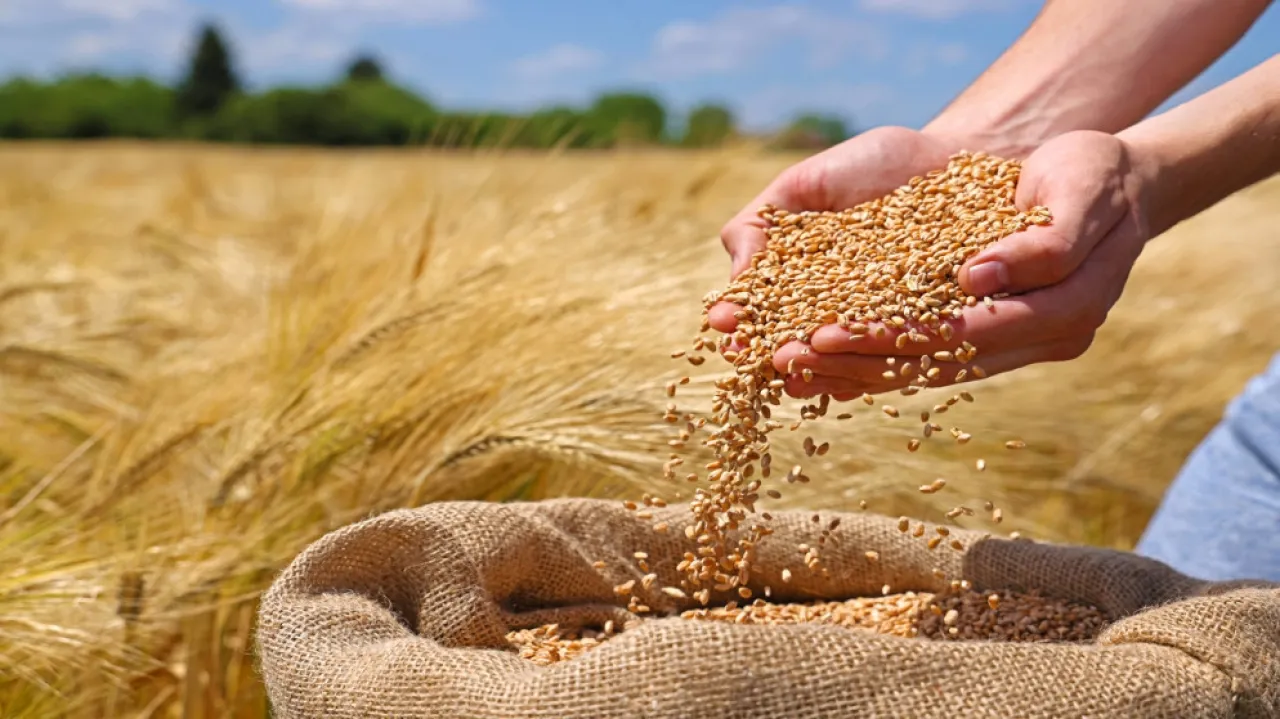
Jordan’s annual consumption of wheat and barley approaches 2 million tonnes, Ministry of Agriculture Secretary-General Mohammad Al-Hiyari said on Thursday. In comments to Al-Mamlaka reported by Khaberni, he described both crops as strategic commodities that the kingdom urgently needs and said support for domestic producers remains a government priority.
The consumption figure provides a central measure of Jordan’s grain requirement. The country produces some wheat and barley locally, but crops requiring large volumes of water — including wheat, barley, sugar, rice and certain forage crops — must also be secured through imports. Al-Hiyari said the state combines domestic production support with purchases from abroad and maintains imported grain volumes sufficient to cover safe periods exceeding 10 months.
2026 harvest rises more than fivefold
Production in the 2026 season exceeded the previous season’s volume by more than five times, according to Al-Hiyari. The increase required the ministry to extend working hours beyond the regular schedule and open additional collection stations for receiving and purchasing grain. The ministry also extended the delivery period for wheat and barley from the current season to government silos and collection centres across Jordan’s governorates.
The sharp year-on-year gain does not remove the underlying production constraint. Wheat and barley yields depend primarily on rainfall, while approximately 80 million dunams of Jordan’s nearly 90 million dunams receive less than 200 millimetres of rain annually. Al-Hiyari said this creates a major challenge as the effects of climate change intensify. Crop rotation is also necessary to preserve soil fertility, preventing farmers from planting the same crop continuously on the same land.
Water projects support local agriculture
The ministry’s climate plan includes constructing ponds and earthen dams in desert areas to capture rainfall. Jordan builds between 40 and 50 earthen dams annually and is working to establish between 3,000 and 4,000 water-collection wells in western parts of the kingdom. The objective is to secure a minimum reserve for drinking and agricultural use, particularly for small farmers.
Despite being among the world’s most water-scarce countries, Jordan supplies more than 60% of its food requirements, Al-Hiyari said. The kingdom also holds more than a year’s stock of vegetables and fruit, alongside substantial inventories of red meat, poultry, table eggs and other essential goods. Its agricultural products reach more than 100 countries, including 50 markets that buy fresh vegetables and fruit.
Exports and processing broaden the sector
Agricultural exports exceeded 1.6 billion Jordanian dinars last year, while shipments during the first half of the current year surpassed 350,000 tonnes, up 18% from the same period a year earlier, according to the ministry official. These exports are concentrated in products Jordan can produce more efficiently, while water-intensive staples remain more dependent on foreign supply.
The government is also promoting food processing to extend the shelf life of domestic output. A food-industry complex in the southern Jordan Valley, covering Ghor Al-Safi and Al-Haditha, has enabled the establishment of three factories. One is close to opening, a second is expected to begin operations in the coming months and the third at the start of next year. Total investment in the factories exceeds 3.25 million Jordanian dinars, while private-sector contributions have surpassed 12 million dinars.