Jordan strengthens food security as tomato output reaches 400,000–500,000 tonnes
Jordan produces 400,000–500,000 tonnes of tomatoes annually and ranks among the 10 largest exporters of tomatoes and some Jordan Valley vegetables during the winter peak. Strong poultry, dairy, egg and olive oil production contrasts with import dependence of more than 95% for wheat, rice and corn.
Tomatoes anchor Jordan’s vegetable exports
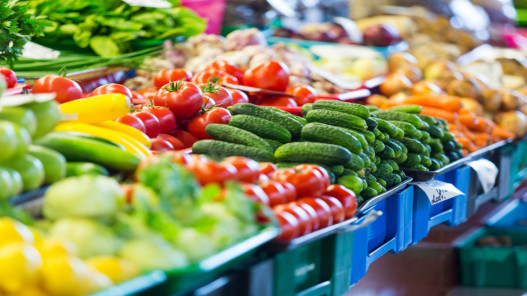
Jordan produces between 400,000 and 500,000 tonnes of tomatoes annually, making the crop the leading product in the country’s vegetable exports, Saraha News reported. Jordan is also among the world’s 10 largest exporters of tomatoes and certain Jordan Valley vegetables during peak winter periods, when neighboring and European markets have less fresh produce available.
The position gives Jordanian growers and exporters a seasonal market opportunity despite the country’s limited land and water resources. Tomatoes belong to a global food category valued at $136 billion and ranked 10th in a Visual Capitalist classification based on data from the UN Food and Agriculture Organization. Jordan’s wider agricultural sector directly contributes 4.5% of gross domestic product. Its indirect contribution through food processing and related logistics exceeds 15–20%, according to Saraha News.
Poultry, dairy and olive oil support domestic supply
Poultry is the largest pillar of Jordan’s domestic livestock industry, with investments exceeding 1 billion Jordanian dinars. The country meets 100–105% of its demand for table eggs and 85–90% of its poultry meat needs. The global poultry category is valued at about $264 billion and ranks sixth in the cited international classification.
Local cow and sheep milk supplies cover a large share of the requirements of Jordanian dairy and cheese processors. Self-sufficiency in fresh dairy products and cheese stands at 80–85%, with most production coming from domestic cattle and livestock farms. Dairy leads the global food-production classification with a value of $379 billion.
Jordan is also self-sufficient in olives and olive oil. Recent Ministry of Agriculture and Department of Statistics data put olive oil self-sufficiency at 120–130%, allowing the surplus to be shipped to Gulf markets, the United States and Europe. These sectors reduce exposure to imported animal products and edible oils while generating exportable volumes.
Grain dependence remains the central vulnerability
The balance is substantially weaker for staple grains. Domestic production covers less than 5% of Jordan’s wheat, rice and corn requirements, leaving the country almost entirely dependent on imports. Strategic silo stocks are sufficient for 10–12 months, and authorities plan new silos and expanded food-storage facilities in Aqaba and Amman to extend coverage beyond one year.
Jordan ranked 47th globally and seventh among Arab countries in the latest Global Food Security Index reading from Economist Impact. It received particularly strong scores for food quality and safety, access points and strategic reserves. The Global Hunger Index placed Jordan 52nd, with a score of 10.6 and a “low” severity classification.
Under the National Food Security Strategy for 2021–2030, the sustainable agriculture plan and the Economic Modernisation Vision for 2022–2033, Jordan aims to become a regional food-security hub. Plans include a regional food logistics complex for storage and re-export, higher domestic production of red meat and fish, and greater use of aquaculture and livestock-fattening projects.
Hydroponic technology is expected to improve irrigation-water efficiency by 30–40% while supporting high-value crops with lower water consumption. The strategy also targets a 30% reduction in crop and supply-chain losses by 2030. Together, these measures seek to protect staple supplies while using Jordan’s seasonal vegetable output, processing base and geographic position to expand its role in regional food trade.