Japanese beer takes 46.9% of South Korea’s imported beer market
Japanese beer accounted for 46.9% of South Korea’s beer imports in the first half of the year. Its average price of $0.79 per kilogram, the lowest among imported beer, supported the advance despite the legacy of the Korean boycott of Japanese products.
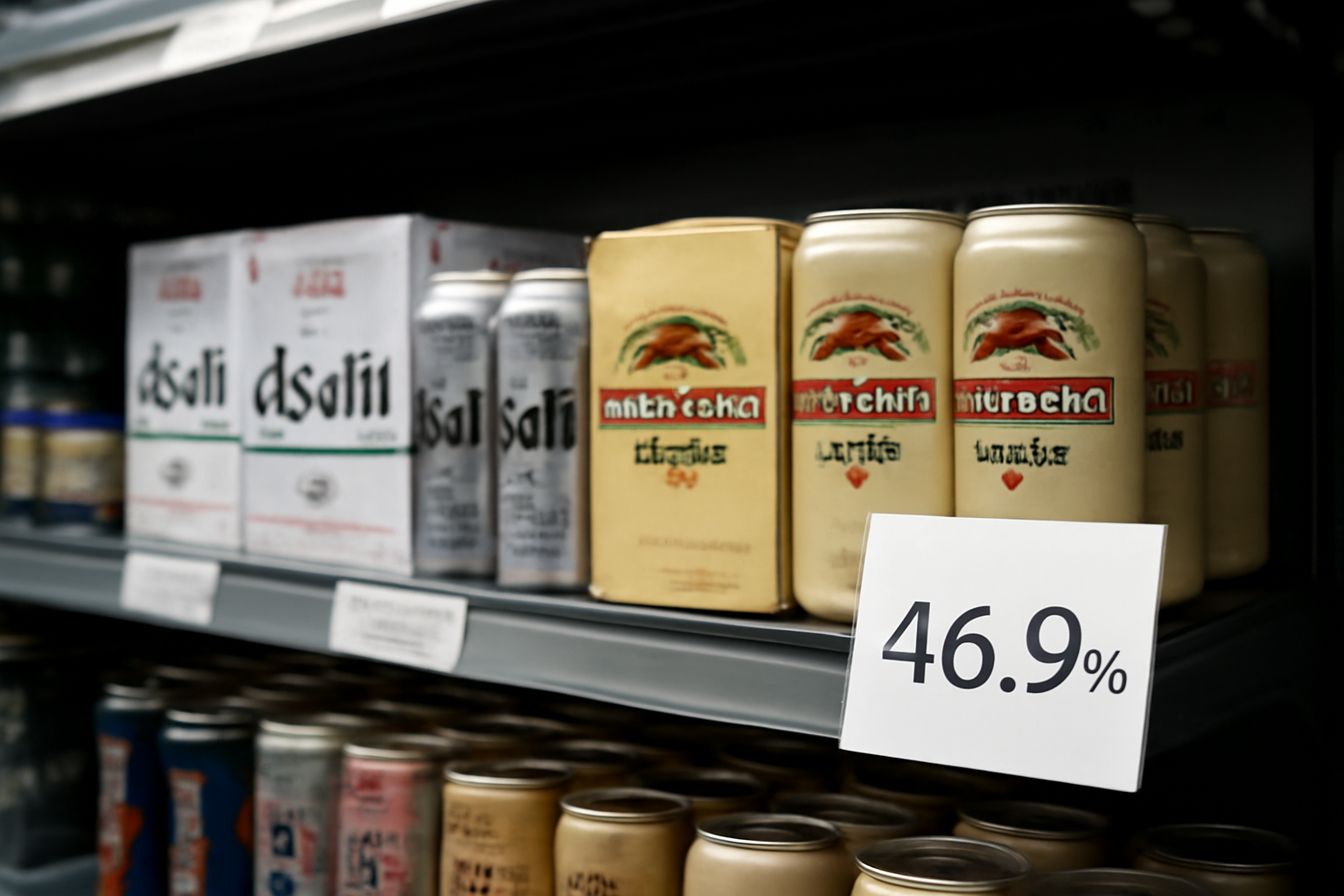
Japanese suppliers approach half of import volume
Japanese beer accounted for 46.9% of South Korea’s beer imports in the first half of the year, bringing suppliers from Japan close to controlling half of the country’s imported beer market. Total beer imports reached 124,200 tonnes during the period and increased for a second consecutive year.
The figures mark a notable change in a market previously affected by the Korean consumer boycott of Japanese products. That campaign reduced demand for goods from Japan, but the latest beer data indicate that its influence on beverage purchasing has weakened. Japanese brands have recovered through a combination of competitive prices, large shipment volumes and familiarity among Korean consumers.
The shift matters because imported beer competes not only with products from other foreign origins but also with South Korean brewers. A 46.9% share gives Japanese suppliers considerable weight in import pricing, retail promotions and purchasing decisions by distributors. It also makes South Korea more important for Japanese breweries seeking dependable overseas demand.
Lowest average price supports market expansion
Japanese beer entered South Korea at an average price of $0.79 per kilogram, the lowest level among imported beer. This price advantage helps explain why Japanese products have expanded their presence so quickly. It gives importers and retailers room to offer familiar brands at accessible prices or use discounts to increase sales volumes.
Price competitiveness is particularly important in a mature beverage category where products from different origins compete for limited shelf and promotional space. Low-priced, high-volume supplies can strengthen the negotiating position of importers carrying Japanese beer. Rival foreign breweries may have to respond through discounts, differentiated products or stronger marketing rather than relying on country of origin alone.
The average import price does not show how revenue is divided among breweries, importers and retailers, nor does it describe individual brands. It nevertheless provides a clear measure of Japan’s advantage at the border. With almost half of volume and the lowest price per kilogram, Japanese suppliers have combined scale and cost competitiveness in the Korean market.
Import growth contrasts with lower drinking rates
The increase in beer imports comes as South Korea’s annual drinking rate continues to decline. The country nevertheless remains the fifth-highest drinking nation in the OECD, according to the information accompanying the import figures. The two trends suggest that lower overall alcohol participation does not automatically translate into weaker demand for every imported beer segment.
Consumers may drink less frequently while continuing to choose recognizable foreign brands when they do purchase beer. For distributors, the second consecutive annual increase in first-half import volume shows that product origin, price and brand familiarity can still create growth within a broader market facing pressure from changing drinking habits.
The immediate commercial question is whether Japanese beer can preserve its 46.9% share if competitors lower prices or expand promotions. Domestic and foreign brewers will also be watching whether the $0.79-per-kilogram level remains sustainable. For now, Japanese suppliers hold a strong position built on low prices, substantial volumes and renewed consumer demand.