Italy’s plastic recycling chain strains as low-cost virgin resin weakens demand
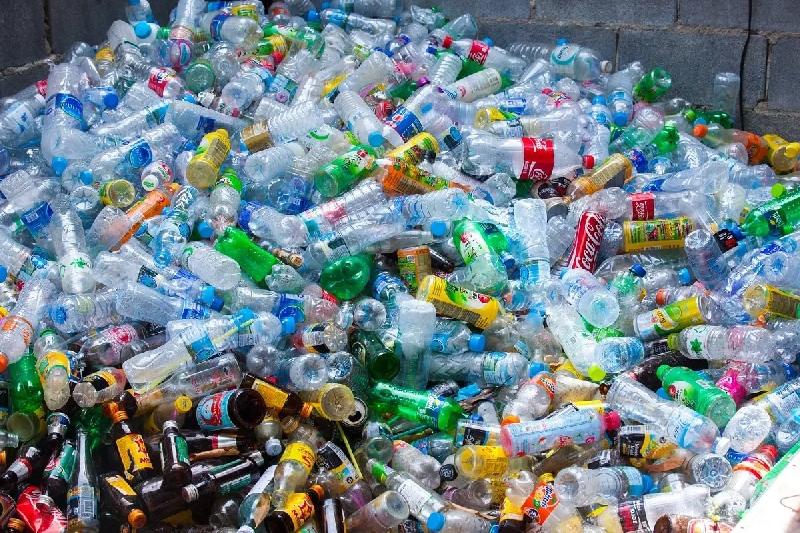
Plastic waste is accumulating at Italian sorting and recycling facilities as low-priced virgin resin from China undercuts domestically recycled material. Piedmont is pressing Italy’s government and the European Union for measures before storage sites reach saturation and disrupt packaging collection.
Recycled plastic loses ground to virgin material
Italy’s plastic packaging recycling chain is facing mounting pressure as waste continues to enter sorting facilities while demand for recovered material weakens. According to Lo Spiffero, low-priced virgin plastic exported by China has become more economical for many European manufacturers than recycled resin produced by Italian consortia, which carries processing costs and must comply with stricter national and European environmental standards.
Italy generates about 3.5 million tonnes of plastic waste each year. Piedmont alone produces roughly 250,000 tonnes, while its separate waste collection rate approaches 70%, above the national average. The immediate constraint is therefore not the ability to collect plastic, but the difficulty of recycling it and selling the resulting material back into industrial production.
Corepla and Conai have presented Italy’s regions with what they describe as a “pre-emergency” scenario. Without structural intervention, they warned that widespread problems in managing the separate collection of plastic packaging could emerge by autumn. The issue has also been discussed with Deputy Minister Vannia Gava.
Piedmont facilities face growing inventories
Piedmont’s three principal sorting and storage centres—Amiat Borgaro, Gaia Asti and A2A Cavaglià—process about 194,000 tonnes annually. Their combined nominal capacity exceeds the region’s collection volume, but inventories are still rising because facilities receive new waste faster than they can place recycled output with buyers. Two centres are considering additional shifts, while the third has no spare production capacity.
The imbalance is increasing storage costs, consuming industrial land and creating environmental safety concerns. Suspending or limiting separate plastic collection has been identified as a last-resort option. Expanding existing plants or building new ones could relieve pressure in the short term, but would not address the weak market for recycled resin.
China’s 2018 policy reshaped the market
The present disruption has roots in China’s 2018 National Sword policy, which stopped imports of most plastic waste from Western countries. China had previously been the world’s principal destination for plastic sent for recovery, forcing the international recycling industry to reorganise rapidly when that outlet closed.
At the same time, China continued exporting large quantities of competitively priced virgin plastic. This produced a two-sided problem for Italy: non-recyclable plastic lost an overseas outlet, while recyclable material encountered stronger competition from cheaper new resin. Industry operators have identified this dynamic as a major contributor to the broader European recycling crisis.
Regions seek national and EU action
Piedmont environment councillor Matteo Marnati has requested an institutional working group with Italy’s government. Regional authorities are also looking to the future EU Circular Economy Act. One proposal would establish a proximity principle giving recycled plastic produced inside EU member states priority over material imported from outside the bloc.
The risks extend beyond packaging. Similar difficulties are beginning to affect plastics recovered from end-of-life vehicles, electrical and electronic waste, agriculture and industrial processing. These streams are not protected by the Conai system and remain fully exposed to market fluctuations. If congestion spreads across them, Italy’s recycling challenge would become substantially larger, affecting waste operators, processors and manufacturers that depend on a reliable market for secondary raw materials.