Iran’s 189,400-Toman Dollar Raises Costs Across Transport and Supply Chains
Iran’s free-market dollar opened at about 189,400 tomans, increasing the cost of imported vehicles, spare parts, port services and logistics equipment. The pressure is extending across road, maritime, rail and air transport while raising working-capital requirements for logistics companies.
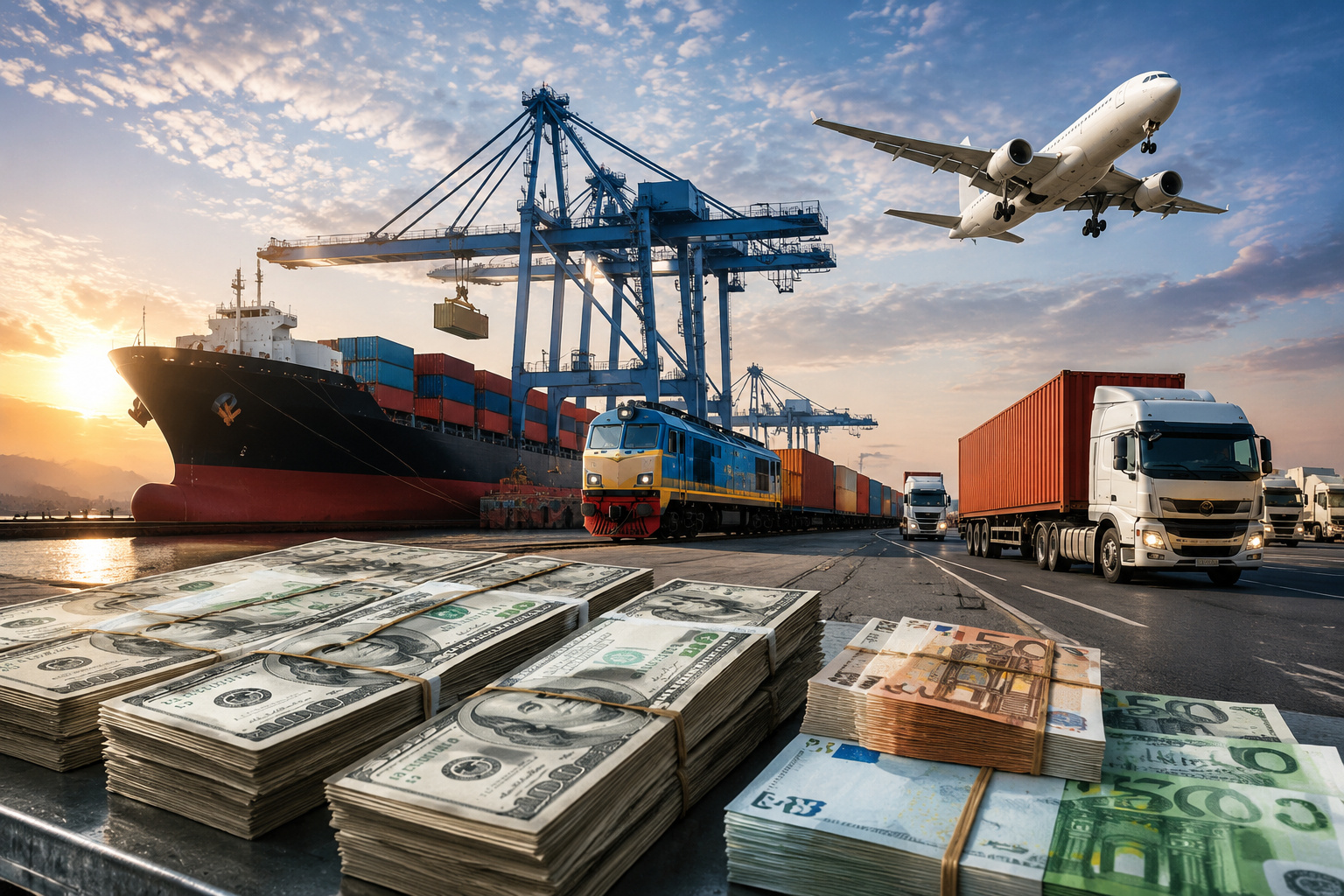
Currency pressure reaches transport operators
Iran’s free-market dollar traded at 1.894 million rials, equivalent to about 189,400 tomans, in early dealings on Saturday, 31 Mordad 1405, according to Tinn News. The euro stood at 2.2121 million rials, or about 221,210 tomans, while the UAE dirham was quoted at 515,980 rials. The euro was approximately 17% more expensive than the dollar and sterling about 36% higher, reflecting both domestic conditions and their international values against the US currency.
The exchange rate does not directly change Iran’s domestic fuel price, but it affects most other transport inputs. Imported vehicles, components, machinery, port equipment and foreign services become more expensive in rial terms. Higher cargo values and transport bills also mean logistics companies need more working capital to handle the same volume of business.
Road fleets face higher maintenance and replacement costs
Road transport is exposed through imported trucks, buses and commercial vehicles as well as components or raw materials sourced abroad. Tinn News identified ECUs, braking and suspension systems, filters, heavy-vehicle tires, batteries, electrical equipment, specialist oils and engine parts among the items that respond quickly to currency movements. Locally manufactured parts are also affected when their raw materials, machinery or intermediate components have foreign-currency costs.
Operators may postpone major repairs or choose cheaper parts to keep vehicles working. That can extend the economic life of an ageing fleet, but it also raises the risk of breakdowns, roadside delays and accidents. Fleet renewal becomes harder because truck and component prices follow the free-market exchange rate while most transport revenue is earned in rials.
A weaker currency does not automatically produce an immediate increase in domestic freight rates. Road tariffs also depend on fuel, driver wages, tolls, insurance, tire and repair costs, backhaul availability and fleet supply and demand. Nevertheless, rising capital and operating expenses increase pressure on rates, particularly on long-distance and transit routes such as Tehran–Bandar Abbas, Tehran–Bazargan, the North–South Corridor and roads serving Chabahar and Iran’s border crossings.
Ports, railways and aviation absorb foreign-currency costs
Maritime transport is affected through port services, container leasing, vessel repairs, spare parts, insurance, ship chartering and agency fees, many of which are calculated in foreign currencies. The resulting increase can raise the landed or delivered cost of cargo moving through Shahid Rajaee, Imam Khomeini, Chabahar and Khorramshahr. Shipping companies, freight forwarders and cargo owners must account for exchange-rate risk in freight contracts, demurrage, storage and cargo scheduling.
The UAE dirham is especially important for southern ports because some procurement, intermediary services and regional settlements pass through the Emirates. Rail exposure is concentrated in locomotives, control and signalling systems, terminal cranes and maintenance machinery. Currency weakness can therefore increase the cost of freight terminals, logistics centers and projects connected with the North–South Corridor, Rasht–Astara, the Chabahar rail link and routes toward Central Asia.
Aviation is among the most currency-sensitive sectors because aircraft parts, specialist maintenance, airport services, leasing, insurance and training have direct or indirect foreign-currency costs. Higher expenses may feed into passenger fares and airfreight rates, reducing the competitiveness of exports unless their value is high enough to support air transport.
Trade routes add exposure to regional currencies
The Turkish lira was quoted at 39,600 rials, the Chinese yuan at 282,700 rials, the Russian ruble at 22,920 rials, the Azerbaijani manat at 1.1025 million rials and the Armenian dram at 5,600 rials. These currencies matter because Iranian carriers and traders pay some road services, tolls, fuel, accommodation and border charges in local or intermediary currencies on routes involving Turkey, the Caucasus, Russia, Central Asia, China and Pakistan.
Tinn News cautioned that the quotations represented opening rates rather than proof of a sustained market direction. Even so, prolonged currency weakness would keep replacement costs and financing needs elevated. Smaller logistics businesses are particularly exposed because they have less capacity to fund inventories, repairs and cargo movements as each transaction requires more rials.