Iran permits 10,000 tonnes of chicken exports as domestic protein demand weakens
Iran has authorized exports of about 10,000 tonnes of chicken in 1405 after poultry production rose while domestic consumption declined. The surplus reflects pressure on household purchasing power rather than stronger market conditions.
Export permit follows widening poultry surplus
Iran has issued a permit for exports of about 10,000 tonnes of chicken in 1405, opening an outlet for a market where production has continued to rise while household consumption has weakened. Donya-e-Eqtesad reports that the surplus is primarily linked to declining domestic demand rather than an expansion of the protein market.
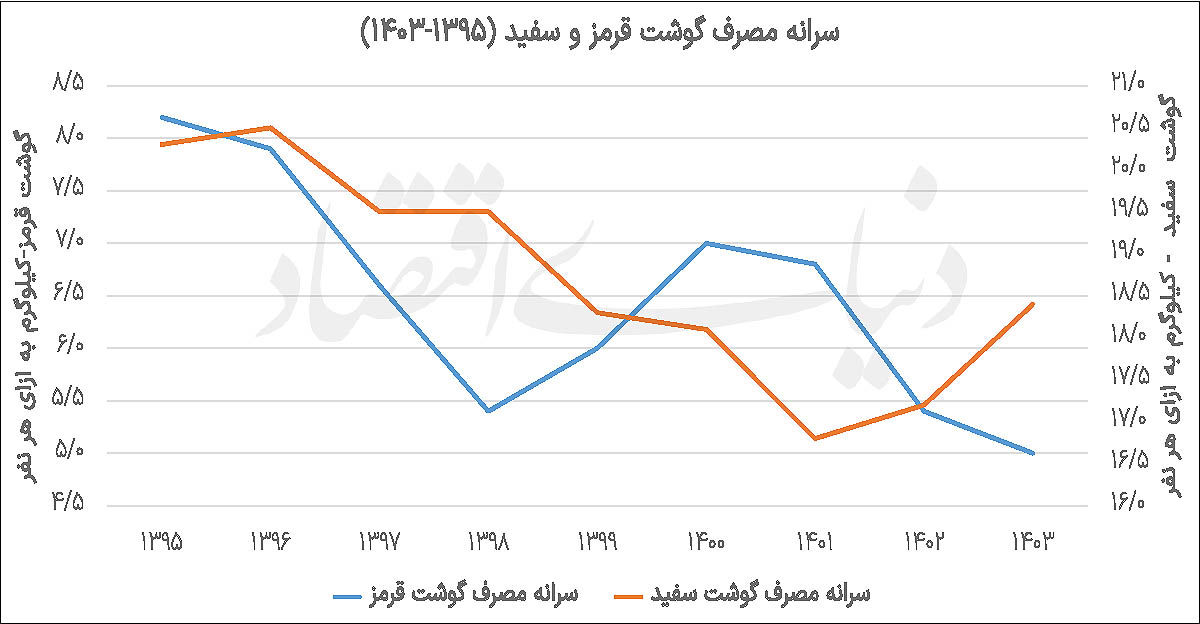
Official data cited by the publication show that poultry meat production increased from about 2.069 million tonnes in 1395 to more than 3.105 million tonnes in 1403, a rise of close to 50%. Over the same period, annual per-capita chicken consumption fell from 20.3 kilograms to 18.4 kilograms. It reached a low of 16.8 kilograms in 1401.
The divergence creates a potential trade flow for Iranian poultry exporters, but the permitted volume remains small compared with national output. The 10,000-tonne authorization is equivalent to less than 1% of the poultry meat produced in 1403. Export execution will therefore help remove part of the surplus without fundamentally changing the balance of the domestic market.
Inflation reshapes household protein purchases
The contraction extends beyond chicken. According to data from the Statistical Center of Iran cited by Donya-e-Eqtesad, annual per-capita red meat consumption declined from 8.2 kilograms in 1395 to 5 kilograms in 1403, a fall of nearly 40%. Esmail Eshghi, a meat-products distribution specialist, told the publication that strong meat sales previously lasted until around the seventeenth day of each month but are now generally limited to the first six or seven days. Demand remains severely depressed for about 20 days each month.
Eshghi said a butcher that bought a whole 50-kilogram veal leg every day two years ago now purchases the same quantity once every three days. Consumers and restaurants have also reduced inventories and increasingly buy meat according to their immediate daily needs. The resulting decline in transaction volumes is affecting livestock farmers, wholesalers and retailers.
Food inflation is reinforcing this pressure. Donya-e-Eqtesad reported that year-on-year food inflation rose from 112% at the end of 1404 to about 135% in Khordad 1405, compared with nationwide headline inflation of 88.6%. Mehr News Agency reported that chicken prices nevertheless fell by about 11% from the wartime period, while rice prices increased by more than 50%. Because chicken is perishable, weaker demand and accumulated stocks are transmitted to prices faster than in the storable rice market.
Feed costs constrain export competitiveness
Lower chicken prices do not indicate lower production costs. Eshghi said livestock feed, much of which is imported from countries including Brazil and Russia, rose from about 10,000 tomans per kilogram to around 60,000 tomans from the beginning of the current year. A calf consumes roughly 10 kilograms of feed per day, putting daily feed expenditure per animal at about 500,000-600,000 tomans and squeezing farm margins.
Red meat offers a warning for poultry exporters. Bone-in veal was quoted at about 1.05 million tomans per kilogram, while wholesale veal leg reached about 1.4 million tomans per kilogram. Eshghi said Iranian red meat is not competitively priced against most neighboring countries after conversion into dollars; Turkey is the only nearby market with higher prices, but its standards and specific market conditions limit access. For chicken, the export permit provides a short-term channel for excess supply, but sustained trade will depend on whether exporters can absorb high feed costs and meet destination-market requirements while domestic purchasing power remains weak.