Indonesian palm oil from land burned in 2026 faces European market-access risk
Palm oil sourced from Indonesian land affected by forest and land fires in 2026 risks losing access to the European market. Coordinate-level traceability makes the origin of raw material difficult for exporters to conceal, according to Kompas.
Traceability reaches individual land coordinates
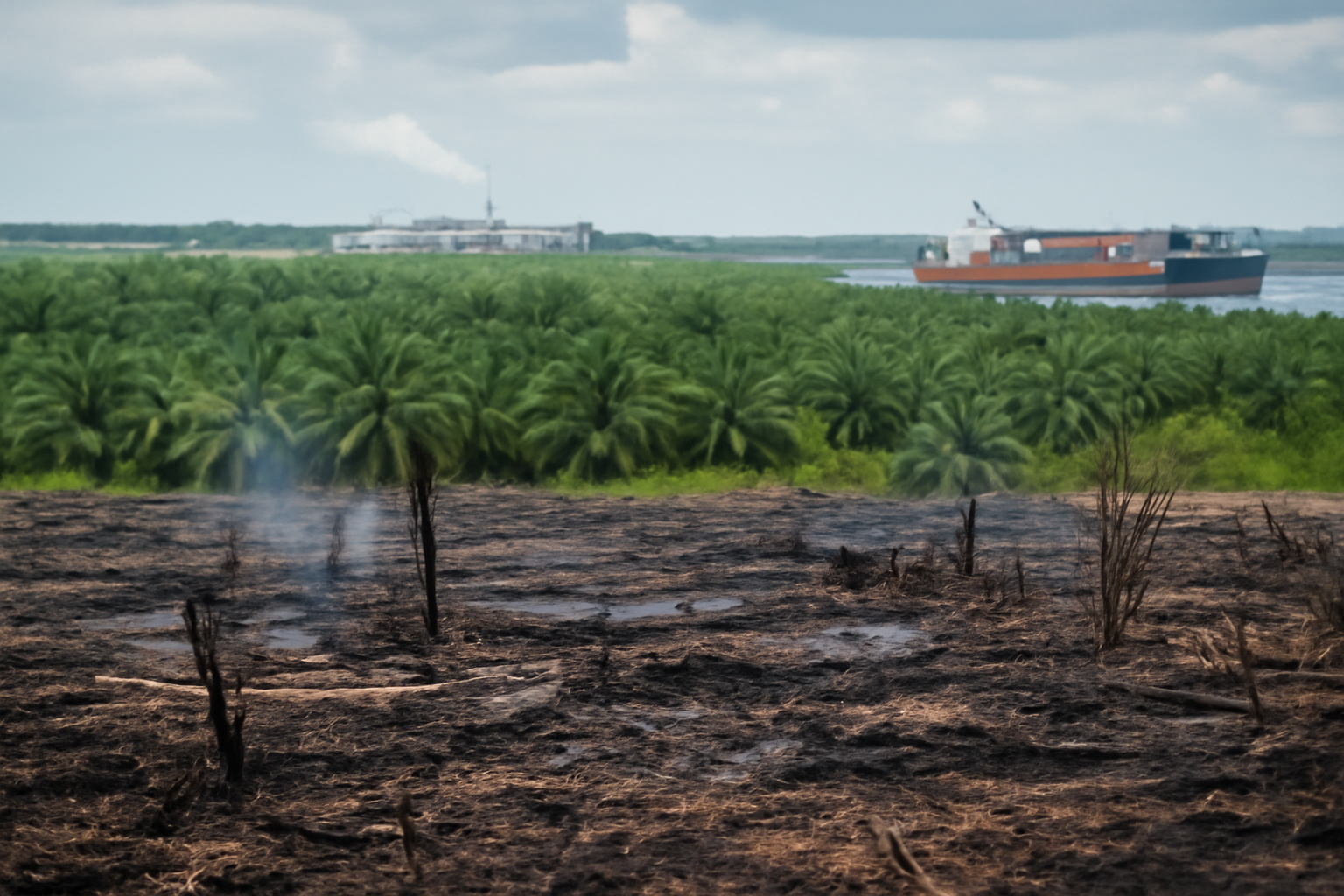
Indonesian palm oil produced on land affected by forest and land fires in 2026 risks being unable to enter the European market. Kompas reports that the relevant traceability system identifies the origin of raw materials down to specific land coordinates. That level of geographic detail makes it particularly difficult for exporters to conceal whether palm oil came from a fire-affected area.
The immediate exposure falls on companies that cannot establish a clear and credible link between a shipment and its production site. Export documentation alone may not resolve the issue when the underlying traceability record points to a specific location. For Indonesian suppliers serving Europe, the commercial value of a cargo will therefore depend not only on its physical quality, but also on the ability to demonstrate where its raw material was produced.
Exporters face a data and sourcing test
Coordinate-level checks raise the importance of accurate records across the palm oil supply chain. Exporters need reliable information about the land supplying their raw material, while processors and traders need confidence that those records remain connected to the product as it moves through the chain. If that connection is incomplete, a shipment may carry market-access risk even when the exporter itself did not control the land where production began.
This creates particular exposure wherever raw material from multiple plots is combined before export. The source material does not specify how mixed consignments will be treated, but the underlying commercial problem is clear: uncertainty over one production location can weaken confidence in the wider shipment. Suppliers may consequently need to separate traceable material from volumes whose origin cannot be demonstrated with the same precision.
The system also reduces the room for changing or obscuring origin information later in the trading process. According to Kompas, its specificity makes concealment very difficult. That shifts compliance attention upstream, toward the point where land coordinates are recorded and linked to raw material, rather than leaving origin checks solely to the final exporter.
European access may divide available supply
If palm oil from fire-affected land is excluded, Indonesian exporters may have to redirect those volumes away from Europe. The supplied material does not identify alternative destinations, shipment volumes or prices, so the scale of any trade diversion cannot yet be quantified. Even without those figures, the risk may divide supply into material supported by acceptable coordinate records and material carrying unresolved origin concerns.
That distinction matters to processors, traders and buyers. European-facing supply chains may apply tighter sourcing controls before taking ownership of raw material, while exporters may place greater weight on the traceability status of each supplier. Contracts could also become more sensitive to responsibility for inaccurate land data or a later finding that the production site was affected by fire.
Compliance depends on evidence at origin
The central issue is not merely whether a company possesses a general sustainability statement. The reported system works at the level of a specific point on the map. Exporters seeking continued European access must therefore be able to connect the palm oil they sell with location data that withstands scrutiny.
For Indonesia’s palm oil sector, the 2026 fire season could thus create consequences beyond the land directly affected. Producers linked to verifiable sites may retain access, while suppliers with incomplete or problematic records face a narrower set of buyers. Until further information establishes the volumes and companies involved, the principal measurable exposure is compliance risk: a shipment associated with burned land may no longer qualify for the European market.