Indonesian garlic prices rise in 269 regions despite higher imports
Garlic prices increased in 269 Indonesian regencies and cities by the second week of July 2026, even as first-half imports rose 28.44% year on year. Currency weakness, international freight costs and inefficient domestic distribution are keeping retail prices elevated.
Price increases spread across Indonesia
Garlic prices increased in 269 Indonesian regencies and cities, covering 74.72% of monitored areas, by the second week of July 2026. Indonesia's Central Statistics Agency, known as BPS, said garlic recorded the widest geographical spread of price increases among food commodities.
The national average reached Rp42,611 per kilogram, above the government's consumer reference price. The disparity between regions was substantial: garlic cost Rp39,000 per kilogram in Jakarta, while the price in Papua Pegunungan reached Rp100,000 per kilogram.
Other eastern and remote markets also reported elevated prices. Garlic reached Rp79,000 per kilogram in Deiyai Regency, Central Papua, which BPS said was 107.89% above the consumer reference price. Prices in South Aceh and North Gorontalo were Rp50,000 per kilogram, respectively 31.6% and 31.58% above the reference level.
Higher imports have not lowered retail prices
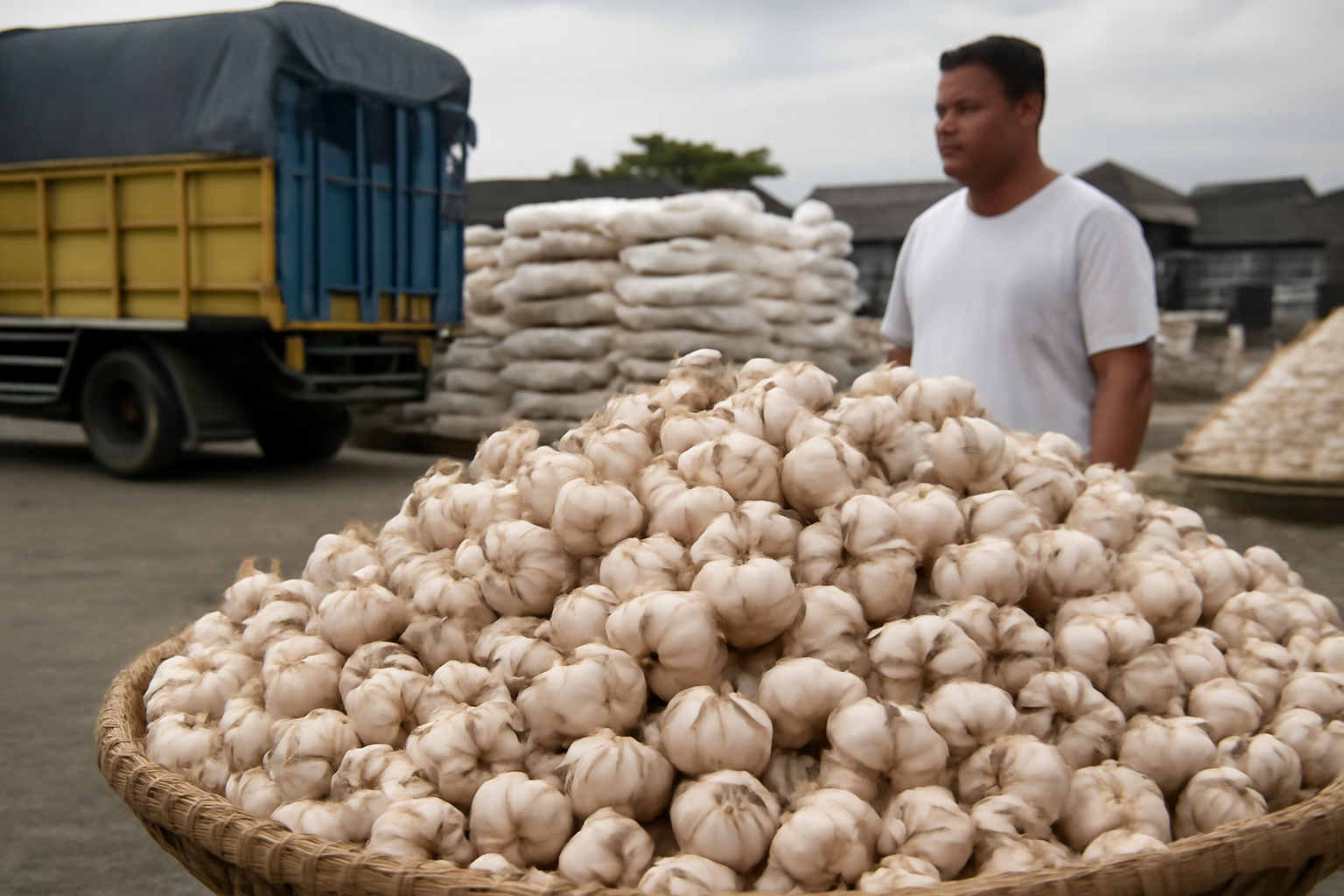
The increase did not coincide with a contraction in foreign supply. BPS data showed that Indonesia imported 229,760 tonnes of garlic between January and June 2026, an increase of 28.44% from the same period a year earlier. The figures indicate that aggregate availability and consumer prices are moving in opposite directions.
BPS head Amalia Adininggar Widyasanti attributed part of the increase to depreciation of the rupiah against the US dollar and higher international logistics costs. Because Indonesia relies on imported garlic, a weaker domestic currency raises purchasing costs even when physical import volumes remain ample.
The Ministry of Trade also linked higher freight costs to the crisis around the Strait of Hormuz. Nawandaru, director of domestic market development at the ministry, said vessels flying the Chinese flag were being sought by many countries after the crisis, increasing the cost of shipping garlic from China to Indonesia.
Distribution becomes the policy focus
The sharp regional differences point to distribution costs as another source of pressure. Cargo entering through established gateways may still face long and expensive domestic journeys before reaching markets in eastern Indonesia. That burden is particularly visible in Papua Pegunungan and Deiyai, where prices are far above both the national average and the reference level.
The Ministry of Trade is coordinating with the Directorate General of Foreign Trade and garlic importers to shorten domestic supply routes. Businesses are being encouraged to send cargo directly to major ports in eastern Indonesia, with the aim of reducing inland transport costs and improving deliveries to high-price areas.
For importers and distributors, the data show that securing additional volume alone may not bring consumer prices down. Exchange-rate exposure, ocean freight and the choice of entry port can all affect the final cost. For food retailers and processors, continued regional price gaps mean procurement conditions will depend heavily on location even while national import availability remains abundant.