Indonesia weighs raising garlic import quota to steady prices
Indonesia's trade ministry says it will evaluate an importer association's request to enlarge the garlic import quota, tied to market conditions. The move comes as national prices sit above the reference level and the rupiah stays weak, with China the dominant supplier.
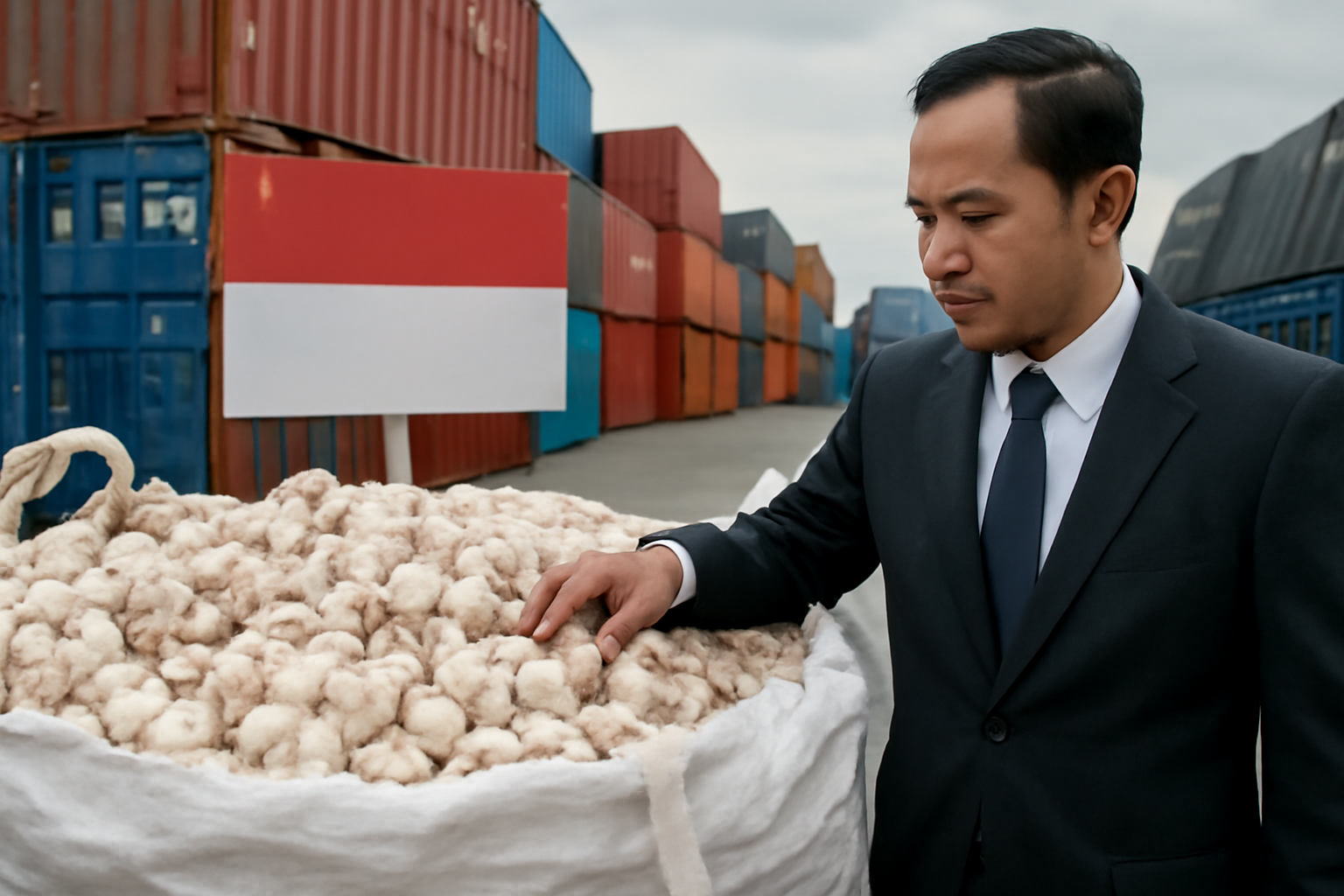
Indonesia's Ministry of Trade said it is evaluating a request from importers to raise the garlic import quota, in a move aimed at stabilizing domestic prices. Trade Minister Budi Santoso told the state news agency ANTARA that the government would assess the association's proposal in line with market conditions and mechanisms.
Quota tied to the commodity balance
According to ANTARA, Budi said garlic falls under Indonesia's commodity balance (neraca komoditas), a framework that can be reviewed at any time or on a three-month cycle. He did not rule out granting the importers' request for additional volume.
"Evaluation can be done at any time. It naturally looks at existing developments, so everything will be considered based on conditions on the ground," Budi said, adding that decisions would follow whether prices stay stable, rise or fall.
China as the main supplier
Budi said the government deliberately staggers garlic imports to prevent price spikes from the main supplier country, China. Placing one large simultaneous order, he argued, would allow Chinese sellers to push prices up.
- Imports are carried out periodically with importers rather than in a single bulk purchase.
- The phased pattern is intended to keep domestic prices stable.
- Concentrated demand risks handing pricing power to suppliers abroad.
The minister acknowledged that the exchange rate has its own effect on costs, but said the currency issue should be treated separately from import regulation. "That is a different matter. On the import side, the mechanism is indeed carried out this way every year," he said.
Prices still above the reference level
The Ministry of Trade earlier reported that national garlic prices in March 2026 began to trend lower than the previous month, though several regions still recorded prices above the reference selling price (Harga Acuan Penjualan, HAP). Nawandaru Dwi Putra, Director of Domestic Market Development at the ministry's Directorate General of Domestic Trade, said the national average price for grade A (kating) garlic stood at Rp39,091 per kilogram, against an HAP of Rp38,000 per kilogram. In regions outside Maluku and Papua, the price was recorded at Rp37,931 per kilogram.
Longer-term policy pull in the opposite direction
The quota debate sits against conflicting policy signals. According to ANTARA, the Minister of Agriculture has affirmed that garlic imports are to be halted over the next five years, while the Ministry of Agriculture targets garlic self-sufficiency within three years. Separately, the national food agency Bapanas has summoned importers to help hold prices steady.
For importers and traders, the near-term question is whether the trade ministry loosens the quota to relieve prices that remain above the HAP, or holds the phased approach to avoid strengthening China's pricing hand. The weak rupiah adds cost pressure on every kilogram brought in, even as Jakarta signals a longer-term shift away from imported garlic altogether.