Indonesia says it supplies 49% of Asia’s processed cocoa as exports reach $3.6 billion
Indonesia accounted for about 49% of Asia’s cocoa processing volume as national grindings reached 110,410 tonnes in the second quarter of 2026. The government is pairing its downstream-processing strategy with trade agreements and export promotion after cocoa exports rose to $3.60 billion in 2025.
Indonesia expands its role in Asian cocoa processing
Indonesia accounted for about 49% of Asia’s cocoa processing volume, reinforcing its position as a major regional supplier of cocoa ingredients and finished products. Liputan6 reported that national cocoa grindings reached 110,410 tonnes in the second quarter of 2026, up 30.1% from 84,844 tonnes in the first quarter.
Total processed cocoa production increased by 8.2% from the previous quarter. The difference between the growth rates for grindings and processed output was not explained in the published figures, but both indicators point to higher industrial activity amid volatile global prices and changing market conditions.
Industry Minister Agus Gumiwang Kartasasmita said the government would continue strengthening downstream processing, workforce capabilities, partnerships between farmers and industry, quality standards and sustainability. The policy is intended to move the sector beyond bean production and increase the share of higher-value cocoa products made to international standards.
Export value triples in four years
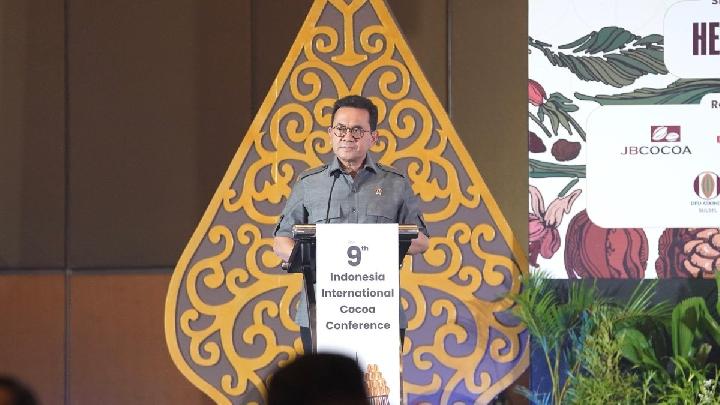
Indonesia’s cocoa exports were valued at $3.60 billion in 2025, three times the $1.2 billion recorded in 2021, according to Tempo and Tribun Jogja. Trade Minister Budi Santoso presented the figures at the 9th Indonesia International Cocoa Conference in Yogyakarta on July 23, 2026.
Santoso said cocoa supports hundreds of thousands of farming families, creates employment across the value chain and contributes to rural economies. He set out an ambition for Indonesia to become a global hub for sustainable, value-added premium cocoa and chocolate products.
The International Cocoa Organization recognizes Indonesia as a producer of fine flavour cocoa. The government sees that status, together with geographical indications, innovation and sustainable production, as a route into the premium segment of the global market. ICCO Executive Director Michel Arrion said Indonesia had transformed from a producing country into a cocoa processor, while noting that further growth in bean production would allow the country to capture more benefits.
Trade policy targets wider market access
The export strategy will focus on value addition, compliance with international standards, diversification of destination markets and greater use of trade agreements. Indonesia has implemented 25 trade agreements with partner countries, while two are undergoing ratification and 11 are under negotiation.
Those negotiations include the Indonesia-European Union Comprehensive Economic Partnership Agreement, which is awaiting signature. Indonesia is also pursuing reciprocal tariff negotiations with the United States. Santoso said the two arrangements could improve competitiveness and market access for Indonesian cocoa.
The Trade Ministry is supporting the effort through 46 representatives in 33 countries. Their responsibilities include promoting Indonesian products, identifying market opportunities and arranging business matching between exporters and prospective overseas buyers.
Processors seek closer links with farmers
Officials used the 2026 cocoa conference to call for cooperation among government agencies, farmers, processors, financial institutions, academics and international partners. Putu Juli Ardika, acting director general for agro-industry, said the agenda included higher productivity, wider market access and a sustainable and inclusive production system.
A Cargill executive responsible for Southeast Asia, Australia and New Zealand also identified collaboration and innovation as conditions for the sector’s development. Consumer interest in authenticity, local sourcing, sustainable agriculture, and new textures and flavours could support Indonesia’s role as a processing and innovation centre. For producers and processors, the central challenge is to connect rising industrial throughput with sufficient domestic bean supply, consistent quality and access to premium markets.