Indonesia Orders Faster State Beef and Buffalo Meat Procurement as Retail Prices Surge
Indonesia’s National Food Agency has instructed state-owned food companies to accelerate beef and buffalo meat procurement after consumer beef prices exceeded the official reference level. The agency is also seeking direct distribution through trader associations to shorten the supply chain and reduce prices in traditional markets.
Retail beef prices exceed the reference level
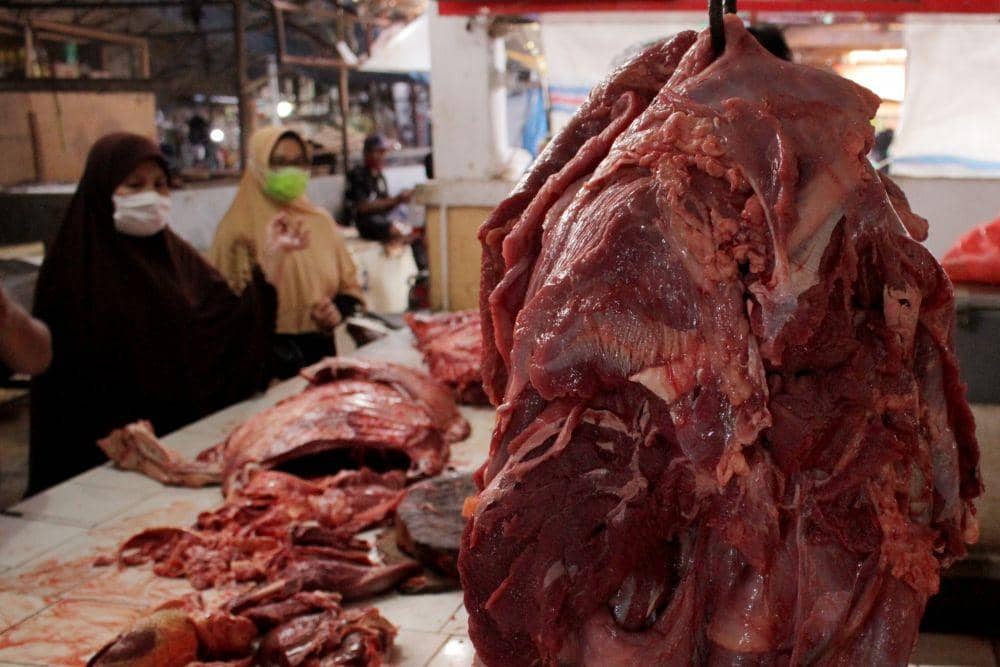
Indonesia’s National Food Agency, known as Bapanas, has instructed state-owned food companies to accelerate the procurement of beef and buffalo meat in response to rising consumer prices. The intervention is intended to strengthen national meat reserves, improve distribution and return retail prices to the government’s reference range.
According to IDN Times, Bapanas price-panel monitoring on August 23, 2026, showed a wide gap between producer and consumer prices. The average beef price at producer level stood at Rp56,575 per kilogram, remaining below the government’s reference purchase price. At consumer level, however, the average reached Rp144,682 per kilogram, exceeding the reference established under National Food Agency Regulation No. 12 of 2024.
State-owned companies asked to accelerate purchases
Bapanas is coordinating the response with PT Berdikari and PT Perusahaan Perdagangan Indonesia, or PPI. Both state-owned food companies have been asked to speed up procurement and facilitate the distribution of national meat reserves. Yusra Egayanti, Bapanas director for the formulation of food safety and quality standards, said the objective was to bring beef prices back within the official reference level, IDN Times reported.
The instruction covers both beef and buffalo meat, giving the authorities more than one source of red meat for market intervention. Faster procurement could increase the volume available to retailers, but the impact on consumer prices will also depend on how quickly stocks reach individual markets and whether distribution costs and trading margins decline.
Direct supply to traditional-market traders
Bapanas is also seeking to shorten the supply chain. It has encouraged the state-owned companies to work with the Indonesian Meat Market Traders Network, known as JAPPDI, and the Indonesian Meat Traders Association, or APDI. Under the proposed arrangement, supplies would be delivered directly to traders operating in traditional markets.
Yusra called for the companies and associations to begin a market intervention aimed at reducing beef prices in those markets. Direct deliveries could limit the number of intermediaries between reserve stocks and retail stalls, addressing part of the unusually large difference between producer and consumer prices. The source did not specify procurement volumes, the origin of the meat or a target retail price.
Execution will determine the market impact
The measures place state-owned food companies at the center of Indonesia’s immediate price-stabilization effort. For cattle producers, the producer price of Rp56,575 per kilogram indicates that the current pressure is concentrated further along the chain rather than being driven solely by farm-level costs. For traders, processors and food-service buyers, the key issue is whether additional supply can be delivered consistently and at prices that materially reduce replacement costs.
The lack of disclosed procurement volumes makes the scale of the intervention difficult to assess. Its effectiveness will depend on available reserves, purchasing speed, logistics and participation by traditional-market traders. The gap between the monitored producer and consumer prices gives Bapanas a clear reason to focus not only on supply procurement but also on the path that meat takes to the retail market.