Indonesia and Russia See Scope to Expand Palm Oil and Wheat Trade
Indonesia’s Prabowo has told Russia’s Vladimir Putin that the two countries’ commodity strengths could support deeper economic ties. Russia could supply Indonesia’s wheat needs, while Indonesia is prepared to serve Russian demand for palm oil.
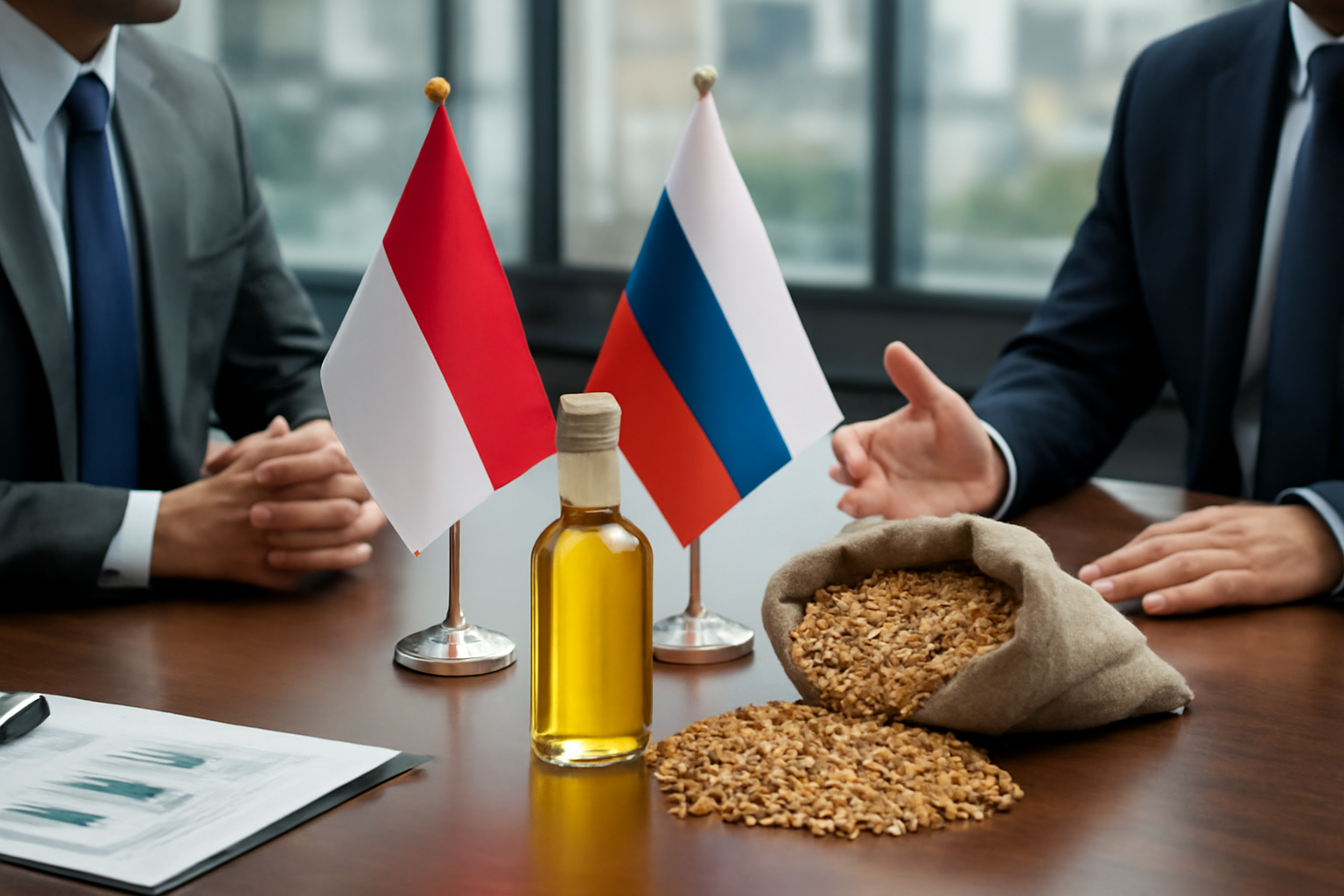
Complementary commodity supplies
Indonesia and Russia are considering the potential to deepen bilateral commodity flows by linking Russian wheat supply with Indonesian palm oil exports. During a meeting with Russian President Vladimir Putin, Indonesia’s Prabowo presented the two products as an example of how the countries’ economic strengths could complement one another, according to Tribunnews.
Prabowo said Russia could supply Indonesia’s domestic wheat requirements, while Indonesia was ready to meet demand for palm oil in the Russian market. His remarks framed the relationship around reciprocal supply rather than competition: each country would provide a commodity needed by the other market.
A basis for broader economic ties
Tribunnews reported that Prabowo described Indonesia and Russia as possessing complementary economic strengths and therefore having the potential to become strategic partners. Wheat and palm oil provide a concrete basis for that argument because they create possible trade in both directions, with Russia supplying Indonesia and Indonesia supplying Russia.
The statements indicate political interest in expanding commodity trade, but the available source material does not identify proposed volumes, prices, contract values, delivery schedules or participating companies. It also does not describe a signed supply agreement. For producers, processors and traders, those commercial details would determine whether the political proposal develops into additional physical shipments.
Commercial terms will determine the impact
For Indonesian buyers, a larger role for Russian wheat would depend on the terms offered to the domestic market and the ability of suppliers to serve Indonesia’s requirements. For Indonesian palm oil producers and exporters, stronger Russian demand could create another sales channel if buyers and sellers reach workable agreements. Russian importers would likewise need commercially suitable palm oil supplies, while Russian wheat exporters would need confirmed Indonesian demand.
The proposed complementarity could support a more balanced commodity relationship because it involves potential flows in both directions. However, the remarks reported by Tribunnews establish an opportunity rather than a completed transaction. The next meaningful indicators will be specific purchase commitments, named counterparties and shipment arrangements. Until those emerge, the initiative remains a statement of bilateral trade potential centered on two commodities that each side says it can supply.
