Indonesia’s Rote Ndao salt hub targets productivity of 200 tonnes per hectare
Indonesia is developing an integrated salt production zone in Rote Ndao with projected productivity of about 200 tonnes per hectare. The project is intended to reduce reliance on imported salt, expand domestic processing and create jobs in East Nusa Tenggara.
Integrated salt production planned in East Nusa Tenggara
Indonesia is developing the National Salt Industry Centre Zone, known as K-SIGN, in Rote Ndao Regency, East Nusa Tenggara, as part of a government drive to strengthen domestic salt production. The industrial zone is projected to produce high-quality salt with productivity of about 200 tonnes per hectare, according to ANTARA and detikBali.
East Nusa Tenggara Governor Emanuel Melkiades Laka Lena said the project would support the national objective of salt self-sufficiency while stimulating the regional economy. The stated productivity figure describes output per hectare, but the source material does not specify the total area under development or the zone’s prospective annual production. Those figures will be necessary for measuring its eventual contribution to national supply.
K-SIGN is being built around an integrated production system. The planned chain extends from seawater collection ponds through sedimentation and crystallisation to salt storage warehouses. This approach is intended to establish a modern industrial operation capable of producing consistent, higher-quality output rather than functioning only as a collection of traditional salt plots.
Import dependence drives government policy
Coordinating Minister for Food Zulkifli Hasan said the project follows President Prabowo Subianto’s instruction to reduce Indonesia’s dependence on imported salt. According to detikBali, its development also implements Presidential Regulation No. 17 of 2025 on accelerating the development of the national salt sector.
The project places Rote Ndao within a broader effort to retain more value from salt production inside Indonesia. If domestic output can meet the quality and volume requirements of industrial buyers, the zone could supply processors that would otherwise rely on foreign material. However, neither publication provided figures for Indonesia’s current imports, domestic demand or the share that K-SIGN is expected to replace.
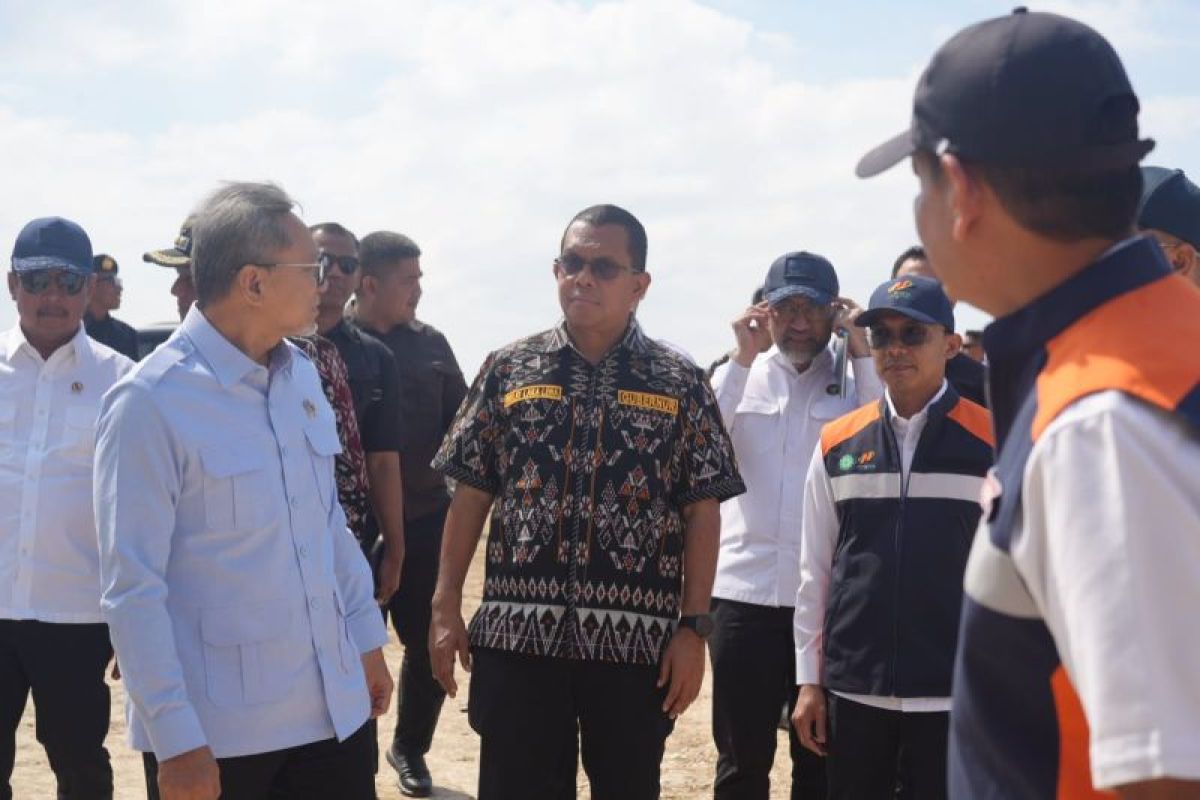
Three cabinet ministers inspected the project’s development: Zulkifli Hasan, Maritime Affairs and Fisheries Minister Sakti Wahyu Trenggono, and Villages and Development of Disadvantaged Regions Minister Yandri Susanto. Their participation indicates that the scheme spans food security, marine resource development and regional economic policy.
Local employment and processing are central goals
Alongside physical infrastructure, the project includes recruitment and skills training for residents around the industrial zone. ANTARA reported that local workers were already taking part in training before beginning employment. The government expects the project to benefit not only salt farmers but also micro, small and medium-sized enterprises, transport providers, traders and other supporting businesses.
Officials also expect K-SIGN to encourage downstream salt processing and reinforce East Nusa Tenggara’s position as a national production centre. For producers and processors, the key commercial tests will be whether the zone can sustain productivity near 200 tonnes per hectare, deliver salt at the specifications required by buyers and compete with imported supply on price and reliability.
The project could broaden Rote Ndao’s economic base by linking primary salt production with storage, logistics and processing. Its impact on Indonesia’s import requirements will ultimately depend on the cultivated area, realised output, product quality and the pace at which domestic industrial users adopt the new supply.