Indonesia’s Plantation Fund Agency Plans Coconut Replanting and Research Support
Indonesia’s Plantation Fund Agency is preparing financing for coconut replanting, infrastructure, training, research and industry partnerships. The 2026 program covers 17 provinces as the sector confronts aging trees, low productivity and high logistics costs.
Fund expands support beyond palm oil
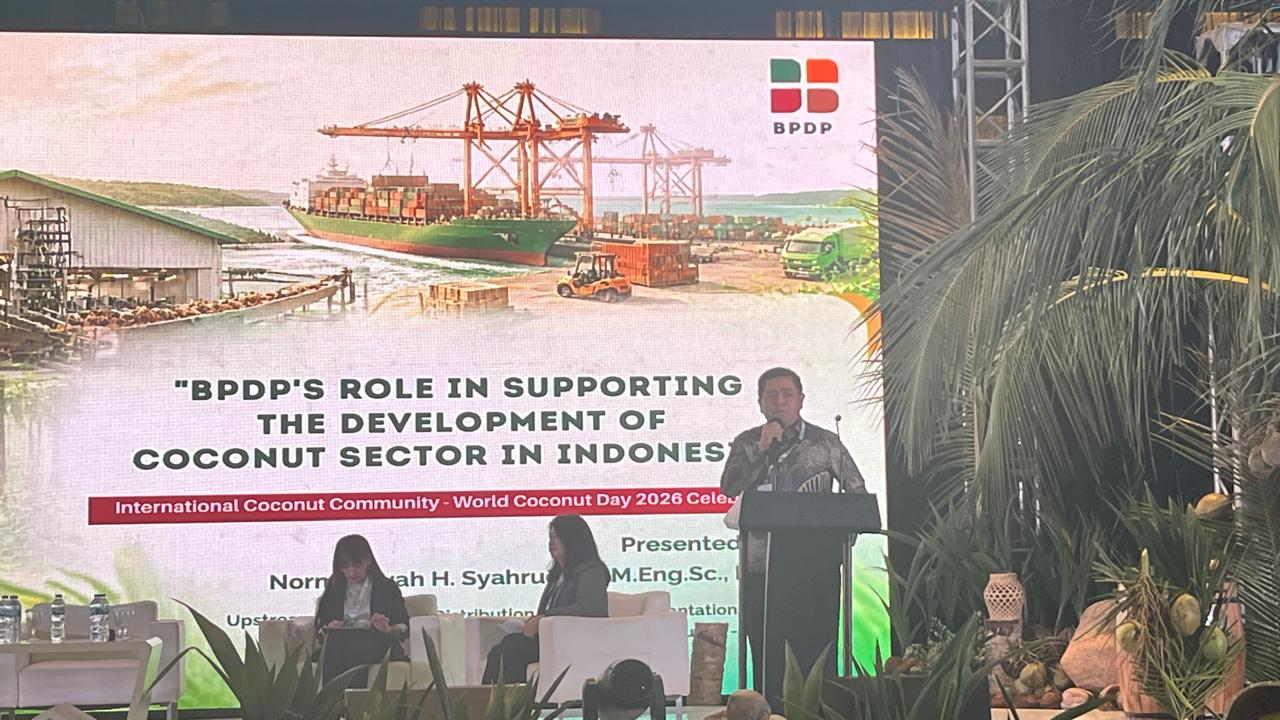
Indonesia’s Plantation Fund Agency, known as BPDP, is preparing several financing schemes to develop the country’s coconut sector, with support spanning farm renewal, infrastructure, skills, research, promotion and partnerships. Normansyah H. Syahruddin, BPDP’s director of upstream fund distribution, presented the plans during the International Coconut Community’s World Coconut Day 2026 program in Manado on October 8, according to Media Perkebunan.
BPDP was established in 2015 as the Indonesian Oil Palm Plantation Fund Management Agency, or BPDPKS, initially with a mandate focused on palm oil. Presidential Regulation No. 132 of 2024 expanded that mandate to include cocoa and coconut, accompanied by the institution’s transformation into BPDP. The coconut funding program has been designated for implementation in 17 provinces during 2026. In North Sulawesi, support will cover North Minahasa and South Minahasa regencies.
Replanting targets aging and low-yield farms
Indonesia has 3.29 million hectares of coconut plantations, producing about 2.70 million tonnes, according to figures presented by Normansyah. Productivity exceeds one tonne per hectare, but aging trees, pests and diseases continue to limit output in several production centers. Around 98% of the country’s coconut plantations are managed by smallholders, making access to planting material, equipment and technical assistance central to any productivity program.
BPDP is working with the Ministry of Agriculture on replanting both tall and dwarf coconut varieties. Priority is being given to farms with old trees, low productivity or severe pest and disease damage. Upstream assistance may include seed, fertilizer, agricultural machinery, transport to plantations and the construction of plantation roads. Farmer groups, individual farmers and cooperatives can submit proposals through the ministry’s Directorate General of Plantations, which may issue a technical recommendation for BPDP financing.
Research and logistics shape downstream supply
The agency’s human-resource program includes extension training, education and scholarships for farmers and their families, as well as mentoring and other support for coconut-sector workers. Research financing is intended to cover the full value chain. Upstream priorities include germplasm, plant breeding, cultivation, harvesting and seed production. Downstream work may address post-harvest handling, processing, socioeconomic issues, marketing, waste utilization and coconut by-products. BPDP launched a coconut research initiative in 2026 and expects support for research and workforce development to expand.
Improved farm output alone will not resolve the sector’s supply constraints. Media Perkebunan reported that much of Indonesia’s coconut production is located in the east, while processing capacity is concentrated in the west, increasing transport and logistics costs. Fragmented farm ownership, supply-chain bottlenecks and limited downstream integration add further pressure. North Sulawesi has about 270,000 hectares of coconut plantations, making it the country’s second-largest producing area by planted area after Riau, which has more than 400,000 hectares. Processed goods already account for about 80% of Indonesia’s coconut export value, compared with around 20% for whole coconuts. The Philippines, China, the Netherlands and Malaysia are among its coconut trading partners, underscoring the importance of linking replanting and research funding with reliable collection, processing and market access.