Indonesia's Oil Palm Area Nears Environmental Carrying-Capacity Limit, Beritasatu Reports
Indonesia's oil palm plantation area has moved close to the upper boundary implied by environmental carrying-capacity modelling, according to beritasatu.com. The reporting does not disclose the threshold value, the current area it was compared against, or the institution behind the calculation. If area is effectively capped, future output growth depends on replanting, seed quality and mill extraction rates rather than on new land.
Modelling points to a ceiling on planted area
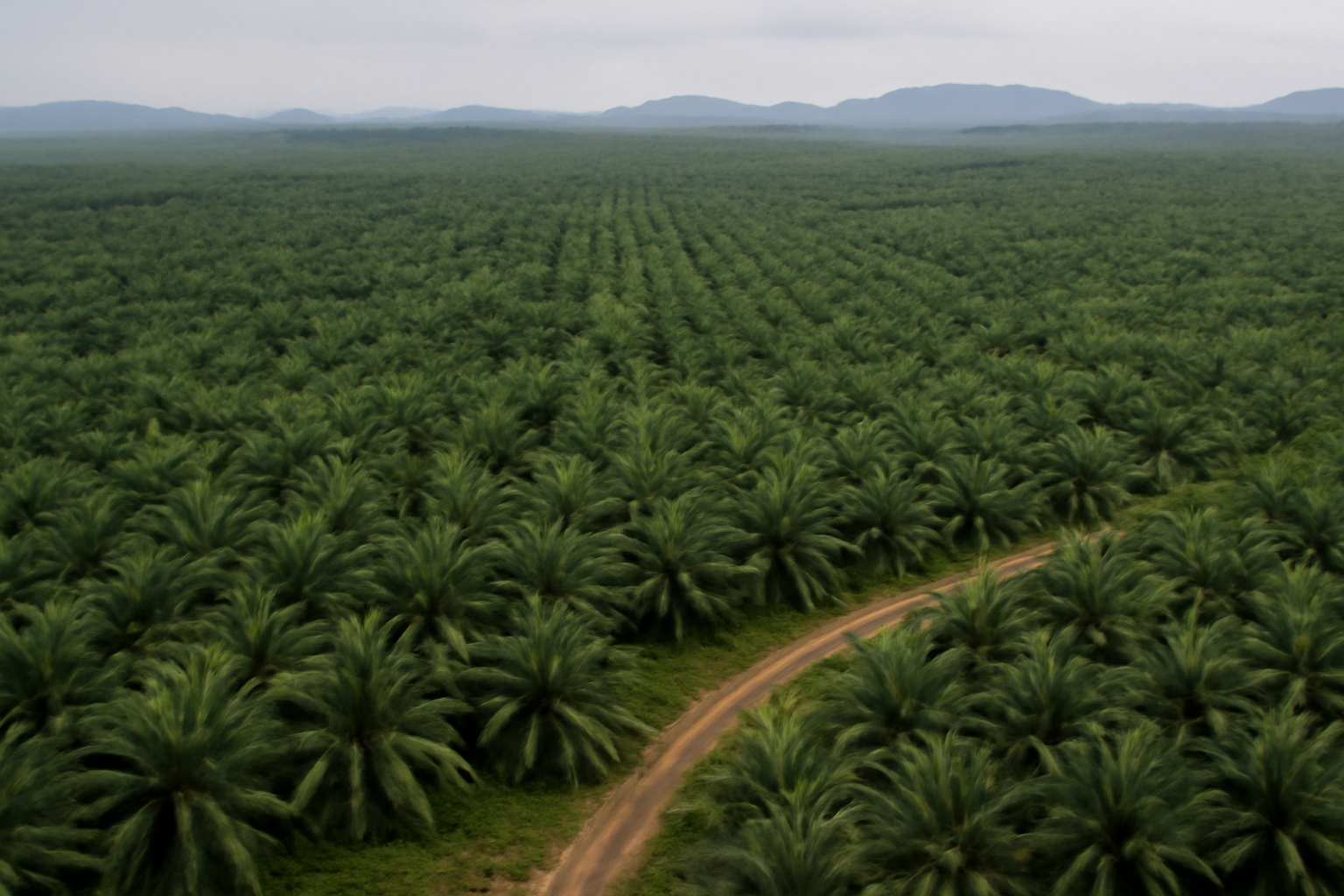
Indonesia's oil palm plantation area has moved close to the upper boundary implied by environmental carrying-capacity modelling, according to beritasatu.com. The reporting treats planted area as a bounded variable rather than an open-ended input: once land, water, forest cover and ecosystem services are counted as constraints, there is a level of plantation area beyond which further expansion is no longer environmentally supportable. On that reading, Indonesia is already close to that level.
The conclusion carries weight because Indonesia is the world's largest palm oil producer, and because oil palm delivers more oil per hectare than any other major oilseed crop. A binding limit on Indonesian area is therefore a limit on the cheapest source of incremental global vegetable oil supply, with effects that reach refiners, food manufacturers, biofuel blenders and oilseed growers well outside Southeast Asia.
Beritasatu did not publish the threshold value used in the modelling, the current planted area it was measured against, or the institution behind the calculation. The room still left between the present footprint and the modelled ceiling therefore cannot be quantified from the available reporting, and the finding should be read as a direction of travel rather than a dated deadline.
Output growth shifts from area to yield
For most of the sector's history, Indonesian production grew primarily through new planting. If area is effectively capped, the levers that remain are agronomic and industrial:
- replanting ageing stands, above all on smallholder blocks where palms are past peak productivity;
- replacing unimproved planting material with certified high-yield seed;
- closing the yield gap between smallholders and estates through fertiliser access, harvesting discipline and upkeep of roads and drainage;
- raising oil extraction rates at the mill and cutting losses between harvest and crushing.
Each of these is slower and more capital-intensive than clearing new land. Replanting in particular takes a block out of production for the years a young palm needs before it bears commercially, which is why smallholders postpone it without financing. The practical result is that supply growth becomes a function of credit, seed supply and extension services rather than of land availability.
Trade and downstream demand feel it first
Indonesian palm oil is split between domestic food use, domestic biodiesel blending and exports, and exports are the residual claim on the crop. A supply base that stops expanding while blending requirements and food demand keep growing narrows the volume available to international buyers, even with no change in trade policy. Importers in South Asia, China, the Middle East and Europe would cover that through a mix of higher prices and substitution into soybean, sunflower and rapeseed oil, and it is that substitution which transmits palm oil tightness into the wider oilseed complex.
The limit also changes what plantation assets are worth. Where growth cannot come from new hectares, already planted area, mills inside established supply sheds and land banks with clean title gain value relative to greenfield expansion plans. That logic favours consolidation among existing operators and vertical integration into refining and oleochemicals over further land acquisition.
For buyers already building deforestation requirements into their sourcing, a domestic ecological constraint points the same way: verified volumes from area that is already planted, rather than growth from the agricultural frontier. The policy response is left open in the Beritasatu account, which does not address whether the ceiling would be enforced through licensing and spatial planning or simply reached in practice.
Full market analysis