Indonesian lawmakers seek tighter salt imports before 2027 self-sufficiency target
Indonesian lawmakers are urging the government to restrict industrial salt imports after shipments reached 936,000 tonnes in January–May 2026, up 13.1%. They also want investment in purification technology, protection for 33,216.06 hectares of salt ponds and stronger industrial demand for domestic salt.
Import increase raises pressure on 2027 target
Indonesian lawmakers have called for tighter controls on salt imports and faster improvements in domestic production as the country works toward national salt self-sufficiency in 2027. The intervention follows an increase in industrial salt imports during the first five months of 2026, highlighting the gap between the government's target and manufacturers' current dependence on foreign supplies.
Industrial salt imports reached 936,000 tonnes in January–May 2026, an increase of 13.1%, according to figures cited by House of Representatives Commission IV member Daniel Johan and reported by ANTARA and VIVA. Johan said the rise should prompt concrete measures in production areas rather than allowing imports to become the automatic response to additional industrial demand.
The proposed approach does not amount to an immediate halt to all foreign purchases. Lawmakers said imports should be opened selectively for requirements that domestic producers genuinely cannot meet. Herman Khaeron, a member of House Commission VI, said each import decision should be tested against data on demand, inventories, domestic capacity, salt quality and industry's ability to absorb local output.
Quality remains the main industrial constraint
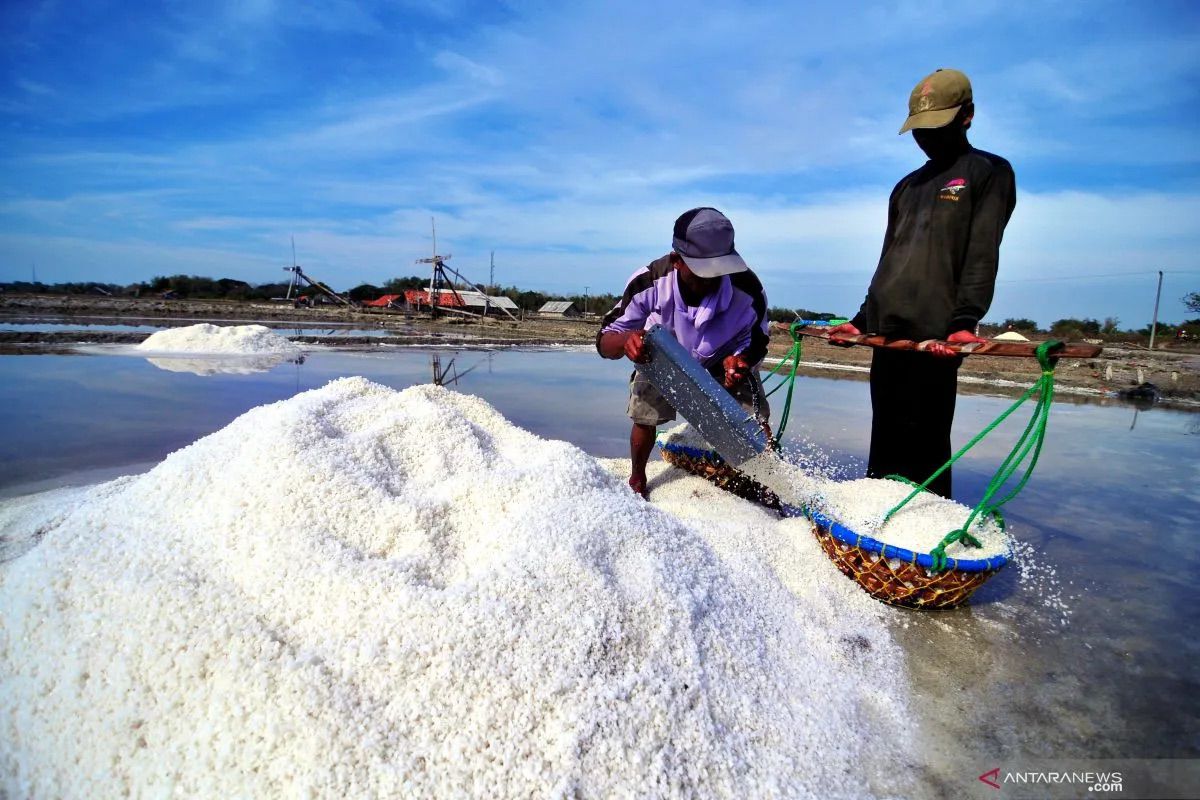
Johan argued that improving quality is more important than simply increasing production volume. Indonesia has 33,216.06 hectares of salt ponds, which he described as an important foundation for national supply. He urged the authorities to protect this land from conversion while helping producers raise the quality and competitiveness of their output.
A central proposal is to expand access to salt purification technology at the producer level. Better processing would allow locally harvested salt to meet industrial specifications and compete on price. This is critical because higher raw production alone will not reduce import dependence if domestic material remains unsuitable for industrial users.
Khaeron said the sector also needs infrastructure, technology, reliable supply and stronger producer institutions. Salt production is affected by climate conditions, making continuity a particular concern for industrial buyers. Accessible technology could help producers manage these fluctuations, but factories will still require predictable volumes and consistent specifications before replacing established imported supplies.
Local purchasing obligations enter the debate
Lawmakers are also seeking stronger mechanisms to ensure that industrial users and importers purchase domestic salt. VIVA reported that Khaeron supported pairing import restrictions with obligations to absorb local production. Without guaranteed demand, producers may lack the commercial incentive to invest in higher output and purification capacity.
The policy challenge is therefore broader than setting a quota. A sharp restriction imposed before local salt meets industrial standards could expose processors to supply or quality risks. Conversely, continued import growth could weaken prices and demand for domestic salt, making investment by pond operators and processors less attractive.
The parliamentary proposals link import approvals, land protection, technology and industrial purchasing in a single policy direction. For producers, the 2027 target could create a larger domestic market if quality upgrades proceed quickly. For industrial users and traders, it could mean more scrutiny of additional import requests and greater pressure to demonstrate why local supplies cannot meet their requirements.
No new quota level or implementation timetable was specified in the reports. The immediate focus is on requiring import decisions to reflect verified demand, stocks, domestic production capacity and quality. Progress toward self-sufficiency will ultimately depend on whether Indonesia can convert its salt-pond area into a stable supply of competitively priced industrial-grade material.