Indonesian farmgate paddy price reaches Rp7,000/kg, exceeding government floor
Indonesia’s average farmgate price for harvested dry paddy has reached about Rp7,000 per kilogram, above the government purchase price of Rp6,500. Higher paddy prices support farmers’ incomes and production incentives, but they could also push retail rice prices above official ceilings.
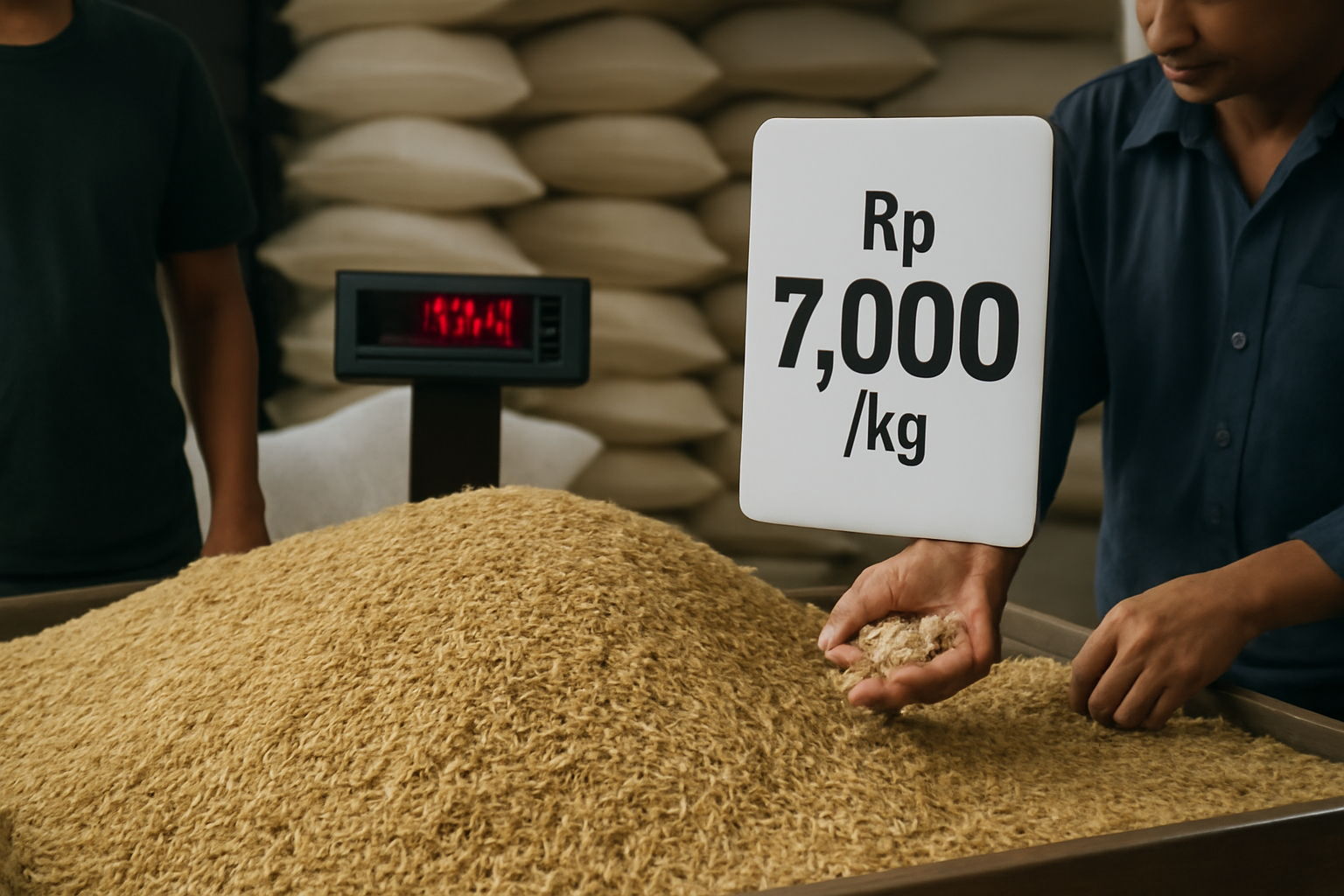
Paddy price rises above official purchase level
Indonesia’s average farmgate price for harvested dry paddy, known locally as GKP, has reached about Rp7,000 per kilogram, according to the National Food Agency, or Bapanas. The price is Rp500 per kilogram, or about 7.7%, above the government purchase price of Rp6,500 per kilogram.
I Gusti Ketut Astawa, Bapanas deputy for food availability and stabilization, told ANTARA that the higher price was a positive incentive for farmers to increase paddy production. The government regards profitable farmgate prices as an important part of its effort to achieve sustainable food self-sufficiency.
The agency said the stronger paddy market had helped lift the rice farmers’ received-price index. Statistics Indonesia, known as BPS, reported that the index reached 149.65 in June 2026, its highest level since 2019 and therefore the highest in seven years.
Farm indicators strengthen
Annual data show that the index has risen consistently. It averaged 104.99 in 2021, 110.42 in 2022, 127.26 in 2023 and 135.99 in 2024. The 2025 average was 141.31, an increase of 36.32 points from 2021.
Throughout 2025, average paddy purchase prices recorded by BPS remained above the Rp6,500-per-kilogram government level. The lowest monthly average was Rp6,712 per kilogram in April 2025, still Rp212 above the official purchase price.
Other measures also indicate an improvement in agricultural purchasing power. Indonesia’s national Farmers’ Terms of Trade index stood at 127.65 in June 2026. The corresponding index for the food-crop subsector reached 114.65, its highest level since March 2024.
Consumer rice prices remain the policy risk
The gain for growers creates a challenge further along the supply chain because paddy prices are closely connected to the cost of milled rice. Bapanas acknowledged that stronger GKP prices could push rice above the maximum retail price. The agency said the government would continue using food-stabilization policies to balance farm profitability with affordability for consumers.
One measure is food assistance for 33.24 million families. Astawa estimated that, if each household contains three people, the program reaches more than 90 million consumers. This support is intended to reduce the burden on households exposed to higher food prices.
The central policy question is whether Indonesia can preserve a farmgate price strong enough to encourage planting and productivity while preventing the additional raw-material cost from passing fully into retail rice. Processors and distributors face greater procurement costs when paddy trades above the government benchmark, while farmers benefit directly from the wider margin.
Bapanas head and Agriculture Minister Andi Amran Sulaiman has reiterated the government’s objective of sustainable food self-sufficiency. ANTARA also reported that the Food and Agriculture Organization forecasts Indonesian rice production could reach 38 million tonnes. Achieving that volume while controlling consumer prices will depend on production growth, milling and distribution efficiency, and the reach of stabilization programs.