Indonesia Seeks to Reduce Coffee Import Dependence While Exporting Most of Its Crop
Indonesia exports more than half of its domestic coffee production but still imports tens of thousands of tonnes. Commission VII of the House of Representatives is pressing for stronger downstream processing to reduce dependence on foreign raw materials.
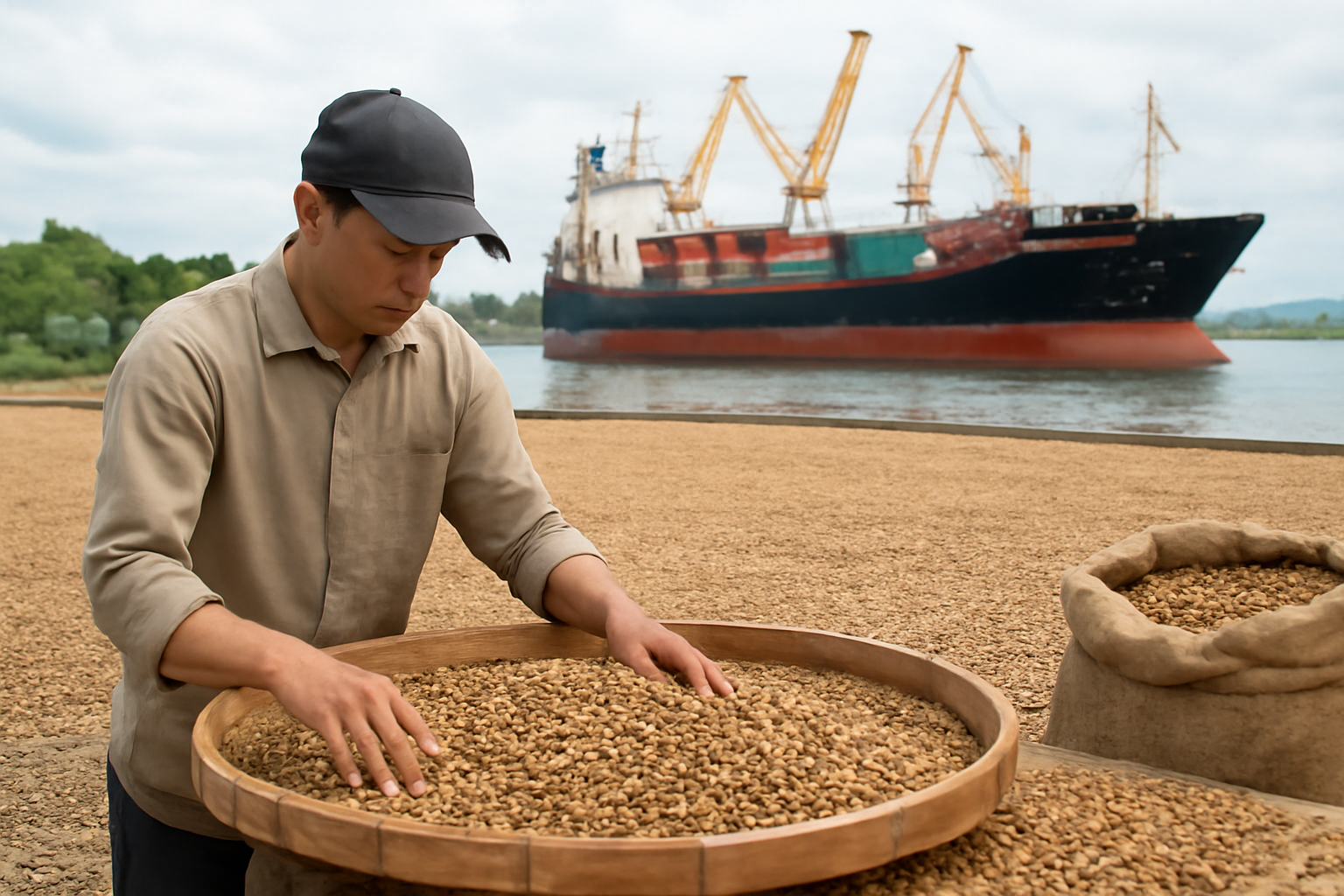
Exports and imports coexist
Indonesia exports more than half of its national coffee production while continuing to import tens of thousands of tonnes, according to Wawasan Suara Merdeka. The two-way flow highlights a distinction between the total volume produced domestically and the specific coffee required by processors and consumer markets.
Large exports do not necessarily eliminate the need for imports. Coffee differs by species, grade, flavor profile, price and intended use. Exporters may find overseas buyers for Indonesian beans while domestic roasters and manufacturers source other types of coffee from abroad. The available source material does not specify the imported varieties, their origins or their value, so the precise composition of the supply gap remains unclear.
Lawmakers focus on downstream capacity
Commission VII of Indonesia’s House of Representatives is continuing to push for stronger coffee downstream processing, Wawasan Suara Merdeka reported. The stated objective is to reduce dependence on raw materials from overseas. That policy direction places processing capacity, sourcing and product specifications at the center of the debate rather than treating imports and exports as inherently contradictory.
For domestic processors, reducing import dependence would require reliable access to beans that meet their technical and commercial requirements. Increasing national output alone may not resolve the issue if the additional harvest is concentrated in grades or varieties aimed at export markets. Closer coordination between farmers, collectors, processors and roasters could therefore be as important as new factory capacity.
Implications for the coffee chain
The current trade pattern creates different incentives across the supply chain. Farmers and exporters benefit from access to foreign demand, while processors need competitively priced and consistent inputs throughout the year. Measures that redirect beans from export channels without addressing quality, price and contract requirements could raise costs without removing the underlying reason for imports.
Stronger downstream activity could allow Indonesia to retain more processing within the country, but its effect will depend on what facilities produce and which beans they use. Investment in roasting, blending and other processing stages would have limited impact on import dependence if local supply does not match industrial specifications. Conversely, production programs targeted at the varieties and grades now sourced abroad could connect agricultural policy more directly with manufacturing demand.
Data will determine policy choices
Further assessment requires details that were not included in the available report: import volumes by coffee type, countries of origin, seasonal purchasing patterns, domestic processing demand and the share of local production suitable for each industrial use. Those figures would show whether imports mainly fill a quality gap, a price gap, a seasonal shortage or a combination of factors.
For producers, traders and investors, the central issue is therefore not simply why an exporting country also imports coffee. It is whether Indonesia can align farm output with the requirements of its growing downstream industry while preserving profitable export channels. Commission VII’s initiative signals political support for that goal, but implementation will depend on matching capacity investment with the right raw-material base.