Indonesia’s coconut output and processing constraints sustain coconut-milk imports
Indonesia remains an importer of coconut milk from Singapore despite its abundant coconut resources. Stagnant production, processing limitations and global distribution networks are complicating the government’s effort to retain more value through domestic downstream processing.
Abundant coconuts do not guarantee processed supply
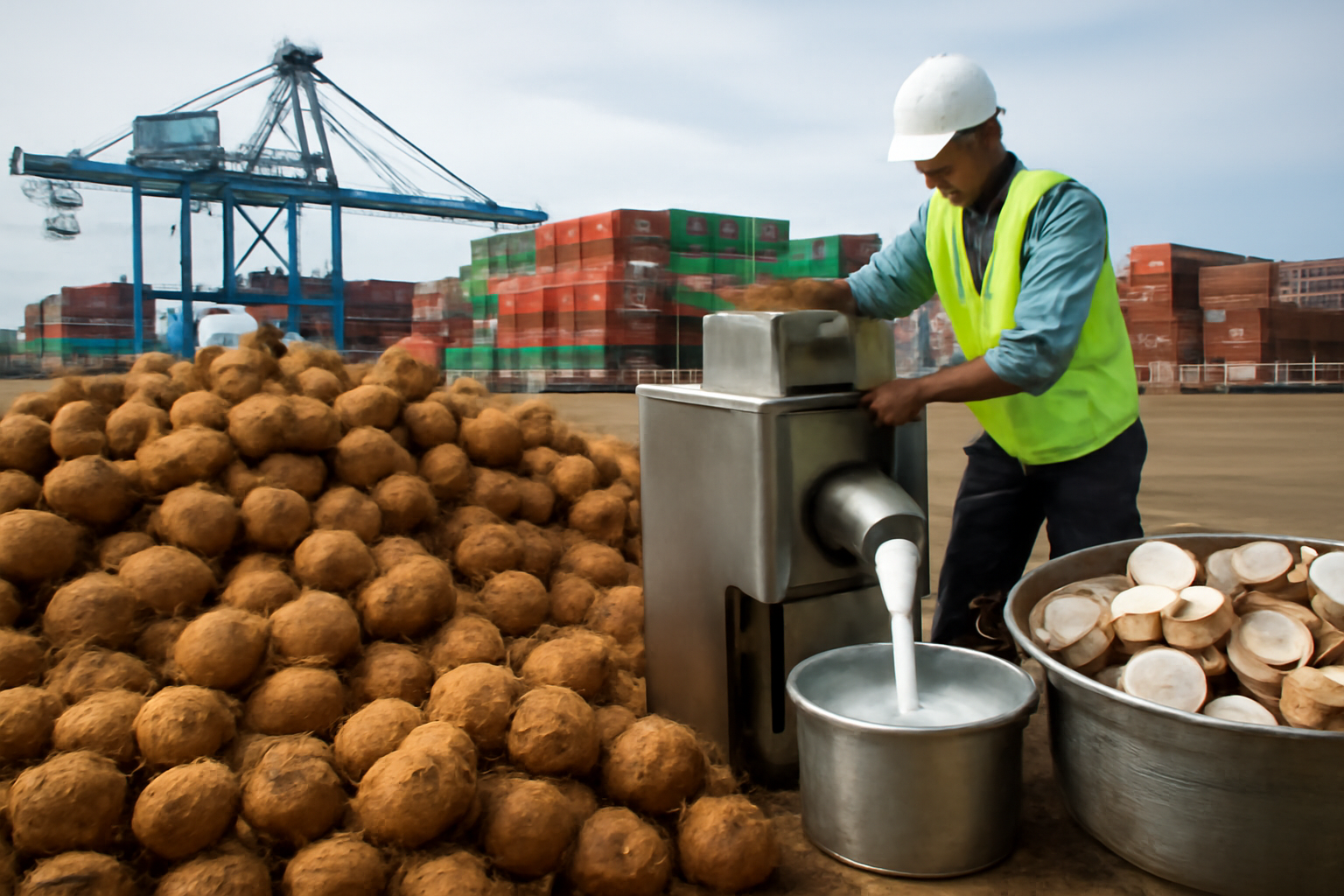
Indonesia’s position as a major coconut producer has not eliminated its need to import coconut milk from Singapore. Tirto.id reports that stagnant domestic production and the organization of global distribution continue to support these purchases, even as the Ministry of Agriculture promotes downstream processing to capture more value inside Indonesia.
The apparent contradiction reflects the difference between producing a raw agricultural commodity and supplying a standardized processed ingredient. Coconut milk must be manufactured, packaged and delivered in the formats required by food producers, restaurants, retailers and households. Abundant coconut resources therefore do not automatically translate into sufficient commercial supplies at the required location, time or specification.
Stagnant production adds pressure at the start of the chain. When the volume of coconuts does not expand alongside demand from processors and consumers, buyers must compete for available raw material. Domestic coconuts may also serve several markets rather than moving exclusively into coconut-milk production. This can leave processors unable to secure a consistent flow of inputs, even in a country widely associated with coconut cultivation.
Processing and distribution determine competitiveness
Processing capacity is only one part of the equation. A plant must receive reliable raw-material deliveries, operate efficiently and supply buyers with consistent quality. Packaging, storage, transport and commercial relationships also influence whether a domestic product can compete with an imported alternative. An importer may consequently choose an established regional supplier when it offers predictable volumes or a distribution channel that is already integrated with the buyer’s operations.
Singapore’s role illustrates how regional trade does not always follow the location of primary production. A distribution and processing center can supply products to a raw-material producer if it has efficient logistics, established contracts or products tailored to industrial and retail demand. The trade flow therefore does not by itself show that Indonesia lacks coconuts. It indicates that parts of the processed-product supply chain remain more competitive or more accessible outside the country.
This distinction matters for Indonesian producers and investors. Expanding coconut cultivation without matching investment in collection, processing and market access may not displace imports. Equally, building factories without securing stable feedstock can create underused capacity. Competitiveness depends on aligning farms, aggregators, processors, packaging operations and buyers rather than treating raw output as the sole measure of supply security.
Government pushes downstream development
The Ministry of Agriculture is encouraging coconut downstream processing as a way to increase domestic value added. For the strategy to reduce import dependence, new or upgraded operations must produce the grades and formats demanded by Indonesian buyers at competitive terms. They must also overcome the distribution advantages held by existing suppliers.
The policy could create opportunities for coconut growers if processors generate stable demand and stronger links to producing areas. Processors, however, need dependable raw-material volumes and logistics before committing capital. Importers and food manufacturers will assess domestic supply primarily through price, quality, availability and delivery reliability, not through Indonesia’s aggregate coconut abundance.
The persistence of imports from Singapore is therefore a test of execution for the downstream agenda. The relevant benchmark is not simply whether Indonesia produces coconuts or installs processing equipment. It is whether the domestic chain can regularly move coconuts from farms into market-ready coconut milk on terms that persuade commercial buyers to replace established imported supply.