Indonesia's slaughter-ready cattle stock projected to run out by November 2026
Indonesia's supply of slaughter-ready cattle is expected to be exhausted by November 2026, with high import costs restraining arrivals of live animals, according to Bisnis.com. The government is preparing an intervention through state-owned food companies, though volumes, instruments and timing have not been specified.
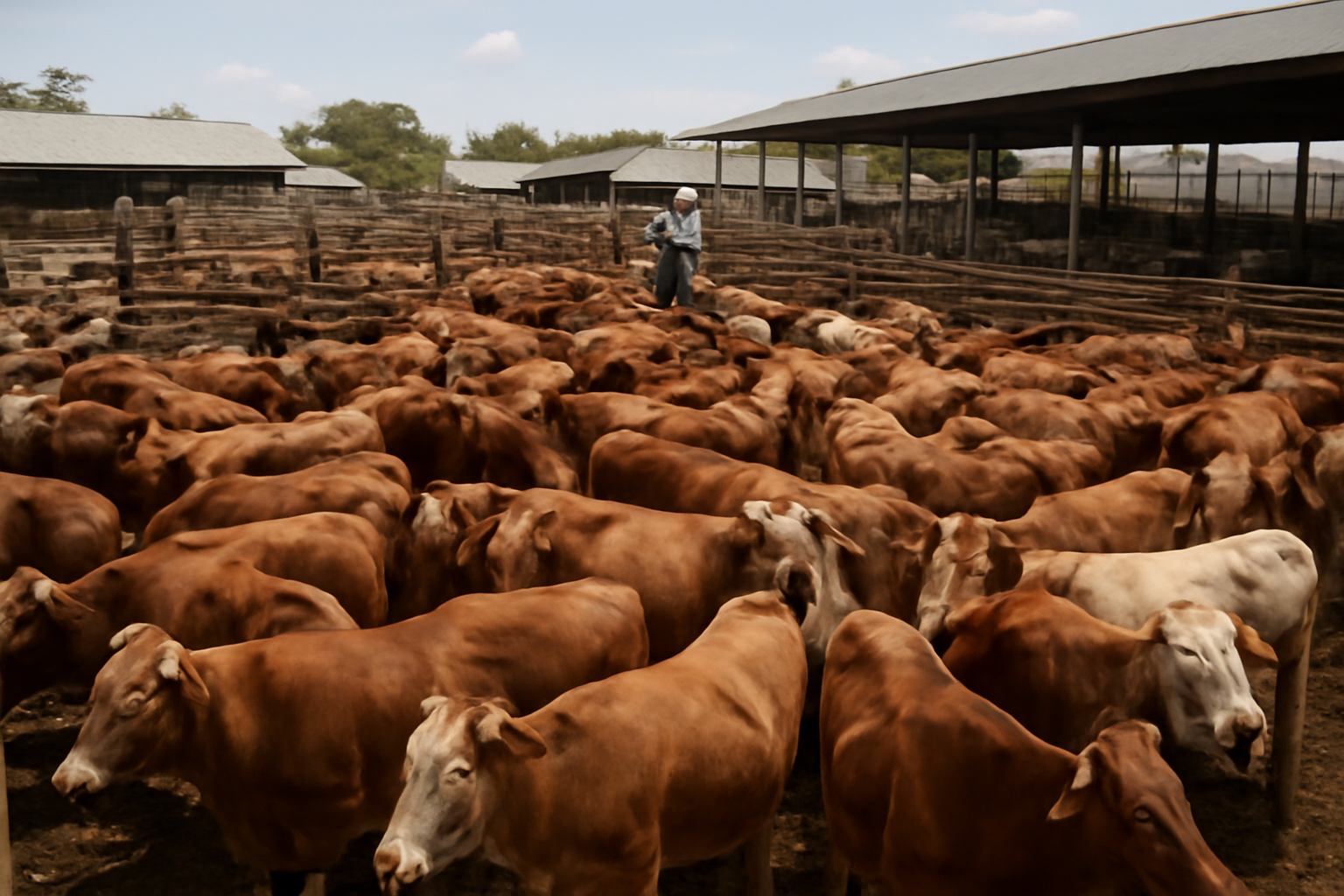
Slaughter-ready stock projected to run out in November
Indonesia's stock of slaughter-ready cattle is projected to be exhausted by November 2026, Bisnis.com reported, pointing to sluggish imports as the main cause. High import costs are holding back the arrival of animals, according to the report, while the government prepares an intervention through its state-owned food companies. No volumes, price levels or delivery schedules were specified.
The distinction between cattle and slaughter-ready cattle is the operative one for processors. What is described is a shortage of animals that have already reached slaughter weight and can move to abattoirs immediately, not of livestock in the country as a whole. Feeder cattle landed at port still require a fattening period before they qualify, so a shortfall in arrivals during one quarter converts into a shortfall of finished animals one or two quarters later. That lag is why a November date can be identified in advance: the animals that would have filled it needed to be standing in feedlots months earlier.
Import economics, not herd size, are the binding constraint
The constraint identified by Bisnis.com is cost rather than physical availability. When the landed cost of imported cattle sits above the price the domestic wholesale market will absorb, importers reduce or postpone bookings instead of accepting negative margins. The decision is commercial and reversible, but it takes effect immediately at the port and only becomes visible in the slaughter chain months afterwards. Several components feed into that landed cost:
- Purchase prices at origin and ocean freight on live animals
- Quarantine, handling and mortality risk on arrival
- Financing costs carried across the entire fattening period
- Currency movement between the purchase and the eventual sale
Any one of these moving against the importer can close the margin. Because feedlot operators must commit capital months before revenue arrives, a period of thin or negative margins tends to reduce placements, which extends the supply gap well beyond the point at which the original cost problem is resolved.
State food companies line up as the intervention channel
The intervention described by Bisnis.com is to run through the state-owned enterprises operating in the food sector. In practice that channel can be used to import on the state's account, to hold and release stock, or to distribute product at administered prices. Each option addresses a different part of the problem: state-account imports address volume, stock release addresses timing, and administered distribution addresses the retail price rather than the underlying supply.
The report does not set out which instrument will be used, at what scale, or on what timetable. For the trade, those parameters are the whole story. An intervention sized to the gap changes fourth-quarter availability, while a smaller one mainly shifts where the cost is carried.
What the market will be watching
Three indicators will show whether the projection is being met: the pace of live cattle arrivals in the coming weeks, feedlot placement levels, and the spread between slaughter-ready cattle prices and wholesale beef. Exporters supplying the Indonesian market face a demand signal that depends less on Indonesian consumption than on whether the cost gap identified by Bisnis.com is closed by policy. If it is not, the constraint reported now carries through the fourth quarter regardless of how many animals are available abroad.