Indonesia's cassava prices reach about Rp2,400 per kilogram after import halt
Cassava prices in several Indonesian production centres have risen to around Rp2,400 per kilogram, which the Indonesian Cassava Society attributes to the government's decision to stop cassava imports. The association says national bioethanol plans could create large-scale new demand, with E20 blending alone requiring some 2.2 million kilolitres. MSI has offered to help develop around 500,000 hectares of cassava, subject to seed, fertiliser, machinery and financing support.
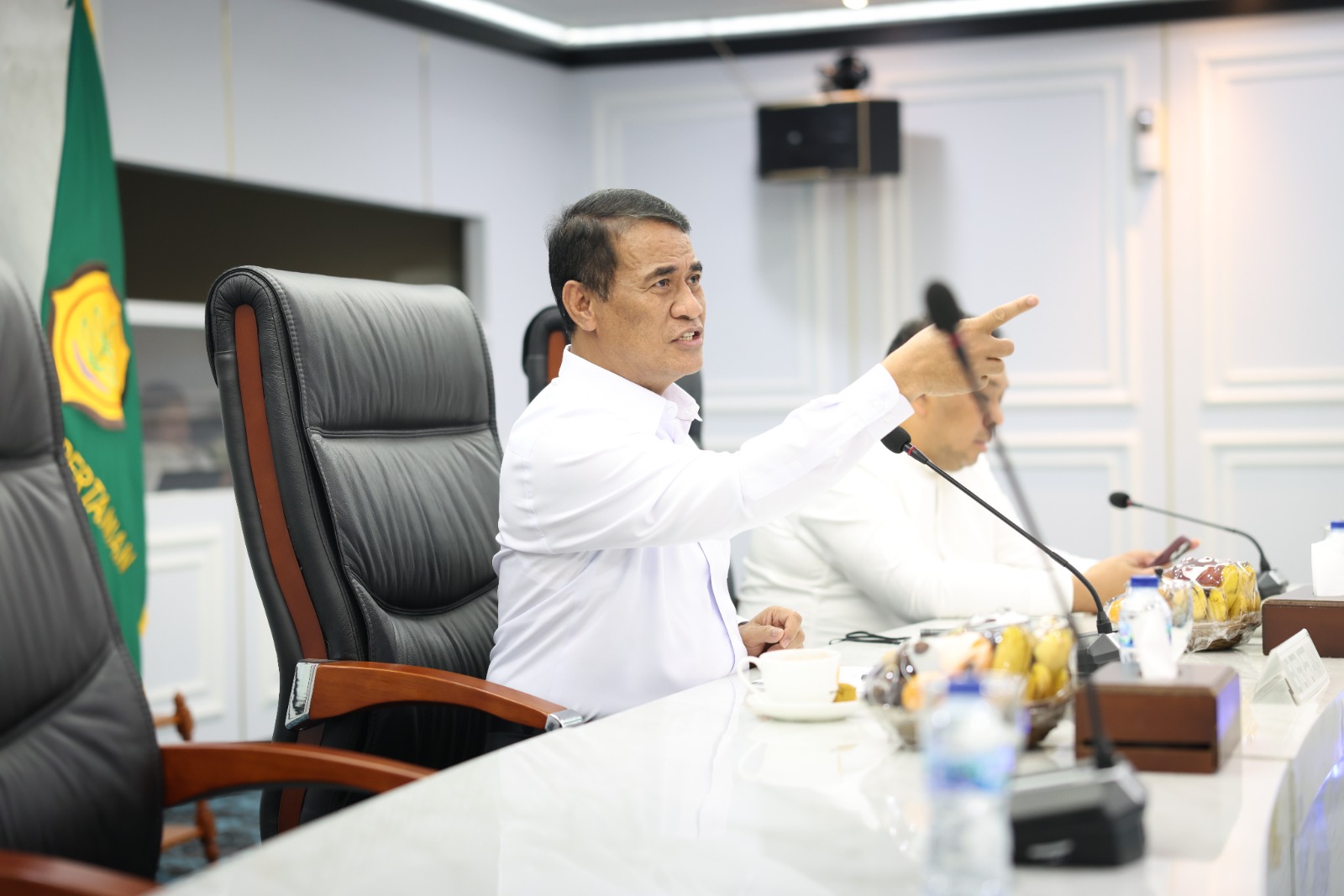
Cassava prices in several Indonesian production centres have climbed to about Rp2,400 per kilogram, a level the Indonesian Cassava Society (Masyarakat Singkong Indonesia, MSI) links directly to the government's decision to stop cassava imports. The figure was cited by MSI representative Arifin during a meeting with Agriculture Minister Amran in Jakarta on Wednesday, 23 September, according to Majalah Hortus.
“Alhamdulillah, especially in Lampung as one of the cassava production centres, the price is already good, around Rp2,400. We thank the Minister and the President for their support and for several policies, for example stopping cassava imports,” Arifin said. He argued that reduced import supply has opened more domestic market space for local growers, and that the price increase is beginning to reflect a stronger domestic market.
Bioethanol sets the demand case
MSI said the stronger domestic market has to be matched by a gradual increase in output, pointing to the national bioethanol programme as the source of new demand. Arifin said the agriculture minister's push on bioethanol could create a large-scale new market for cassava, with rising feedstock requirements giving farmers room to expand planting and raise the crop's economic value. “This is a big requirement. This is a very big market for us,” he said.
According to Arifin, fuel blending targets could lift bioethanol demand to industrial scale: supporting E20 alone would require around 2.2 million kilolitres of bioethanol. MSI said it is ready to back the government's move towards E20 and has coordinated with cassava operators in various regions to prepare feedstock supply. “We are 100 percent ready to support the E50 programme. What matters is the feedstock,” Arifin said, referring to a higher blending level.
Half a million hectares of new planting
To cover that feedstock demand, MSI said it is prepared to take part in developing around 500,000 hectares of cassava land. Arifin cautioned that expansion on that scale depends on strengthening the upstream end of the chain, in particular:
- high-yielding planting material
- fertiliser supply
- agricultural tools and machinery
- financing schemes
Planting material is the most immediate constraint. Arifin said one hectare requires about 8,000 to 10,000 cuttings, so developing hundreds of thousands of hectares implies seed supply in very large volumes. He added that the material must come from high-yielding varieties with good starch content, since starch, rather than fresh root tonnage, determines how much bioethanol can be produced.
Investors wait for off-take certainty
On the industrial side, MSI said it has held talks with several investors interested in developing cassava-to-bioethanol processing, and that some of them are ready. “We have made several contacts with investors, especially in processing cassava into bioethanol. Some investors are already ready,” Arifin said.
He identified market certainty, or a confirmed off-taker, as one of the decisive conditions for bioethanol investment to be realised, and as the mechanism that ensures higher farm output is absorbed by industry. MSI proposed that the bioethanol industry be built in stages and integrated with existing cassava production centres, with a nucleus-plasma partnership scheme prepared so that farmers take part directly as feedstock suppliers.
Arifin framed bioethanol as part of national cassava downstreaming: beyond opening a new market, the industry could raise the commodity's added value and widen farmer participation in the energy supply chain. MSI said it wants cooperation between government, farmers, associations, investors and industry strengthened further, so that import control runs alongside higher domestic production and new demand from bioethanol.