Indonesia’s B50 biodiesel policy leaves Bangka palm fruit prices largely unchanged
Fresh fruit bunch prices on Bangka remained largely stagnant three weeks after Indonesia introduced B50 biodiesel, with increases at some mills limited to Rp30 per kilogram. The uneven response has intensified debate over smallholders’ bargaining power and a proposal to direct their output toward the energy market.
B50 demand has yet to reach Bangka farms
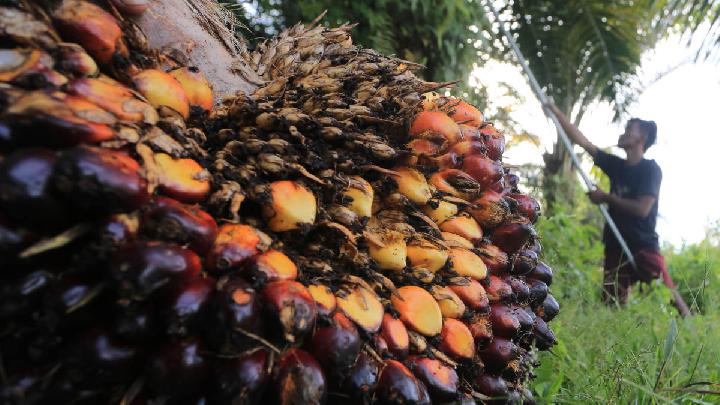
Fresh fruit bunch prices on Indonesia’s Bangka Island have remained largely stagnant since the introduction of B50 biodiesel, despite expectations that greater palm oil demand would improve returns for growers. The fuel, introduced on 1 July 2026, consists of 50% palm-based material and 50% conventional diesel and is intended to strengthen domestic energy security and reduce Indonesia’s dependence on fossil fuel imports.
Three weeks after the policy was announced, most palm oil companies on Bangka had not made significant price adjustments, according to Jamaludin, acting head of the Bangka Belitung branch of the Indonesian Palm Oil Farmers Association. Bangkapos reported that increases at some companies were limited to around Rp30 per kilogram and were not applied across the island.
Jamaludin said growers had expected fresh fruit bunch prices to rise alongside crude palm oil prices, the stronger dollar and higher overseas prices. He also pointed to a similar upward market trend in Malaysia. Farmers have not been told why companies on Bangka have been slow to adjust their purchasing prices, he said.
Belitung prices move higher
The situation differs on neighboring Belitung Island, where purchasing prices have continued to follow market developments. From 21 July 2026, fresh fruit bunches in Belitung were bought at Rp3,670 per kilogram, while prices on Bangka ranged from Rp3,050 to Rp3,250 per kilogram, Bangkapos reported.
Prices received by independent growers in Belitung have also moved close to those paid to plasma farmers, who operate within partnership schemes linked to plantations or mills. The divergence between the two islands shows that a national fuel policy does not automatically produce uniform farm-gate gains. Local mill demand, procurement practices and farmers’ access to buyers continue to shape how additional palm oil demand is transmitted through the supply chain.
Industry figure proposes separate energy market
Against this background, Agro Investama Group president director Petrus Tjandra has proposed classifying the fresh fruit bunch market according to its final product. Speaking at a discussion in Jakarta on 21 July 2026, he suggested directing the output of smallholders, who account for 43% of the sector and 6.8 million hectares, toward energy products. Large companies and state-owned enterprises could concentrate on cooking oil and other products, Tempo reported.
Tjandra argued that mills focused on cooking oil favor fruit with lower free fatty acid levels. Overripe bunches, although yielding an estimated 28–31% oil, can consequently be rejected or purchased at a discount. Separating plantations supplying food and energy markets could reduce the risk that smallholders’ fruit is rejected as overripe, he said.
The proposal also addresses a longer-standing imbalance between independent farmers and integrated plantation companies. Large operators typically own both estates and processing mills, while smallholders often lack their own processing capacity and depend on third-party buyers. Tjandra said this weakens their bargaining position and keeps fresh fruit bunch prices relatively low. He called for smallholders to own mills capable of processing their harvests, a step that could give them more control over quality, timing and sales as B50 expands the domestic energy market.