Indian rice export prices reach one-year high on African demand and weak monsoon
Indian rice export quotations rose to their highest level in a year as stronger African demand coincided with poor monsoon rainfall. The increase was modest week on week, but tighter availability could raise procurement costs for importers and improve the position of competing Asian suppliers.
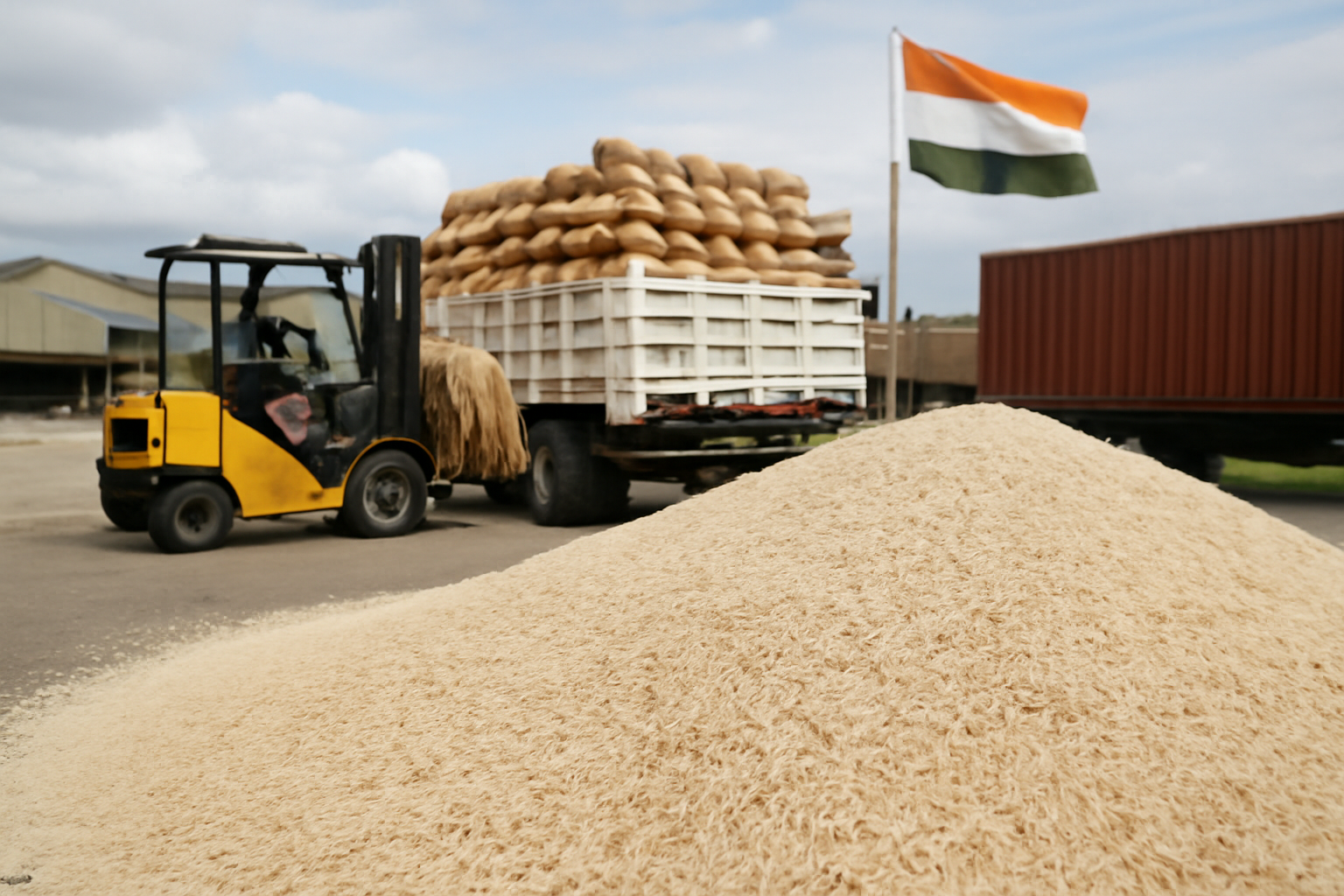
Export quotations move higher
Indian rice export prices climbed to their highest level in a year as stronger demand from Africa and poor monsoon rainfall tightened market availability. The country’s 5% broken parboiled rice was quoted at $364-$369 per tonne this week, compared with $362-$368 per tonne in the previous week. Indian 5% broken white rice was offered at $360-$365 per tonne.
The weekly change in parboiled rice quotations was limited, but the move to a one-year high is significant for buyers that rely on India as a major source of competitively priced grain. The bottom of the quoted range increased by $2 per tonne, while the top rose by $1 per tonne. White rice remained slightly cheaper than parboiled rice across the reported ranges, although the two ranges overlapped between $364 and $365 per tonne.
African buying supports the market
Demand from African customers was identified as a central driver of the increase. Stronger buying can quickly affect export quotations when available supplies are constrained, particularly for widely traded grades such as 5% broken parboiled and white rice. For importers, even a relatively small increase matters when applied to large cargoes and repeated purchases.
The rise also shows that buyers are competing for Indian supply despite the difference between the two reported grades. Parboiled rice is widely used in markets where buyers value its processing characteristics, while white rice serves a broad range of consumer markets. With both products quoted close to each other, procurement decisions may depend on specifications and availability as much as on the headline price.
Weak rainfall raises supply concerns
Poor monsoon rainfall is adding pressure by creating uncertainty over domestic availability. Rainfall is a key consideration for India’s rice market because expectations for production influence how exporters, processors and traders manage stocks. The source material provides no production estimate or quantified supply loss, so the current price movement signals concern rather than a confirmed harvest shortfall.
That distinction is important for market participants. If rainfall conditions improve, some of the supply premium could ease. If weak conditions persist, exporters may remain cautious about offering volumes, while buyers may seek earlier coverage. The immediate evidence is contained in export quotations: parboiled rice is now offered up to $369 per tonne and white rice up to $365 per tonne.
Implications for Asian competition
Higher Indian prices can give competing Asian suppliers more room in export negotiations, particularly where importers can substitute origins without changing product specifications. However, no comparable quotations for other suppliers were included in the source material, making it impossible to establish whether Indian rice has lost price competitiveness.
For African importers, the combination of firmer demand and uncertain Indian supply increases exposure to further quotation changes. Traders will watch whether buying remains strong and whether monsoon conditions alter expectations for availability. For Indian exporters and processors, the one-year price high offers firmer selling values, but weak rainfall also raises the risk that supply will become harder or more expensive to secure.
