India’s whole cardamom exports more than triple to $436.8 million in FY2025-26
India’s whole cardamom exports reached $436.8 million in FY2025-26, compared with $131.9 million in FY2023-24. The increase makes whole cardamom a standout high-value category in the country’s spice trade, although the available government data do not separate volume and price effects.
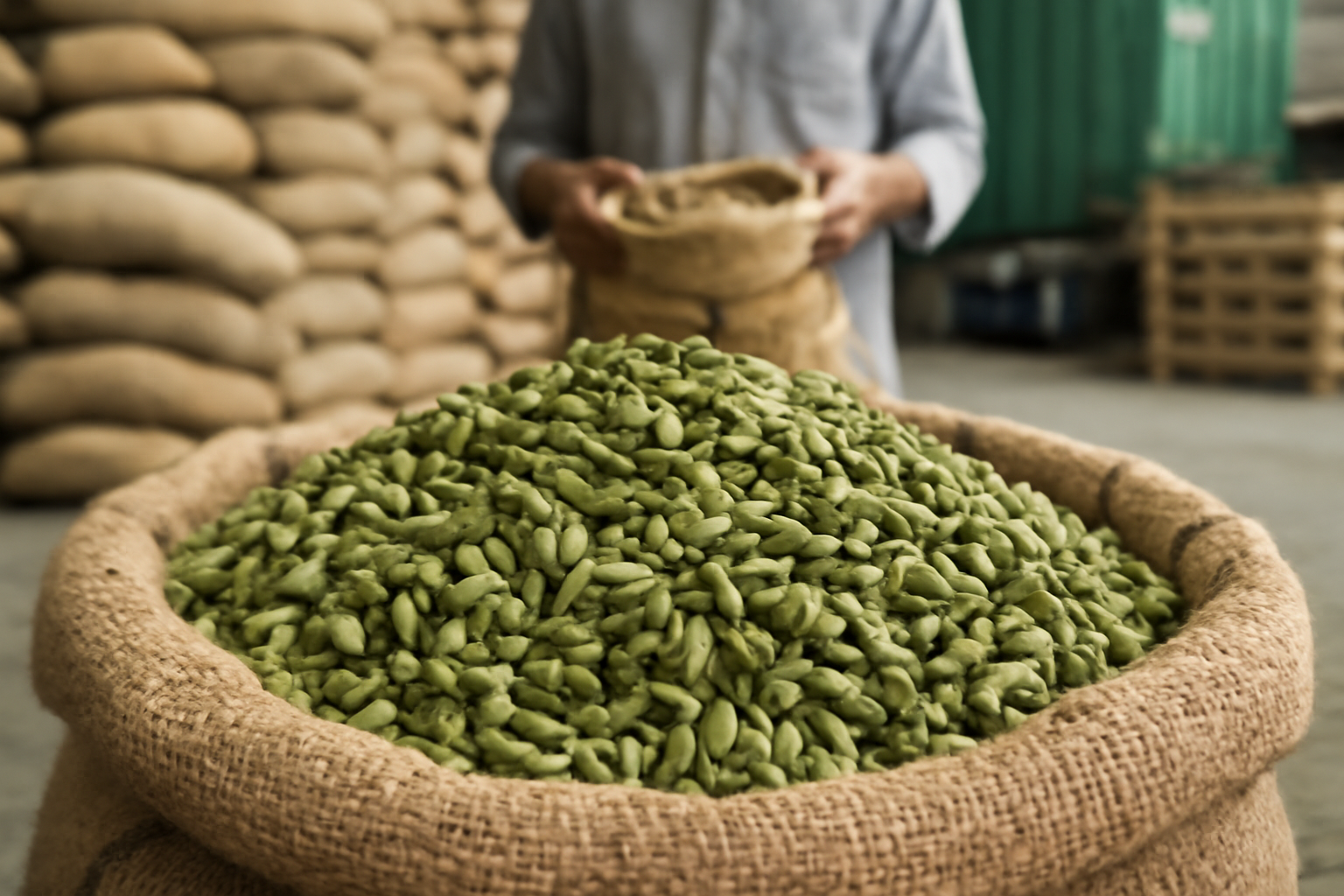
Export value rises by $304.9 million
India’s exports of whole cardamom more than tripled in value over two years, reaching $436.8 million in FY2025-26 from $131.9 million in FY2023-24. Bhasha reported the figures on July 17, citing government data.
The increase of $304.9 million means export receipts in FY2025-26 were about 3.3 times the level recorded two financial years earlier. The result marks an unusually large gain for a single high-value spice category and raises the commercial importance of cardamom for Indian growers, processors and exporters.
Value data leave price and volume effects open
The available figures refer to whole cardamom and measure exports by value. They do not state the quantity shipped, the average export price, the balance between different cardamom varieties or the countries that bought the product. It is therefore not possible to determine from the reported data alone how much of the increase came from larger physical shipments and how much reflected higher prices or a change in product mix.
That distinction matters to market participants. A rise driven mainly by volume would imply a substantial expansion in export supply and overseas sales. A price-led increase would indicate stronger unit returns but could expose exporters and buyers to a reversal if international prices weaken. A shift toward higher-value grades, meanwhile, would have different consequences for cleaning, grading, processing and procurement.
Higher receipts strengthen the sector’s position
For producers, the export gain points to a much larger pool of foreign demand measured in dollars, although the data do not show how the additional revenue was distributed along the supply chain. Farm-level benefits depend on procurement prices and costs, while processors and traders must also account for quality requirements, working capital and the timing of purchases and sales.
The figures establish a clear change in the scale of India’s whole cardamom export business: receipts increased from $131.9 million to $436.8 million within two financial years. Further assessment will require shipment volumes, destination-level trade data and export prices. Until those details are available, the strongest supported conclusion is that whole cardamom has delivered a major increase in foreign-exchange earnings for India’s spice sector.