India Expected to Sustain Rice Exports Despite Climate Risks: IGC
Arnaud Petit, Executive Director of the International Grains Council, told CNBC-TV18 that India's rice crop remains resilient enough to keep export volumes steady despite climate risks. He flagged El Nino as the main threat to global grain production and discussed the outlook for corn and soybeans.
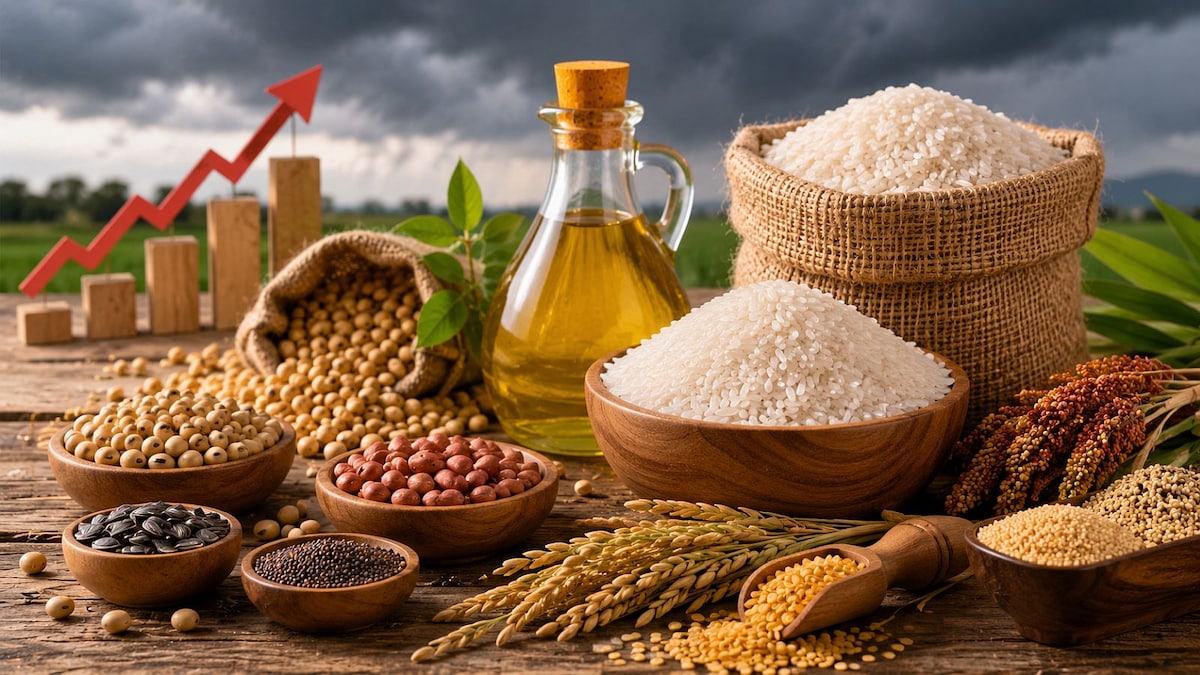
India set to keep rice exports flowing despite climate risks
India is likely to maintain its rice exports even as climate risks mount, according to Arnaud Petit, Executive Director of the International Grains Council (IGC), speaking to CNBC-TV18. Petit said the country's rice crop remains resilient, a reassuring signal for a global market that leans heavily on Indian supply.
A resilient rice crop
In the interview, Petit stressed the resilience of India's rice crop as the basis for his view that export volumes can hold. India is the world's largest rice exporter, so the health of its harvest carries outsized weight for buyers across Asia, Africa and the Middle East. When Indian supply stays steady, global rice availability tends to stay steady with it, and the price pressure that import-dependent countries feel during shortfalls eases. A resilient crop also gives New Delhi less reason to reach for the export curbs that have unsettled the market in the past, keeping Indian rice as the benchmark origin against which other exporters price.
El Nino over the wider grain market
Petit also flagged El Nino as a risk to global grain production. The weather pattern, associated with shifts in rainfall and temperature across major growing regions, can pull yields lower and inject uncertainty into the supply outlook even where current crops look adequate. The IGC's message on rice, however, was that India's crop is well placed to withstand that risk without forcing a change in export policy. For the wider grain complex, El Nino remains the single variable most capable of tightening balances quickly.
Corn and soybeans in focus
Beyond rice, Petit addressed the outlook for corn and soybeans, two of the most heavily traded agricultural commodities. Both underpin global livestock and processing industries, and their price direction shapes input costs for buyers far outside the grain trade itself. The IGC tracks these balances as part of its assessment of world grain and oilseed markets, and any El Nino disruption to production would feed through to feed and food chains alike.
What it means for trade
For importers and exporters, the core takeaway from the IGC is continuity rather than disruption:
- Indian rice exports are expected to continue, supporting global supply from the dominant origin.
- El Nino remains the key variable to watch for grain production worldwide.
- Corn and soybean balances stay central to the broader agricultural trade outlook.
The assessment, delivered by the International Grains Council through CNBC-TV18, points to a steadier rice trade than climate headlines might suggest, provided India's crop performs as Petit expects. For buyers planning purchases across Asia, Africa and the Middle East, that continuity is the operative signal to work with.