India targets 35 million tonnes of pulse production by 2030-31
India plans to raise pulse production from 27.4 million tonnes to 35 million tonnes by 2030-31 as it pursues self-sufficiency. Climate-resilient varieties, better fertilizer use and faster delivery of research to farmers will be central to the effort.
A 7.6-million-tonne production gap
India has set a target of producing 35 million tonnes of pulses by 2030-31, compared with current output of 27.4 million tonnes, as the country seeks self-sufficiency in a staple source of protein. The target was disclosed by Indian Council of Agricultural Research Director-General Dr ML Jat during a meeting with the media in Kanpur, according to Jagran.
Reaching the target requires an additional 7.6 million tonnes of annual production, an increase of nearly 28% from the current level. Jagran reported that output has already risen by about 1.75 million tonnes from the previous year. The longer-term objective nevertheless demands sustained gains over several growing seasons rather than a single strong harvest.
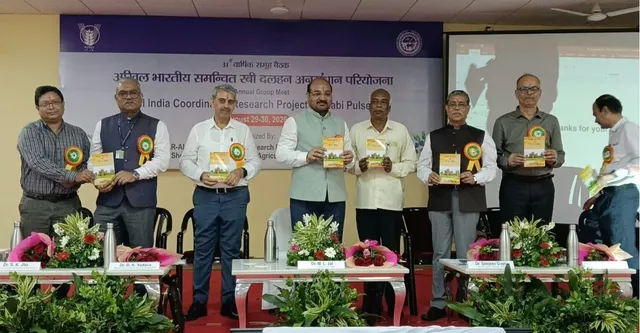
Dr Jat presented the plan at the 31st annual group meeting of the All India Coordinated Research Project on Rabi Pulses, organised jointly by Chandra Shekhar Azad University of Agriculture and Technology and the Indian Institute of Pulses Research. The institutional setting underlines the importance of winter pulse research to the national production programme.
Weather and input management remain constraints
Weather volatility is a central production risk. Dr Jat said ICAR is focusing its research on climate-resilient agriculture and that about 95% of new crop varieties under development are being equipped to withstand conditions including drought, frost, high temperatures and excessive rainfall. He said climate-adapted varieties and technologies have helped Indian agricultural production continue rising despite persistent weather challenges during the past decade.
Farm input management is another part of the strategy. Dr Jat warned that excessive applications of urea and pesticides damage soil and the environment while raising farmers’ costs. He urged growers to test their soil through the Soil Health Card system and apply fertilizers according to identified nutrient deficiencies. For pulse producers, more precise use of inputs could protect soil productivity and improve the economics of expanding output.
ICAR also wants to shorten the time required for new varieties and farming technologies to reach growers. According to Jagran, artificial intelligence is being used to narrow the gap between research institutions and farms. Scientists will advise farmers on crop selection under changing climatic conditions, natural farming and balanced pesticide use.
Import exposure could decline
If India closes the 7.6-million-tonne gap, its need for imported pulses could decrease, although the source did not provide an import forecast or a timetable for reducing purchases. The consequences for overseas suppliers will depend on whether domestic production growth keeps pace with consumption and whether climate shocks interrupt the expansion. Exporters and traders serving India will therefore need to monitor adoption of new varieties, yields and annual harvest performance rather than rely on the headline target alone.
The production programme is also being linked to nutrition. ICAR and the Indian Council of Medical Research have launched Mission SEHAT, short for Science Excellence for Health through Agricultural Transformation. The initiative connects agriculture, nutrition and human health while also considering soil, plant, animal and environmental health. This approach positions higher pulse output not only as an agricultural and import-substitution objective, but also as part of India’s food and nutrition policy.